


Khamenei's killing complicates planned summit between Trump, Xi Jinping
While Iran, Venezuela aren't considered important partners for China, Trump's campaign of regime change raises the question of whether the next target could be a leader with much closer links to Xi
 "donald trump, Xi Jinping, US China")
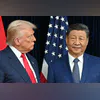
Instability in Iran will likely further entrench China’s relations with Russia, as Xi seeks to lock down oil supplies | Image: Bloomberg
Listen to This Article
By Bloomberg News
One month before President Xi Jinping and Donald Trump are set to convene at a much-touted summit in China, the US leader’s toppling of another friend of China risks stoking tensions between the world’s biggest economies.
After US and Israeli military strikes on Iran wiped out the Islamic Republic’s Supreme Leader, Chinese Foreign Minister Wang Yi on Sunday called it “unacceptable to openly kill the leader of a sovereign country and institute regime change.” Speaking by phone with his Russian counterpart, Wang warned that the US president risked driving the West Asia into the “abyss.”
Condemnation of Washington from China’s top diplomat stands out during a delicate period when officials on both sides are trying to steady relations before Trump arrives in Beijing on March 31. Complicating that task, the Republican has ousted two leaders with ties to Beijing in quick succession this year, after the US in January snatched Venezuela’s Nicolás Maduro from his Caracas home.
While Iran and Venezuela aren’t considered important trade or defense partners for China, Trump’s escalating campaign of regime change raises the question of whether the US president’s next target could be a world leader with much closer links to Xi.
Also Read

 "Iran, US Iran, Israel Iran, LNG, Strait of Hormuz")
 "Oil-linked stocks crash amid Iran-Israel war")
 "Anthropic's Claude Code has gone from being a side project to a billion-dollar business")
 "US personnel, US military")
 "Goldman Sachs Group Inc")
“How can Xi feel everything is normal and alright and be prepared to welcome Trump to visit in happy mood?” said George Chen, partner at The Asia Group. “Investors should manage their expectation on what Trump can achieve for his China trip — if he still goes.”
Instability in Iran will likely further entrench China’s relations with Russia, as Xi seeks to lock down oil supplies, Chen added. Both countries over the weekend called an emergency meeting of the UN Security Council — of which they are permanent members alongside the US, UK and France — citing what Moscow branded an “unprovoked act of armed aggression by the United States.”
Trump’s strikes are destabilizing the global economy by roiling a region critical to energy supplies. Ships are avoiding the Strait of Hormuz, which handles about a quarter of the world’s seaborne oil trade. China buys about 13.4% of its seaborne crude from Iran, meaning a prolonged disruption could sting Chinese firms grappling with a property crash and weak consumer spending at home.
Adding to the chaos, airspace in the West Asia has been disrupted as the conflict spreads to half a dozen countries. Projectiles are flying, resulting in a hit on Dubai’s main airport — the world’s busiest aviation hub. The US has said that three service members were killed and five “seriously wounded.” Trump also said on social media that US forces sank nine Iranian naval vessels and that the headquarters of Iran’s navy was “largely” destroyed in a separate attack.
“China will likely bank on the pressure that an extended blockade of the Strait of Hormuz would put on the global economy to ensure that oil will resume flowing soon,” said Jeremy Chan, a senior Eurasia Group analyst and former US diplomat, who added that Trump’s military endeavors will put a dampener on his meeting with Xi.
“This should further lower expectations of meaningful outcomes from the Trump-Xi summit, although the meeting is still likely to go forward,” he added.
The turmoil is unfolding as Xi heads into one of China’s most-important political weeks during which officials will unveil the economic growth goal for 2026. Those annual parliamentary sessions will also be scrutinized for who isn’t in attendance, after two of the country’s top generals were put under investigation earlier this year and rumors swirl about other senior officials.
‘Mounting Instability’
As well as war in the West Asia, China is grappling with conflicts spiraling along its borders with fresh clashes between Afghanistan and Pakistan erupting in recent days. Beijing is also engaged in a diplomatic dispute with Asia’s other top economy, over Japanese Prime Minister Sanae Takaichi’s comments on Taiwan.
All that might mean China’s focus doesn’t linger on Iran for long.
“The larger concern is mounting instability across China’s periphery,” said John Calabrese, senior fellow at the Middle East Institute. “Meanwhile, tightening military alignment between Russia and North Korea narrows Beijing’s room to maneuver and heightens escalation risks on the Korean Peninsula that China cannot fully control.”
Trump’s actions amount to a declaration of US power in the West Asia, after years of neglect under the Biden administration that had given Xi space to bolster his credentials in the region. As part of that effort to boost his influence, China’s top leader oversaw Iran’s joining of the Shanghai Cooperation Organization security club in 2023, and then its accession to the BRICS bloc — groupings Beijing has expanded to challenge US sway on the world stage.
Despite those growing ties, China showed during Trump’s strikes on Iran last year that Beijing’s support is limited to strong rhetoric and continuing its normal trading relationship.
That approach has extended to even China’s closest partners. Xi’s government has provided diplomatic support for Vladimir Putin’s war in Ukraine and shipped dual-use goods to Moscow, but been careful not to directly provide weapons in order to avoid US sanctions.
Xi’s measured style could help stabilize the summit with Trump. That outcome would help preserve the one-year trade truce, thereby keeping US tariffs on Beijing lower and ensuring the flow of critical minerals from China to American factories.
“China has a good thing going with Trump, and the trip to Beijing is happening in weeks,” said Yun Sun, senior fellow and co-director of the East Asia Program and director of the China Program at the Stimson Center. “China is not going to fight the US in support of Iran at this moment.”
More From This Section
 "Israeli airstrikes, Doha, Qatar, Hamas leaders")
 "Iran, US Iran, Israel Iran, LNG, Strait of Hormuz")
 "Iran, US Israel attacks on Iran, Israel Iran conflict, US Iran, Israel Iran")
 "US President Donald Trump")
 "Iran, US Israel attacks on Iran, Israel Iran conflict, US Iran, Israel Iran")
Topics : Donald Trump Israel Iran Conflict US-Iran tensions US Iran tensions Iran economy Xi Jinping
Don't miss the most important news and views of the day. Get them on our Telegram channel
First Published: Mar 02 2026 | 9:53 AM IST