


Explained: What is the Strait of Hormuz and why it is vital for oil trade
Tensions in West Asia have put the Strait of Hormuz in focus; here's what this narrow sea route is, why it is crucial for global oil and gas supplies and how any disruption can affect prices worldwide
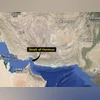 "Strait of Hormuz")
Around 20 per cent of the world’s oil supply passes through the Strait of Hormuz.


Listen to This Article
The United States and Israel carried out their biggest attacks on Iran in decades on Saturday, in an operation that killed Iran’s Supreme Leader Ayatollah Ali Khamenei. In response, Iran launched drones and missiles at Israel and targeted US military bases in Bahrain, Kuwait, and Qatar.
As the conflict widened, global attention quickly turned to one narrow stretch of water -- the Strait of Hormuz -- where oil and gas shipments have largely paused. Here’s everything to know about the strait and why it matters so much to the world.
What is the Strait of Hormuz?
The Strait of Hormuz is a narrow waterway between Iran and Oman. It connects the Persian Gulf in the north to the Gulf of Oman and the Arabian Sea in the south, opening into the wider ocean.
At its narrowest point, the strait is about 33 km wide. However, the shipping lanes used by tankers are only about 3 km wide in each direction. Despite lying within the territorial waters of Iran and Oman, it is considered an international waterway open to global shipping.
The United Arab Emirates (UAE), home to Dubai, also lies close to this route.
Also Read

 "Modi, Narendra Modi")
 "china Flag, China")
 "FLIGHT cancellations")
 "UK, UK immigration, UK visa")
 "money, Rs, rupees, currency, funding, fund, funds")
Why has shipping slowed down now?
Oil and gas shipments through the strait have largely paused as tensions rose following the US-Israel strikes on Iran. Iran has stepped up threats against vessels moving through the chokepoint.
Ship-tracking data showed that on Sunday, a small number of vessels were moving out of the waterway, though none appeared to be entering, Bloomberg reported. A small oil tanker, reportedly sanctioned by the US for helping Iran export fuel, was targeted off Oman’s northern coast. It was not clear who carried out the attack.
Why has the strait always been important?
Historically, the Strait of Hormuz has been a major trade route. In ancient times, goods such as ceramics, ivory, silk, and textiles moved from China through this region.
In the modern era, it has become one of the world’s most important energy corridors. Supertankers carrying oil and liquefied natural gas (LNG) from Saudi Arabia, Iran, Iraq, Kuwait, Qatar, Bahrain and the UAE pass through this narrow route.
Most of this energy supply goes to Asian markets. China, for instance, remains Iran’s only major oil customer.
While Saudi Arabia and the UAE have pipelines that can bypass the strait, the US Energy Information Administration has said “most volumes that transit the strait have no alternative means of exiting the region".
Why does it matter to the global economy?
Around 20 per cent of the world’s oil supply passes through the Strait of Hormuz. On average, more than 20 million barrels of crude oil, condensate and fuel moved through the strait every day last year, news agency Reuters reported.
Qatar, one of the world’s largest LNG exporters, sends almost all of its gas through this route.
Data by Reuters showed that in 2025, the Strait of Hormuz was the world's second-busiest oil shipping chokepoint, handling about 2.5 million metric tonnes of oil daily. Only the Strait of Malacca handled more, at around 3.3 million metric tonnes per day.
Any disruption here can quickly push up global oil and gas prices, affecting fuel costs and inflation worldwide. ALSO READ: Crude oil's epic fury: 300% jump! It's happened before; tracing the history
Have there been tensions here before?
Yes. The strait has often been at the centre of geopolitical tensions. In 1973, Arab producers led by Saudi Arabia imposed an oil embargo on Western nations during the Arab-Israeli war. During the 1980-1988 Iran-Iraq War, both sides targeted oil tankers in what became known as the “Tanker War”.
In 2012, Iran threatened to block the strait in response to US and European sanctions. In 2019, several oil tankers were attacked near the UAE coast. In 2023 and 2024, Iran seized vessels near or in the strait, some after US actions against Iranian-linked tankers.
Last year, Iran also considered shutting down the waterway following US attacks on its nuclear facilities.
Who protects shipping in the region?
The US Fifth Fleet, based in Bahrain, is responsible for safeguarding commercial shipping in the area. However, in times of direct conflict, even a strong naval presence cannot fully remove risks for commercial vessels.
What happens if the strait is blocked?
If the Strait of Hormuz were to be blocked, even temporarily, global oil and gas supplies would be severely disrupted. Prices would likely surge, shipping insurance costs would rise and energy-importing countries -- especially in Asia -- would face immediate pressure.
That is why, even as fighting intensifies between Iran, the US and Israel, the world is closely watching this vital stretch of water.
(With agency inputs)
More From This Section
 "Iran, US Israel attacks on Iran, Israel Iran conflict, US Iran, Israel Iran")
 "US President Donald Trump")
 "Iran, US Israel attacks on Iran, Israel Iran conflict, US Iran, Israel Iran")
 "Maria Corina Machado, Maria Corina")
 "China")
Topics : Israel Iran Conflict US-Iran tensions global oil prices oil trade United Nations israel Explained BS Web Reports Decoded
Don't miss the most important news and views of the day. Get them on our Telegram channel
First Published: Mar 02 2026 | 9:43 AM IST