


Next Pope after Francis: Who the Catholic Church may choose to lead next
After Pope Francis's death, attention turns to the College of Cardinals and a diverse field of potential successors, from Parolin and Tagle to Zuppi and Ambongo
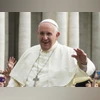 "Pope Francis")
File photo of Pope Francis. Photo: Shutterstock
Listen to This Article
Following the death of Pope Francis earlier this week, speculation has arisen over who will be the next leader of the Roman Catholic Church. History has repeatedly shown that guessing the outcome of a papal conclave is a near-impossible task. When Jorge Mario Bergoglio emerged as Pope Francis in 2013, he was not even listed among the top contenders.
The challenge this time is even greater, as the late Pope Francis appointed a significant number of new cardinals during his decade-long tenure. Many of those appointments were from outside Europe, making the College of Cardinals more diverse than ever. This diversification has blurred traditional lines of influence and ideology within the conclave, making it harder to predict who might emerge as the next leader of the world’s 1.3 billion Catholics.
Top contenders to succeed Pope Francis as the next head of the Catholic Church
Pietro Parolin, 70, Italy
Currently the Vatican’s Secretary of State, Parolin is considered a “continuity candidate” and was a close confidant of Pope Francis. He has played a central role in diplomatic negotiations, including the controversial 2018 agreement with China on the appointment of bishops — a deal some critics viewed as a capitulation to the Chinese government. His pragmatic diplomacy has drawn both praise and criticism. While secular leaders see him as a reliable negotiator, some within the Church view him as too modernist. His supporters describe him as “a courageous idealist” and a steady hand in turbulent times.
Luis Antonio Tagle, 67, Philippines
Once considered Francis’s favourite to succeed him, Tagle would be the first Asian Pope if chosen. A former Archbishop of Manila, he now heads the Vatican’s Dicastery for Evangelisation. He has expressed support for a more compassionate approach to divorced and LGBTQ+ Catholics, though he remains opposed to abortion rights. Despite earlier momentum, insiders believe his standing has declined in recent years. Nevertheless, his popularity in Asia — the fastest-growing region for Catholicism — keeps his name in the conversation.
Also Read

 "Kevin Farrell")
 "Australia Flag")
 "Donald Trump, Melania Trump")
 "Pope Francis")
 "Pope Francis and PM Modi")
Peter Turkson, 76, Ghana
Turkson is often cited as a potential first Black Pope in modern history. Known for his strong positions on economic justice, climate change, and poverty, he also upholds traditional teachings on marriage and the priesthood. He has acknowledged that anti-LGBTQ+ laws in some African nations are too harsh. Turkson’s moral clarity and advocacy on global justice have earned him a loyal following.
Péter Erd?', 72, Hungary
A top conservative contender, Erd?' is the Archbishop of Esztergom-Budapest and a respected intellectual. He was aligned with the late Cardinal George Pell and is seen as someone who could reassert more traditional doctrinal authority. In 2015, he notably resisted Francis’s calls for churches to welcome migrants, aligning instead with Hungarian Prime Minister Viktor Orbán. Erd?' would likely mark a sharp shift away from Francis’s progressive tone.
Matteo Zuppi, 69, Italy
Zuppi, appointed cardinal in 2019, is widely viewed as a bridge-builder and one of the more progressive voices among the Italian clergy. He shares Francis’s concern for the poor and marginalised and has taken on key diplomatic roles, including as the Pope’s peace envoy for Ukraine. In 2023, he visited both Moscow and Kyiv, calling for “gestures of humanity.” His relatively liberal stance on LGBTQ+ relationships and his active peacemaking role have raised his global profile.
José Tolentino Calaça de Mendonça, 59, Portugal
At 59, Tolentino is among the youngest serious candidates. His age may, however, be a disadvantage, as some cardinals may prefer a shorter pontificate. A theologian and poet, he is seen as intellectually gifted and spiritually imaginative. However, his sympathy for feminist theologians and openness to LGBTQ+ issues have stirred controversy. He was close to Francis and has argued for greater dialogue between the Church and contemporary culture.
Mario Grech, 68, Malta
Grech began as a conservative but shifted toward progressive positions during Francis’s papacy. Now Secretary General of the Synod of Bishops, he has supported female deacons and criticised European leaders for cracking down on NGO-run migrant rescue ships. His evolution has earned him both admiration for his openness and scepticism from traditionalists.
Pierbattista Pizzaballa, 60, Italy
The Latin Patriarch of Jerusalem, Pizzaballa has played a vital role in interfaith relations and diplomacy in West Asia. He made headlines in 2023 when he offered himself as a hostage in exchange for Israeli children held by Hamas. In 2024, he visited Gaza after months of negotiation. Though he has made few public statements on controversial social issues, his courage and leadership in crisis have won him wide respect.
Cardinal Robert Sarah, 79, Guinea
Seen as a staunch conservative, Sarah has long been a polarising figure. He once positioned himself as a rival to Pope Francis’s theological outlook, particularly on liturgical matters and priestly celibacy. His 2020 co-authored book with Pope Emeritus Benedict XVI, defending clerical celibacy, was seen as a thinly veiled critique of Francis. Sarah’s charisma, spiritual intensity, and African roots could make him a compelling figure for some, especially those who feel the Church has drifted too far left. His ideological rigidity and past opposition to reforms may either strengthen his appeal or limit his chances.
Cardinal Reinhard Marx, 71, Germany
A close adviser to Francis, Marx helped lead the Vatican’s financial reforms and remains a key figure in the German Church’s progressive “synodal path,” which has opened discussions on priestly celibacy, same-sex blessings, and women’s roles. He stunned the world by offering his resignation in 2021 over the Church’s mishandling of abuse cases — a move that was rejected by Francis. Loved by reformers and eyed warily by conservatives, Marx embodies the Church’s current ideological crosswinds.
Cardinal Marc Ouellet, 80, Canada
As former Prefect of the Congregation for Bishops, Ouellet wielded significant influence in shaping the global episcopacy. Though aligned with Benedict XVI in theology, he retained his post under Francis, balancing doctrinal conservatism with pastoral appointments. His advocacy for a larger role for women in governance (not ordination) and his handling of abuse investigations show a moderate streak. However, his advanced age and recent retirement may make him more of a mentor than a frontrunner.
Cardinal Fridolin Ambongo, 65, Democratic Republic of Congo
An outspoken advocate for climate justice and an opponent of corruption, Ambongo is one of Africa’s most influential bishops. He was also a close adviser to Francis. His African roots and alignment with Francis’s social agenda make him a strong symbolic candidate. However, his vocal rejection of same-sex blessings in 2023 reveals tensions with parts of the Vatican’s recent pastoral direction.
How is the Pope chosen?
The next pope will be chosen in a secret conclave, where 120 cardinal electors under the age of 80 will vote until a candidate receives a two-thirds majority. Alliances shift quickly behind closed doors, and history has shown that the eventual pope is often a compromise candidate or an unexpected choice.
For a more detailed understanding of how the Vatican chooses a new Pope, read.
More From This Section
 "Kash Patel")
 "Taiwan flag, Taiwan")
 "US President Donald Trump, Pete Hegseth")
 "US senate, White house, United states")
 "The Harvard University campus in Cambridge")
Topics : Pope Francis Church BS Web Reports Explained
Don't miss the most important news and views of the day. Get them on our Telegram channel
First Published: Apr 22 2025 | 11:55 AM IST