


How Nvidia CEO Jensen Huang won over Trump who wanted to split his company
Not Tim Cook or Elon Musk, but Jensen Huang has emerged as the most influential tech executive in Washington as Donald Trump reverses decision to dismantle Nvidia
 "Nvidia CEO Jensen Huang")
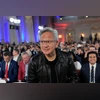
Nvidia CEO Jensen Huang attends the 'Winning the AI Race' Summit in Washington DC, US, July 23, 2025. Photo: Reuters
Listen to This Article
US President Donald Trump has revealed that he once contemplated dismantling tech giant Nvidia to spur competition in the artificial intelligence (AI) chip sector. However, he later backed off—a move that highlights Nvidia's CEO Jensen Huang's growing influence in the White House.
In fact, Huang's personal lobbying and policy engagement has helped drive a major shift in US trade policy and cemented his place as one of the most powerful tech executives in Washington.
Why did Trump drop the idea to break Nvidia?
Speaking at an AI summit in Washington on Wednesday (local time), Trump admitted, “I said, ‘Look, we’ll break this guy up,’ before I learned the facts here.” He explained that aides had advised him the move would be far more difficult than anticipated, as Nvidia’s dominance in the AI hardware market was underpinned by years of development that rivals would struggle to match in the near term.
“I figured we could go in and sort of break them up a little bit, get them a little competition,” Trump said. “But I found out it’s not easy in that business.”
Huang, who sat in the audience during Trump's remarks, was praised several times by the US President along with other tech leaders for their continued investments in the United States.
Also Read

 "Elon musk, musk, Elon")
 "NvidiaJensen Huang, Jensen, Nvidia")
 "Jensen Huang, Jensen, Nvidia, Nvidia CEO")
 "Donald Trump, Trump")
 "David Sacks")
China chip ban spurs Nvidia into action
Nvidia holds more than 90 per cent of the market for chips that power AI systems. That dominance has helped it surpass Apple to become the world’s most valuable public company, with a market cap topping $4 trillion. But it has also brought the company into the crosshairs of global trade tensions.
In April, the Trump administration blocked sales of Nvidia’s H20 AI chip to China, a move that sparked concern within the company and triggered an intense lobbying campaign from Huang.
According to reports from The New York Times and CNBC, Huang responded with a full-blown lobbying campaign—meeting Trump at Mar-a-Lago, testifying before Congress, and aligning with White House insiders like AI and crypto czar David Sacks.
During these meetings, Huang argued that restricting American chip exports would do more harm than good, pushing countries toward Chinese alternatives and weakening US leadership in AI. It seems this narrative began to resonate with Trump’s inner circle, especially as Chinese competitor Huawei unveiled its own competing AI chip platform and Chinese demand for AI infrastructure exploded.
The campaign culminated last week when Huang met with Trump in the Oval Office. Within days, the administration changed course. The decision was officially linked to broader trade negotiations, officially tying the change to a rare earth magnet deal with China, but insiders, as reported by US media, credit Huang’s influence for the change.
Jensen Huang's foray into policy
During Trump's first term, Apple CEO Tim Cook played a key role in behind-the-scenes diplomacy. But in Trump’s second administration, Huang has quietly become the most influential tech executive—surpassing Cook and Tesla’s Elon Musk, both of whom have lost standing with the US president.
Cook, once seen as Trump’s go-to corporate statesman, has faced criticism from the administration over Apple’s supply chain strategies and its manufacturing shift to India. Meanwhile, Elon Musk, once considered Trump's right-hand man, has had a public falling out with the president.
Is Huang Trump's new best buddy?
Huang has publicly praised Trump for acknowledging the need for energy to produce artificial intelligence. In an interview with Fox News' Bret Baier, Huang called Trump a "visionary" for recognising this need.
During Wednesday's AI summit, Huang was asked during his session about the US' advantage which other countries don't have.
"America's unique advantage that no country could possibly have is President Trump," said Huang.
More From This Section

 "European Central Bank, ECB")
 "Govt may tweak IBC to factor in climate change")
 "swaminarayan temple in melbourne")
 "gavel")
Don't miss the most important news and views of the day. Get them on our Telegram channel
First Published: Jul 24 2025 | 12:27 PM IST