


Clashing over the Durand Line: A history of the Pak-Afghan border dispute
Drawn by the British in 1893, the Durand Line remains a source of conflict as Pakistan and Afghanistan inch closer to a direct military confrontation
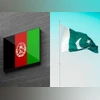 "Afghanistan flag, Pakistan flag, Afghanistan-Pakistan")
Durand line, the 2,640 km boundary, drawn by the British in 1893 between British India and Afghanistan, lies at the heart of the Afghanistan-Pakistan conflict. | Image: Canva/Free
Listen to This Article
Pakistan and Afghanistan stand on the brink of one of their most serious confrontations in decades, as the Pakistan government has openly issued threats of military action. Yet the roots of their hostility go far deeper — from the disputed Durand Line drawn in 1893 to decades of militant safe havens and border skirmishes. The recent peace talks in Turkey have collapsed without an agreement, and tensions have since escalated. Pakistan is demanding that the Taliban government in Kabul act against the Tehrik-i-Taliban Pakistan (TTP), which it alleges operates from Afghan soil. Kabul, in turn, denies harbouring militants and accuses Pakistan of repeated cross-border aggression.
What is the Durand Line and why does it divide Afghanistan and Pakistan?
The border takes its name from Sir Mortimer Durand, the British diplomat who negotiated the line on behalf of British India with Emir Abdur Rahman Khan of Afghanistan. Though intended as an administrative boundary, it ended up bisecting the Pashtun heartland — dividing communities, clans, and trade routes that had operated for centuries without borders.
This month, the situation escalated sharply. Pakistan launched air and drone strikes in Afghan provinces such as Kabul, Khost, Jalalabad, and Paktika, targeting TTP leaders. The attacks caused civilian casualties, prompting retaliatory fire from Afghan forces.
Afghanistan’s diplomatic outreach to India, including a visit by its foreign minister to New Delhi, further alarmed Islamabad, adding a geopolitical edge to the crisis. International mediators have since stepped in to defuse the tensions. But the risk of conflict remains, and both countries face a volatile moment in their relationship.
What triggered the Pakistan-Afghanistan border conflict?
The animosity between the two nations traces back to before Pakistan’s creation. The 1,640-mile (2,640 km) boundary, drawn by the British in 1893 between British India and Afghanistan, lies at the heart of the divide. The line split Pashtun tribal lands, cutting through families and communities. Although Emir Abdur Rahman Khan accepted the agreement — reportedly under British pressure — successive Afghan governments have never recognised the Durand Line as a permanent international border.
Also Read

 "Donald Trump, Trump")
 "Sudan civil war crisis")
 "Google Search, GPT searches")
 "artificial intelligence, large language model, LLM")
 "scam, fraud, spam call")
When Pakistan was created in 1947, Afghanistan refused to accept the Durand Line’s legitimacy, fuelling Kabul’s longstanding demand for a separate “Pashtunistan.” The border dispute thus became the foundation of decades of mistrust. ALSO READ | Pakistan now paying a high price for its long-standing ties with Taliban
What was the state of relations post-1947 partition?
In 1947, Afghanistan became the only country to vote against Pakistan’s entry into the United Nations, signalling its deep resentment over the border issue. Through the 1950s and 1960s, Kabul intermittently pushed for self-determination for Pashtuns living in Pakistan, while Islamabad insisted the border was final. These disagreements hardened into diplomatic estrangement and recurring low-level clashes along the frontier.
How did Cold War politics deepen the conflict?
The 1978 Saur Revolution in Kabul brought a communist regime to power, followed by the Soviet invasion in 1979. The upheaval turned Afghanistan into a Cold War battlefield.
As millions of Afghan refugees migrated into Pakistan, Islamabad became the breeding ground for the mujahideen, resistance fighters armed and financed by the United States, Saudi Arabia, and others to fight the Soviet Union. Pakistan’s intelligence services grew deeply involved in Afghan affairs, cultivating networks that would later help form the Taliban.
After the Soviets withdrew in 1989, Afghanistan descended into civil war. Pakistan, still hosting millions of refugees and militant groups, remained entangled in the country’s chaos. The border became porous not just to people but to ideology and arms.
When did the Taliban and cross-border militancy become central?
The Taliban emerged from Afghan refugee camps and religious schools in the early 1990s, promising order amid chaos. Backed by Pakistan’s security establishment, the group captured Kabul in 1996 and imposed strict Islamic rule. Pakistan, along with Saudi Arabia and the UAE, recognised the Taliban regime, establishing a complex patron-client relationship.
After the US-led invasion in 2001, the Taliban regrouped in Pakistan’s border regions and waged a long insurgency. The Tehreek-i-Taliban Pakistan (TTP), often seen as ideologically aligned with the Afghan Taliban, began targeting Pakistani forces and civilians, frequently operating from Afghan territory.
While Pakistan had in principle become a US ally in the “war on terror,” it was repeatedly accused by Washington and Kabul of sheltering militants. These mutual accusations, cross-border strikes, and insurgent networks have kept relations in a continuous cycle of hostility.
Were there any periods of cooperation between the neighbours?
Despite deep mistrust, the two neighbours have occasionally cooperated. In the late 1950s, relations briefly normalised, and the 1960 Afghanistan-Pakistan Transit Trade Agreement sought to promote economic connectivity. The period between 1964 and 1972 saw relative calm, with Afghanistan remaining neutral during the Indo-Pak wars.
After 2001, both countries worked with international donors on refugee management, reconstruction, and border control. Trade agreements and intelligence exchanges occasionally improved ties. But these moments of cooperation have rarely lasted, with each flare-up of violence, domestic politics, or leadership change quickly undoing years of progress.
What role does trade play in the border dynamics?
Trade between the two countries has always been modest but crucial for border economies. Bilateral trade has fluctuated between a few hundred million to about a billion dollars annually, often disrupted by security tensions and border closures.
In the first half of 2025, trade reached $1.1 billion, with Afghan exports to Pakistan including coal, cotton, talc, tobacco, and lentils. Pakistan exported rice, cement, medicines, and clothing in return. Islamabad also relies on Afghanistan as a transit corridor to Central Asia, pushing combined regional trade to over $2 billion.
However, the escalation in 2025, including repeated border closures and clashes, has again choked formal trade and stranded goods at crossings.
The line that still divides
At its heart, the Pakistan-Afghanistan conflict is not only about borders or militancy but about history itself—colonial legacies, divided tribes, and two nations locked in mutual suspicion. More than a century after it was drawn, the Durand Line remains not just a disputed border but a geopolitical fault line that could spark a modern conflict.
Flashpoints on the Durand Line
- 1947: Afghanistan votes against Pakistan’s entry into the UN, citing Durand Line dispute
- 1955 & 1961: Kabul-Islamabad diplomatic ties severed over Pashtunistan demands
- 1979–1989: Soviet invasion turns Pakistan-Afghanistan border into Cold War frontier
- 1996–2001: Taliban rise to power with Pakistani backing; Kabul-Islamabad ties remain tense
- 2007–2014: TTP insurgency escalates in Pakistan, blamed on safe havens in Afghanistan
- 2017: Pakistan builds border fencing; Afghanistan protests, clashes erupt
- 2021: Taliban return to power; Pakistan expects crackdown on TTP, but tensions rise
- 2025: Pakistan launches cross-border air strikes; Afghanistan retaliates; war fears escalate
More From This Section
 "Xi Jinping, Jinping, China President, Donald Trump")
 "gaza, palestine")
 "A man is detained by police officers during a police operation against drug trafficking at the favela do Penha, in Rio de Janeiro, Brazil October 28, 2025 | REUTERS")
 "Chinese Tiangong Space Station, China Space Station, Chinese Space Station")
 "People walk at the venue of the Japan Mobility Show 2025 at Tokyo Big Sight in Tokyo, Japan October 29, 2025 | REUTERS")
Don't miss the most important news and views of the day. Get them on our Telegram channel
First Published: Oct 30 2025 | 12:13 PM IST