


What's happening in Sudan? Inside the conflict that left over 150,000 dead
The fall of El Fasher to the Rapid Support Forces marks a turning point in Sudan's civil war, intensifying fears of genocide, partition, and regional destabilisation amid global neglect
 "Sudan civil war crisis")
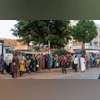
Families caught in the city of El Fasher after months of siege and continuous fighting. (Photo: X/@Refugees)
Listen to This Article
Sudan’s civil war, now in its third year, has become one of the world’s worst humanitarian crises. The fighting between the national army and the paramilitary Rapid Support Forces (RSF) has left more than 150,000 people dead and forced around 12 million to flee their homes, according to the United Nations.
The latest escalation came when the RSF seized El Fasher, the last major city in Darfur held by the army, after an 18-month siege that trapped tens of thousands of civilians.
Let's understand why there is a civil war in Sudan, who are the major players and why the country faces the risk of partition.
What triggered Sudan’s civil war?
The conflict erupted in April 2023 following a bitter power struggle between two former allies: army chief Gen Abdel Fattah al-Burhan and RSF leader Lt Gen Mohamed Hamdan Dagalo, widely known as Hemedti.
Both had jointly seized power in a 2021 coup that derailed Sudan’s fragile transition to civilian rule. But divisions soon emerged over plans to merge the RSF into the regular army and hand power to civilians.
Also Read

 "legal, law, judiciary, order")
 "United Nations Security Council")
 "landslide, Jammu Landslide")
 "Sudan clashes, Sudan")
 "Rahul Gandhi, Rahul, Priyanka Gandhi, Priyanka, Congress leader")
Gen Burhan wanted the merger to take place swiftly under army command. Hemedti resisted, fearing the loss of autonomy and control over his financial networks, which include lucrative gold mining interests.
Tensions boiled over in April 2023 when RSF units were redeployed across Sudan in what the army saw as a threat. Gunfire broke out in the capital, Khartoum, and quickly spread nationwide.
Who are RSF and how did they rise to power?
The RSF traces its origins to the Janjaweed militia, infamous for atrocities in Darfur in the early 2000s. Backed by former dictator Omar al-Bashir, the Janjaweed were accused of genocide and ethnic cleansing that killed about 300,000 people.
Formally established in 2013, the RSF became a major paramilitary force under Hemedti. The BBC notes that it has intervened in conflicts in Yemen and Libya, and controls several of Sudan’s gold mines.
Over time, the RSF built its own networks of foreign backers. The Sudanese army has accused the United Arab Emirates (UAE) of arming and funding the group. However, the UAE has denied these allegations.
According to The Guardian, leaked UN reports revealed “multiple” flights from the UAE to Chad that allegedly transported weapons destined for RSF-controlled areas in Darfur.
What happened during RSF’s capture of El Fasher?
In late October 2025, the RSF captured El Fasher after months of siege. According to The Guardian, RSF fighters claimed to have “extended control over the city of El Fasher from the grip of mercenaries and militias”. The following day, army chief Gen Burhan confirmed his forces had withdrawn “to a safer location”, effectively conceding defeat.
Hundreds of civilians were reportedly killed in ethnically motivated attacks. The RSF has been accused of hunting down individuals, detaining civilians for ransom, and executing men from non-Arab communities.
According to the Yale Humanitarian Research Lab, the scale of violence in El Fasher was comparable to the first 24 hours of the Rwandan genocide. Satellite imagery analysed by the lab revealed “clusters consistent with adult human bodies” and signs of “door-to-door clearance operations” targeting non-Arab Fur, Zaghawa and Berti communities.
Are genocide and ethnic cleansing taking place in Darfur?
According to the BBC, the US determined in early 2025 that the RSF and allied militias had committed genocide against the Massalit and other non-Arab groups in Darfur.
Then US Secretary of State Antony Blinken said, “The RSF and allied militias have systematically murdered men and boys on an ethnic basis, and deliberately targeted women and girls for rape and other forms of sexual violence.”
Human Rights Watch and the UN have also documented widespread atrocities, including sexual assaults against minors, the destruction of displacement camps, and starvation tactics.
The RSF denies the allegations, claiming it is not involved in ethnic violence and describing the conflict as “tribal”. But UN investigators cited testimonies of fighters taunting victims with racist slurs and saying they would make them bear “Arab babies”.
Which territories does Sudanese army still control?
Despite losing most of Darfur and parts of Kordofan, the Sudanese army controls much of the north and east. Its main base is in Port Sudan on the Red Sea, which hosts the UN-recognised government. The BBC reports that Egypt remains the army’s main backer, while Iran and Turkey have supplied weapons.
The army retook Khartoum in March 2025 after nearly two years of RSF control, leaving behind a devastated city of burned buildings and shattered infrastructure.
How severe is Sudan’s humanitarian crisis?
Sudan’s conflict has created what the UN calls “the world’s largest humanitarian crisis”. The BBC notes that 24 million people face acute food insecurity, while famine has been declared in several areas, including the Zamzam camp for displaced people near El Fasher.
Aid operations have been crippled by insecurity and funding cuts. Nearly 80 per cent of emergency food kitchens have shut down. The BBC reports that 12 million people are displaced and living without access to clean water or healthcare.
Why have global efforts to end the conflict failed?
Several rounds of peace talks in Saudi Arabia and Bahrain have failed to produce a ceasefire. Both sides, particularly the army, have shown little willingness to compromise, according to the BBC.
A London conference earlier this year, reported by The Guardian, brought together 17 countries, the EU, and the African Union to discuss aid and diplomacy. However, the participation of countries allegedly linked to the conflict, such as the UAE, drew criticism.
Amnesty International has called the global response “woefully inadequate”, while the International Crisis Group described diplomatic efforts as “lacklustre”.
UN health chief Tedros Adhanom Ghebreyesus told the BBC that “race is in play here”, lamenting the limited global attention given to Sudan compared with other crises.
What lies ahead for Sudan?
Analysts quoted by The Telegraph warn that Sudan could be headed towards partition, mirroring Libya’s east-west divide. With the RSF consolidating power in the west and the army entrenched in the east, the country risks fracturing along regional and ethnic lines.
More From This Section
 "Donald Trump, Trump")
 "Stabbing")
 "Xi Jinping, Jinping, China President, Donald Trump")
 "Donald Trump, Trump")
 "Donald Trump, Trump, Xi Jinping")
Topics : BS Decoded Sudan Africa Decoded starvation deaths
Don't miss the most important news and views of the day. Get them on our Telegram channel
First Published: Nov 02 2025 | 10:44 AM IST