


Are robots going to replace human surgeons soon? Here's what Musk predicts
Medtronic, an Ireland-based healthcare company that develops medical technology, recently experimented with its Hugo robot, which assisted in performing 137 real surgeries
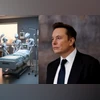 "Elon Musk")
Elon Musk’s company Neuralink is testing brain-computer interface technology in clinical trials, aiming to help people with paralysis or neurological disorders control devices with their minds (Photo: Freepilk, Reuters)
Listen to This Article
Do you remember the 2013 movie Elysium, where a robotic machine cured a critically ill patient within seconds? That sci-fi scene may not be far from reality. Robots could soon perform surgeries—one of the most delicate and complex tasks traditionally handled by humans.
“Robots will surpass good human surgeons within a few years and the best human surgeons within ~5 years,” billionaire Elon Musk predicted in a post on X.
Citing a Neuralink experiment involving robotic surgery, Musk added: “@Neuralink had to use a robot for the brain-computer electrode insertion, as it was impossible for a human to achieve the required speed and precision.”
Medtronic’s Hugo robot in action
Robots will surpass good human surgeons within a few years and the best human surgeons within ~5 years. @Neuralink had to use a robot for the brain-computer electrode insertion, as it was impossible for a human to achieve the required speed and precision. https://t.co/ipPhQK8z1j
— Elon Musk (@elonmusk) April 27, 2025
Medtronic’s Hugo robotic-assisted surgery (RAS) system supported 137 surgeries across multiple hospitals as part of the company’s Expand URO clinical study—the largest of its kind for robotic-assisted urologic surgery.
Also Read

 "digital public infrastructure")
 "TCS")
 "Tomas Gorny, Co-founder and CEO, Nextiva")
 "artificial intelligence, AI, COMPANIES")
 "artificial intelligence, AI, GenAI")
The company reported excellent results. According to RTT News, the study met its main safety and effectiveness goals.
The rates of serious complications (Grade 3 or higher) were low:
3.7 per cent for prostate removal (prostatectomy)
1.9 per cent for kidney removal (nephrectomy)
17.9 per cent for bladder removal (cystectomy)
All results were better than benchmarks based on prior research.
Additionally, 98.5 per cent of the surgeries were successful—well above the 85 per cent target. Only two surgeries had to be converted to a different method: one due to a device issue and another due to patient anatomy.
The rise of brain-computer interface technology
Meanwhile, Musk’s company Neuralink is testing brain-computer interface technology in clinical trials, aiming to help people with paralysis or neurological disorders control devices with their minds.
The technology is not yet publicly available, but three people have received Neuralink implants so far.
Talk to the first @Neuralink recipient with ALS https://t.co/njSE94tPZN
— Elon Musk (@elonmusk) April 28, 2025
One recipient, Brad Smith, recently shared a video showing how the implant helps him. Despite being paralysed, he can now use a MacBook and communicate again through the device.
As Musk and medical innovators like Medtronic push the boundaries of what’s possible, the question remains: Will robots soon replace human surgeons—or just make them better?
More From This Section
 "US ships, Panama canal, Panama")
 "United Nations Security Council")
 "Vancouver attack")
 "Washington midair crash")
 "Vladimir Putin, Putin")
Topics : Elon Musk artifical intelligence artificial intelligence and robotics Robotics surgery BS Web Reports health tech medical technology
Don't miss the most important news and views of the day. Get them on our Telegram channel
First Published: Apr 28 2025 | 3:32 PM IST