


Trump to host Erdogan as Turkey closes in on 250 Boeing jet order
President Donald Trump announced Friday in a social media post that he'll host Turkish President Recep Tayyip Erdogan in Washington on Sept 25
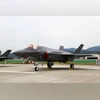 "A US Air Force F-35A stealth fighter jet, manufactured by Lockheed Martin Corp")
Turkey plans to buy 40 F-35 jets, 40 F-16 Vipers, and munitions including bombs and missiles | Image: Bloomberg
Listen to This Article
By Julie Johnsson, Selcan Hacaoglu, Nick Wadhams and Siddharth Philip
Boeing Co and Lockheed Martin Corp are poised to win aircraft orders from Turkey as soon as next week for as many as 250 commercial planes and additional F-16 fighter jets, with possible resolution of a long-running F-35 dispute.
President Donald Trump announced Friday in a social media post that he’ll host Turkish President Recep Tayyip Erdogan in Washington on Sept. 25. The two leaders would meet to discuss the possible sales while also working to resolve a logjam over F-35 stealth fighters that soured ties between the Nato allies.
The meeting is slated to occur after the annual high-level gathering of the United Nations General Assembly in New York.
The Turkish president will be seeking to reach deals spanning defense to energy worth tens of billions of US dollars during the visit, according to Turkish officials familiar with the matter. Turkey plans to buy 40 F-35 jets, 40 F-16 Vipers, and munitions including bombs and missiles, the officials said.
Also Read

 "Donald Trump, Trump")
 "Donald Trump")

 "H-1B Visa")
 "Donald Trump, Trump")
The two sides are still negotiating the price tag for the F-16s, the officials said, speaking on condition of anonymity as the deliberations are private.
“We are working on many Trade and Military Deals with the President, including the large scale purchase of Boeing aircraft, a major F-16 Deal, and a continuation of the F-35 talks, which we expect to conclude positively,” Trump said. “President Erdogan and I have always had a very good relationship.”
Boeing has hammered out the framework for a deal with Turkish Airlines that’s likely to be showcased with a state visit, said people familiar with its plans. The White House visit and upcoming bilateral talks in October are among the possible venues being discussed, said one of the people.
Negotiations are still ongoing for the various aircraft purchases, and the final contours of the deals may change, some of the people warned.
Boeing deferred comments to Turkish Airlines. Yahya Ustun, a Turkish Airlines spokesperson, said, “We have been discussing an order with Boeing for quite some time, but no final decision has been made yet.” A Lockheed representative referred questions to the US government. The Turkish Defense Ministry declined to comment.
Aircraft orders continue to figure prominently in Trump’s campaign to pare the US trade deficit, a phenomenon that has propelled Boeing’s sales this year past those of Airbus SE, its European rival.
Boeing shares have risen 22% this year as of Friday’s close, compared with the S&P 500 Aerospace & Defense index’s 35% advance over the same period. Boeing was unchanged at $215.65 in postmarket trading.
The deal would be the culmination of years of negotiations with Turkish Airlines, which has publicly discussed its aims to almost double its fleet in the next decade and establish Istanbul as a global aviation hub rivaling nearby Dubai.
Turkish Chairman Ahmet Bolat said last year that the nation’s flag-carrier was in discussions with Boeing to order about 250 aircraft — most of them 737 Max jets along with 75 of the 787 Dreamliner widebody model. Airbus landed a deal for 230 jets with Turkish two years ago.
Erdogan has championed a strong national carrier to help put Turkey and its $900 billion economy on the global map. The airline says it flies to the most countries in the world, using its hub in Istanbul as a major transfer airport.
Turkey was an original partner in the program to build Lockheed’s F-35 stealth fighter but was booted from participating after it bought Russia’s advanced S-400 missile defense system. That purchase brought congressional sanctions, known as CAATSA, that targeted the nation’s defense industry.
Turkey acknowledges that Trump may seek concessions to enable the purchase of F-35 jets, Turkish officials said. Ankara could agree to establish a technical military mechanism to supervise the S-400 defense system in a controlled way, though it remains opposed to abandoning them entirely, the officials said.
US officials have repeatedly said any resolution on the F-35 hinges on Turkey giving up the Russian system.
In June, US Ambassador to Turkey Tom Barrack told the Turkish state-run Anadolu news agency that a resolution to the F-35 dispute was possible by the end of the year.
More From This Section
 "Estonia flag")
 "UNGA")
 "KP Sharma Oli, Oli, Nepal PM")
 "Donald Trump, Trump")
Don't miss the most important news and views of the day. Get them on our Telegram channel
First Published: Sep 20 2025 | 8:48 AM IST