


Trump to maintain fentanyl-related tariffs on China, Mexico, Canada
However, the commerce secretary did acknowledge that the tariffs would lead to higher prices for US consumers on foreign-made goods
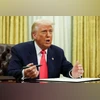 "Donald Trump, Trump")
Lutnick also pushed back on fears that Trump's global tariffs would cause a recession in the United States. | Photo: Reuters
Listen to This Article
US President Donald Trump will not let up pressure on tariffs on Mexico, Canada and China related to their handling of fentanyl, Commerce Secretary Howard Lutnick said on Sunday, despite recent holds put on announced tariff measures.
Trump imposed new 25% tariffs on imports from Mexico and Canada last Tuesday, along with fresh duties on Chinese goods, after he declared the top three US trading partners had failed to do enough to stem the flow of deadly fentanyl and its precursor chemicals into the United States.
Two days later, he exempted many imports from Mexico and some from Canada from those tariffs for a month, the latest twist in a fluctuating trade policy that has whipsawed markets and fanned worries about US inflation and growth.
It was the second time in two months that Trump has walked back announced fentanyl-related tariffs on the US neighbors, but Lutnick said the president was not easing up.
"He's not going to step off the gas," Lutnick said in an interview with NBC's "Meet the Press."
Also Read

 "European Central Bank, ECB")
 "Stock Market, BSE, NSE, Nifty, Capital")
 "Donald Trump, Justin Trudeau")
 "US China flag, US-China flag")
 "Bull, Bull market")
"If fentanyl ends, I think these will come off. But if fentanyl does not end, or he's uncertain about it, he will stay this way until he is comfortable," Lutnick said.
White House officials say Canada and Mexico are conduits for shipments of fentanyl, which is 50 times more potent than heroin, and its precursor chemicals into the US in small packages that are not often inspected.
Public data shows 0.2% of all fentanyl seized in the US
comes from the Canadian border, while the vast majority arrives via Mexico. In a concession to Trump, Canada appointed a new fentanyl czar last month.
The exemptions for the two largest US trading partners expire on April 2, when Trump has threatened to impose a global regime of reciprocal tariffs on all US trading partners.
Kevin Hassett, director of the White House's National Economic Council, said on ABC's "This Week" program he hoped the drug-related tariffs can be resolved by the end of the month so the focus can be on imposing the reciprocal measures.
Trump said he put a hold on tariffs on some goods last week because, "I wanted to help Mexico and Canada," according to an interview with "Sunday Morning Futures" taped on Thursday and broadcast on Sunday.
The three countries are partners in a North American trade pact.
Yet Trump also told the Fox News program that those 25% tariffs "may go up" and he said on Friday that his administration could soon impose reciprocal tariffs on Canadian lumber and other products.
Separately, US tariffs of 25% on imports of steel and aluminum will take effect as scheduled on Wednesday, Lutnick said during the interview. Canada and Mexico are both top exporters of the metals to US markets, with Canada in particular accounting for most aluminum imports.
TRADE CONFUSION
The Trump trade policies have raised fears of trade wars that could slam economic growth and raise prices for Americans still smarting from years of high inflation.
China said it would "resolutely counter" pressure from the United States on the fentanyl issue after Trump imposed tariffs of 20% on all imports from China.
Democratic senators from two border states criticized Trump's tariff policy as inconsistent and irresponsible.
"These broad, indiscriminate and on-again, off-again tariffs don't help anyone. They don't help farmers. They don't help auto workers. They're a mistake," US Senator Adam Schiff of California said on ABC.
"Pounding Canada as if they're the exact same thing as China - it just creates this chaotic feeling," US Senator Elissa Slotkin, of Michigan, said on NBC.
Lutnick acknowledged that the Trump tariffs would lead to higher prices for US consumers on some foreign-made goods.
"Some products that are made foreign might be more expensive, but American products will get cheaper, and that's the point," Lutnick said.
The commerce secretary pushed back on concerns that Trump's global tariffs would cause a recession in the United States.
"Absolutely not," he said. "There's going to be no recession in America."
(Only the headline and picture of this report may have been reworked by the Business Standard staff; the rest of the content is auto-generated from a syndicated feed.)More From This Section
 "White House")
 "US President Donald Trump and Iran's Supreme Leader Ayatollah Ali Khamenei")
 "Donald Trump, Trump")
 "artificial intelligence sleep solutions, AI mattress, AI bed")
 "French President Emmanuel Macron, France, Macron")
Don't miss the most important news and views of the day. Get them on our Telegram channel
First Published: Mar 09 2025 | 7:54 PM IST