


US administration seeks delay in court proceedings in tariff refund fight
The DOJ lawyers wrote that a delay wouldn't hurt companies because "monetary loss is a classic harm that can be remedied by payment of money with appropriate interest"
 "Donald Trump")
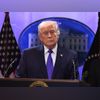
US President Donald Trump. (Photo: YouTube/@WhiteHouse)
Listen to This Article
By Zoe Tillman
The Trump administration is seeking to delay court proceedings over whether it must refund importers billions of dollars in tariffs recently struck down by the US Supreme Court, marking a contentious start to the next phase of the legal fight. The government wants to wait as long as four months before reviving litigation before the US Court of International Trade on the refund question, according to a filing by the Justice Department late Friday. DOJ lawyers criticized attorneys for companies in one of the lead cases for pressing to reopen the legal wrangling as soon as possible.
“Complexity in the future counsels appropriately careful process, not breakneck speed,” the government said.
The Justice Department appeared to acknowledge that there will be a refund process after its loss in the Supreme Court, warning that “the coming process will take time” and noting the example of an earlier mass refund situation that took years to play out.
But the government’s filing didn’t offer a full-throated assurance that the administration would commit to refunding all importers the full amount of tariffs they paid.
Also Read

 "US Israel strike Iran")
 "oil pipeline")
 "airplane, airport")
 "Iran-Israel, Iran Israel flag")
 "Iran's former Crown Prince Reza Pahlavi")
The DOJ lawyers wrote that a delay wouldn’t hurt companies because “monetary loss is a classic harm that can be remedied by payment of money with appropriate interest.”
Last year, the government successfully argued for judges to allow the administration to continue collecting tariffs while the legal fight was pending, at one point telling the trade court that the plaintiffs “will assuredly receive payment on their refund with interest” if they won.
Importers had paid approximately $170 billion in the contested duties by the time the justices ruled, according to Bloomberg Economics analysis.
Sara Albrecht, chairperson of Liberty Justice Center, which has represented companies in the case before the Supreme Court, said in a statement that “the government cannot have it both ways.”
“It cannot argue there is no harm because refunds are available — and then delay when the time comes to return the money,” she said. “American businesses paid money the government had no authority to collect. That money does not belong to Washington. It belongs to the American people who earned it.”
The Supreme Court’s 6-3 decision on Feb. 20 was silent on the refund question, meaning it will go back to the New York-based trade court to resolve. But that next phase is in limbo until the Supreme Court and US Court of Appeals for the Federal Circuit formally close out their proceedings, which hasn’t happened yet.
Over the past week, lawyers for companies seeking refunds have asked the Federal Circuit to swiftly take steps to finish its phase of the case and urged the trade court to move quickly to establish a schedule for the next round.
The Justice Department, by contrast, wants the Federal Circuit to wait until the Supreme Court finalizes its judgment, which can take up to 32 days. After that happens, the government is then arguing for another 90-day delay, saying that it would “allow the political branches an opportunity to consider options.”
The administration accused the companies of pushing for a speedy schedule out of an “apparent desire to be the center of attention” in the future proceedings before the trade court.
The latest filing also referred to Trump’s move to impose new global tariffs under a different legal authority after the Supreme Court ruled, citing the fact that the levies declared unlawful by the Supreme Court “have been replaced by vigorous new tariffs.”
The government didn’t elaborate on the relationship between the new duties and the question of whether businesses should be refunded for money they already paid.
Trump signaled the administration might contest refunds shortly after the Supreme Court announced its decision, telling reporters “I guess it has to get litigated.” In a social media post on Friday, he appeared to refer to potential refunds as an “undeserved ‘windfall’” and asked, “Is a Rehearing or Readjudication of this case possible???”
More than 2,000 tariff lawsuits have been filed so far, nearly all of which were lodged in the trade court after the Supreme Court heard arguments in November. The trade court paused all of the cases until the Supreme Court ruled.
Only importers are eligible to seek refunds directly from customs authorities, but consumers recently joined the fray as well, filing a handful of proposed class actions this week to recoup the higher prices they paid as businesses passed on the cost of the levies.
More From This Section
 "Anthropic")
 "Russia Ukraine flag, Russia-Ukraine flag")
 "Israeli military on the Israeli side of the border with Gaza, on Wednesday")
 "US flag, US, united states")
 "Bahrain, Bahrain flag")
Topics : Donald Trump United States Trump tariffs
Don't miss the most important news and views of the day. Get them on our Telegram channel
First Published: Feb 28 2026 | 5:38 PM IST