


Trump's tariff shock: 10 takeaways on trade impact, exemptions, retaliation
US imposes sweeping import tariffs; China faces 54%, India 26%, EU 20%; exemptions for Canada, Mexico; markets brace for impact as global trade tensions escalate
 "Donald Trump")
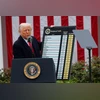
US President Donald Trump delivers remarks on tariffs in the Rose Garden at the White House in Washington, DC, April 2, 2025. (Photo: Reuters)
Listen to This Article
US President Donald Trump announced a broad set of reciprocal tariffs targeting the nation’s trading partners. Branded as ‘Liberation Day’, the announcement applied to more than 180 countries without any exemptions. In addition to country-specific tariffs, Trump introduced a 10 per cent baseline tariff on all imports.
The US economy and global markets are bracing for potential disruptions. The new policy aims to counterbalance trade barriers imposed by other nations. Here are the main takeaways:
1. The proposed tariffs mark a significant shift in US trade policy, potentially impacting global markets and trade dynamics.
2. Tariff hikes across key economies: China will face a total tariff of 54 per cent, with an additional 34 per cent on top of the existing 20 per cent. The European Union will be subjected to a 20 per cent tariff, while India will see a 26 per cent tariff rate.
3. Implementation timeline: A 10 per cent minimum tariff on all imported goods entering the US will be introduced starting April 5. The rates will rise further on April 9.

 "Market, Stock market, NSE, National Stock Exchange")
 "Deepak Shenoy, CEO and Founder, Capitalmind")
 "Farmer, Agriculture")
 "Money, Loan, Economy, Capital, Rs, Rupee, Indian Currency")
 "Donald Trump, Trump")
4. Calculation basis: The rates are determined based on the Trump administration’s assessment of tariff and non-tariff barriers — such as value-added taxes (VAT) — that foreign nations impose on US products.
5. Exemptions for North America: Canada and Mexico will not be affected by this executive order, maintaining their existing trade terms with the US.
6. Sectoral exclusions: Certain goods, including automobiles, steel, aluminium, copper, pharmaceuticals, semiconductors, and lumber, will not fall under the reciprocal tariffs if they are already covered or set to be covered under Section 232 national security tariffs.
7. Rising effective tariff rate: If fully implemented, the average US tariff rate could increase to approximately 25 per cent, compared to just 2.3 per cent when Trump first assumed office.
8. Economic impact projection: According to JP Morgan, tariffs on $3.3 trillion worth of US goods imports could equate to a $660 billion increase in costs, roughly 2.2 per cent of the country’s GDP.
9. Potential retaliation: Key trading partners, including China and the European Union, may respond with countermeasures. Trump has indicated that specific negotiations could lead to adjustments in country-specific tariffs.
10. Challenges in reversal: Since many of these reciprocal tariffs are linked to non-tariff trade barriers, such as regulatory policies, simple tariff reductions by other nations may not be enough to reverse the impact.
More From This Section
 "Crime, Prison, Law, Arrest, Punishment, Prisoner")
 "tiktok")
 "Red Sea, US airstrike, airstrike, Houthis, Yemen")
 "Benjamin Netanyahu, Benjamin, Netanyahu, Israel PM")
 "Meta")
Don't miss the most important news and views of the day. Get them on our Telegram channel
First Published: Apr 03 2025 | 9:45 AM IST