


Venezuela mobilises troops, militia amid US military buildup in Caribbean
President Nicolás Maduro positioned forces along the Caribbean coast and called up civilian militias as tensions rise over Washington's escalating operations in the region
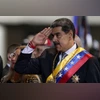 "Nicolas Maduro, Venezuelan President")
While Maduro calls for mobilisation, some Venezuelans hope that the US presence and growing international pressure could lead to a change in leadership (Photo: PTI)


Listen to This Article
Venezuela is deploying troops along the Caribbean coast and mobilising what President Nicolás Maduro claims is a militia numbering in the millions. The move signals defiance against the largest US military presence in the Caribbean since the 1980s, according to a Wall Street Journal report.
State media has amplified Maduro’s message, portraying the US as a rapacious, Nazi-like power seeking control of Venezuela’s oil resources. Announcers on television, radio, and social media platforms have emphasised that the National Bolivarian Armed Forces are prepared to repel any invasion, WSJ reports.
Militia and armed forces on display
Footage shows Venezuelan militia members of varying ages navigating obstacle courses, firing rifles, and performing training exercises. The country’s regular armed forces, numbering around 125,000 on paper, were seen marching in formation, moving munitions, and mounting Russian-made jet fighters.
“The people are ready for combat, ready for battle,” Maduro had told supporters earlier this month. The president has also encouraged recruitment from indigenous communities and called on civilian militias to prepare for possible confrontations with American forces.
Also Read

 "Donald Trump, Trump")
 "Venezuelan embassy in Norway")
 "United Nations Security Council")

 "Donald Trump, Trump")
US military operations and advancement
The US has positioned advanced weaponry in the Caribbean and skies north of Venezuela, including eight Navy warships, an attack submarine, F-35B fighter jets, P-8 Poseidon surveillance aircraft, and MQ-9 Reaper drones. Elite US special operations forces, including the Army’s 160th Special Operations Aviation Regiment, are part of the deployment, conducting training missions within 90 miles of Venezuela.
B-52 bombers have flown near La Orchila island, where Venezuelan forces recently held drills involving jets, amphibious vehicles, and warships.
On Thursday, President Donald Trump said he had authorised the CIA to take secret action in Venezuela to stop drug smuggling and illegal immigration, blaming Maduro’s regime for releasing prisoners and sending drugs into the US.
The Pentagon has also carried out at least five strikes on vessels allegedly transporting drugs to the US, killing 27 people in operations described by some American lawmakers as extrajudicial killings.
Venezuela’s economic woes
Despite Maduro’s show of force, Venezuela remains highly vulnerable. The International Monetary Fund (IMF) projects a 3 per cent contraction in 2026, with inflation hitting 682 per cent. Military experts say experienced officers were purged to ensure loyalty, leaving ordinary soldiers underfed and poorly trained. The country’s military is largely structured for domestic repression rather than conventional defence.
Former officers in exile argue that much of the mobilisation is a propaganda effort designed to deter US action and buy time. “They know it’s a lost cause but are trying to frighten American troops a little,” Edward Rodriguez, a former colonel, told WSJ.
Venezuelans hopeful of a change in leadership
While Maduro calls for mobilisation, some Venezuelans hope that the US presence and growing international pressure could lead to a change in leadership.
This sentiment also comes as Maria Corina Machado, the Venezuelan opposition leader, recently won the Nobel Peace Prize for her tireless efforts to promote democracy, human rights, and social welfare in the country. Machado has long campaigned for political reforms and the protection of Venezuelans’ freedoms, gaining recognition internationally for her work in advocating for a peaceful and democratic transition.
More From This Section
 "People attend a vigil in memory of Mauricio Ruiz, a 32-year-old man who was killed during Wednesday's protest against Peru's President Jose Jeri, days after Jeri took office, in Lima, Peru, October 16, 2025. | Photo Credit: Reuters")
 "Mahmoud Khalil")
 "Lin Jian")
 "The probe into John Bolton surfaced in August after the FBI searched his Maryland home and Washington office for classified records from his government tenure")
 "European Central Bank, ECB")
Topics : Donald Trump Venezuela Venezuela economy Donald Trump administration President Nicholás Maduro Nicolas Maduro
Don't miss the most important news and views of the day. Get them on our Telegram channel
First Published: Oct 17 2025 | 9:05 AM IST