


Wall Street bank chiefs hold most power since the 2008 global crisis
With Citigroup CEO Fraser adding title of chair this week, it's first time during modern US financial landscape that CEOs of all biggest banks also sit atop their boards
 "Wall Street")
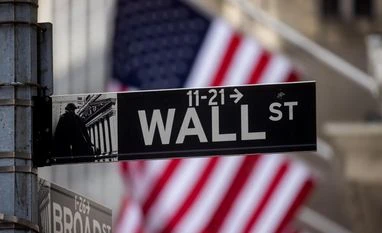
The consolidation of power comes as bank profits climb on the back of higher interest rates and active trading markets, lifting the shares of all six lenders by more than 20 per cent in the past year. Photo: Bloomberg


Listen to This Article
By Todd Gillespie and Katherine Doherty
The last time every major US bank boss also led their boards, Steve Jobs was launching the first iPhone and Bear Stearns had a market value of some $20 billion.
With Citigroup Inc. Chief Executive Officer Jane Fraser adding the title of chair this week, it’s the first time during the modern US financial landscape that the CEOs of all the biggest banks also sit atop their boards. It was last in 2007 that Citigroup had the same person as both CEO and chair — back when Bear Stearns, Lehman Brothers, Merrill Lynch and Washington Mutual were all big names in banking, before the global financial crisis reshaped the industry.
Three months ago, Charlie Scharf was similarly elevated to run the board at Wells Fargo & Co., joining JPMorgan Chase & Co.’s Jamie Dimon, Goldman Sachs Group Inc.’s David Solomon, Bank of America Corp.’s Brian Moynihan and Morgan Stanley’s Ted Pick, who was given the chairman title in January.
The consolidation of power comes as bank profits climb on the back of higher interest rates and active trading markets, lifting the shares of all six lenders by more than 20 per cent in the past year. Citigroup’s stock has climbed the most, with a 53 per cent increase.
Also Read

 "Charles Scharf, Brian Moynihan, Jamie Dimon and Jane Fraser")
 "Beyond Meat")
 "Wall Street")
 "Asian stcks, asian shares, share market")
 "Stock Market LIVE, October 17, 2025")
It’s a level of comfort not everyone is enthused by, particularly as regulators ease standards and banking chiefs reap hefty pay packages that come with stocks riding high. Fraser, in being made Citigroup’s chair, was handed a special bonus worth tens of millions of dollars, encouraging her to stay at the bank — similar to the $30 million award of restricted stock Scharf received in July when he took over leadership of Wells Fargo’s board.
“Kings with names followed by ‘the great’ tend to be kings during times of economic prosperity,” said Mike Mayo, a Wells Fargo analyst who criticized Fraser’s special payout as too much too soon. “The phrase ‘don’t confuse brains with a bull market’ comes to mind.”
The six bank chiefs — who were paid a combined $212.7 million last year — have a collective tenure of more than half a century as CEO. Some, like Fraser, 58, and Scharf, 60, are pushing through arduous turnaround plans for their firms. All six chiefs have signaled they’re comfortable remaining in their jobs for years to come.
Earlier this year, Solomon, 63, and his likely successor, John Waldron, received retention bonuses of $80 million each. The longest-serving CEO among the group — Dimon, 69 — suggested in May that he may still have years of energy left in the tank. Pick, 56, was made CEO just last year, and Moynihan, 66, hasn’t given any hint he’ll budge soon, even after 15 years in the top job.
A couple years ago, things didn’t feel quite as settled. Morgan Stanley was in the midst of picking one of three candidates to succeed James Gorman. Solomon was facing turmoil among his top ranks amid strategy disagreements and pay declines. And Scharf and Fraser both faced questions over whether they could escape regulatory scrutiny that weighed on their share prices.
Now, at perhaps the stablest moment for US bank chiefs in recent history, investors have few reasons to complain: the six biggest US banks boosted their stock buybacks by about 75 per cent in the third quarter to more than $27 billion, making existing shareholders’ stakes more valuable.
Although fewer large banks now exist and each wields proportionately more power, Wall Street is also a very different place for lenders compared with two decades ago, when looser rules allowed gung-ho risk-taking and private credit was considered niche. That means that boards are under more pressure to lock in talent to fight off generous pay packets from higher-paying private equity firms.
“It’s not always easy to find a good leader,” said Jason Goldberg, a Barclays Plc analyst who’s covered the sector since 1995. “So when you do find a good one, it behooves the board of directors to make sure they stay in place.”
More From This Section
 "Marco Rubio")
 "Reliance Industries, retail, CPI Inflation")
 "tiktok")
 "Booker prize foundation")
 "European Union, EU")
Topics : Wall Streets Banks US banks
Don't miss the most important news and views of the day. Get them on our Telegram channel
First Published: Oct 24 2025 | 7:22 PM IST