Market players see short-term bounce after FM Sitharaman's measures

Stocks of firms in the automobile, banking, and real estate sectors, and those of non-banking financial companies (NBFCs) are likely to remain under focus
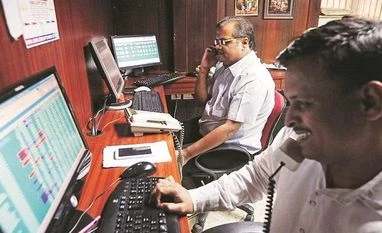
Markets set for boost after Sitharaman’s measures, but will need more fuel
Sundar SethuramanSamie Modak Mumbai
4 min read Last Updated : Aug 26 2019 | 2:54 AM IST
The measures announced by Finance Minister Nirmala Sitharaman on Friday and the promise of more will be a shot in the arm for the bulls, who have been subdued for nearly two months. Experts have given the thumbs up to the government for taking steps to restore confidence among investors and businesses. However, they say more will be needed. 

While the markets are set for an immediate surge, a prolonged upward climb is ruled out, given the precarious US-China trade situation and economic slowdown, both globally as well as domestically.


Stocks of firms in the automobile, banking, and real estate sectors, and those of non-banking financial companies (NBFCs) are likely to remain under focus. 

Meanwhile, the withdrawal of the higher tax surcharge on foreign portfolio investors (FPIs) may pause selling. However, they could go slow with their investment, given the global risks. 


“These measures and the expectations of more over the next couple of weeks will likely improve investor sentiment and should drive at least a short-term bounce, because the government has given a clear signal that it acknowledges an economic slowdown and is willing to act promptly to address the issues,” wrote Mahesh Nandurkar, India Strategist, CLSA, in a note tiled ‘Government Says ‘We Care’’.

Some key decisions included reversing the higher tax surcharge on equity capital gains for domestic investors as well as foreign portfolio investors, Rs 70,000 crore upfront bank recapitalisation, steps to boost liquidity for NBFCs and other businesses, support measures for the auto sector and a push for stuck projects. 

Further, Sitharaman has promised two more sets of announcements in the days ahead.

“The big positive is that the government has listened and taken action. Depending on what other measures are announced, sentiment will be further bolstered,” said Andrew Holland, chief executive officer (CEO), Avendus Capital Public Markets Alternate Strategies.


The Sensex is down 8 per cent since July 5, the day of the Union Budget. The broader market has declined more with the BSE SmallCap index dropping 15 per cent and BSE MidCap index falling nearly 12 per cent. Stocks in the metal, infrastructure, capital goods, automobile, and financial sectors have been hit the hardest amid a $3 billion sell-off by FPIs.

Rajat Rajgarhia, CEO, Motilal Oswal Institutional Equities, said the measures were just the beginning and more would be needed to revive growth.

“The announcements are beneficial for sectors that are domestically linked. The ones that come to mind would be auto, financials, and real estate. While more needs to be done, this is a good beginning,” he said. While investors are hoping for a big stimulus, economists say given the fiscal concerns, there may not be much room for that.

In a note, Nomura has said the government has tried to tackle growth headwinds without rocking the fiscal boat.


“In a bid to revive growth, the government announced a long list of sector-specific incentives and reforms, but steered clear of any short-term fiscal stimulus. While the government has reaffirmed its confidence of meeting its fiscal deficit target for 2019-20, we remain concerned due to the slip on revenues in a weak growth environment,” wrote Sonal Varma, chief economist for India at Nomura. 

Shankar Sharma, vice-chairman and joint managing director, First Global, too, expects the market to rebound, though more on account of technical factors.


“We should definitely see a bounce. The Indian markets have become oversold and was anyway due for a bear market bounce. FPIs are unlikely to come back in a big way. The real reason for the market crash is sharply deteriorating fundamentals of the Indian economy. The FPI surcharge is a red herring,” he said.

One subscription. Two world-class reads.

Already subscribed? Log in

Subscribe to read the full story →
*Subscribe to Business Standard digital and get complimentary access to The New York Times

Smart Quarterly

₹900

3 Months

₹300/Month

SAVE 25%

Smart Essential

₹2,700

1 Year

₹225/Month

SAVE 46%
*Complimentary New York Times access for the 2nd year will be given after 12 months

Super Saver

₹3,900

2 Years

₹162/Month

Subscribe

Renews automatically, cancel anytime

Here’s what’s included in our digital subscription plans

Exclusive premium stories online

  • Over 30 premium stories daily, handpicked by our editors

Complimentary Access to The New York Times

  • News, Games, Cooking, Audio, Wirecutter & The Athletic

Business Standard Epaper

  • Digital replica of our daily newspaper — with options to read, save, and share

Curated Newsletters

  • Insights on markets, finance, politics, tech, and more delivered to your inbox

Market Analysis & Investment Insights

  • In-depth market analysis & insights with access to The Smart Investor

Archives

  • Repository of articles and publications dating back to 1997

Ad-free Reading

  • Uninterrupted reading experience with no advertisements

Seamless Access Across All Devices

  • Access Business Standard across devices — mobile, tablet, or PC, via web or app

Topics :Nirmala SitharamanMarket newsNBFCsInvestors

Next Story



