


Mahindra yet to make SsangYong click 10 years after acquiring Korean firm
A decade after Mahindra & Mahindra acquired the South Korean motor company, the automaker is struggling and its Indian parent's three-year plan to pull it out of crisis looks challenging
 "Mahindra")
premium
At the time of the acquisition, Mahindra executives had said the buyout would make SsangYong a competitive global UV player and that the Korean firm will benefit from the Indian conglomerate’s financial capability
The past decade has been a roller-coaster ride for auto companies across the world, including India. Top decision makers at these firms have confronted disruptions and rapid changes in buying behaviour with regular frequency. Nobody can vouch for this better than Pawan Goenka, managing director at Mahindra and Mahindra.
When Goenka signed on the dotted lines in 2010 to acquire the troubled, bankruptcy-protected SsangYong Motor Company, little did he realise that like the previous two owners — Daewoo Motor and SAIC — Mahindra too would have its share of struggles in running the smallest of the Korean automakers.
At the time of the acquisition, Mahindra executives had said the buyout would make SsangYong a competitive global UV player and that the Korean firm will benefit from the Indian conglomerate’s financial capability, its competence in sourcing and marketing strategy. In turn, Mahindra would benefit from Ssangyong’s technological capabilities.
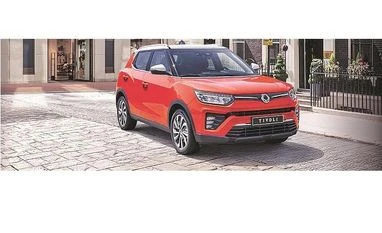
Nine years after Mahindra completed the acquisition in March 2011, none of these objectives have been met. Mahindra paid Rs 2,100 crore ($463 million) for the purchase. But each year in the past decade has been tough for the maker of Rexton and Tivoli brands. The first two months of 2020 have been particularly tough with the outbreak of coronavirus knocking off sales in South Korea to the lowest in 11 years in February.
Clearly, the underperformance has spooked investors. Its share prices have dropped to 1,980 Korean won (as of February 2020) from 9,180 Korean won at the end of the trading season on March 31, 2011.
With a market share of less than 5 per cent, SsangYong is nowhere close to becoming a global SUV player — neither in scale nor in geographical presence. Sample this: On an average SsangYong sells 137,000 units (including exports) a year, averaging 11,416 units per month. Its Korean rival, Kia Motors sold 1.4 million units in 2019, averaging 121,142 units a month. Drill it further and this is what you get: Kia sells a little more than SsangYong’s monthly sales in just about four days!
A steep contraction in export volumes, sudden changes in buyer preference for gasoline vehicles in Korea, among other factors, caught the company unawares and plunged Mahindra’s Korean subsidiary into record losses of Rs 704 crore in calendar year 2019.
It also forced the maker of Scorpio and XUV5OO to take an impairment charge of Rs 600 crore in the December quarter.
Last month, Goenka had told reporters that the Mahindra-SsangYong board has put in place a three-year plan to pull the company out of the crisis. “Mahindra will pump in 450-500 billion Korean won ($380 million-$425 million) to revive the company, funded through a mix of debt and equity. The company is also open to strategic divestment,” he had said.
When Goenka signed on the dotted lines in 2010 to acquire the troubled, bankruptcy-protected SsangYong Motor Company, little did he realise that like the previous two owners — Daewoo Motor and SAIC — Mahindra too would have its share of struggles in running the smallest of the Korean automakers.
At the time of the acquisition, Mahindra executives had said the buyout would make SsangYong a competitive global UV player and that the Korean firm will benefit from the Indian conglomerate’s financial capability, its competence in sourcing and marketing strategy. In turn, Mahindra would benefit from Ssangyong’s technological capabilities.
Nine years after Mahindra completed the acquisition in March 2011, none of these objectives have been met. Mahindra paid Rs 2,100 crore ($463 million) for the purchase. But each year in the past decade has been tough for the maker of Rexton and Tivoli brands. The first two months of 2020 have been particularly tough with the outbreak of coronavirus knocking off sales in South Korea to the lowest in 11 years in February.
Clearly, the underperformance has spooked investors. Its share prices have dropped to 1,980 Korean won (as of February 2020) from 9,180 Korean won at the end of the trading season on March 31, 2011.
With a market share of less than 5 per cent, SsangYong is nowhere close to becoming a global SUV player — neither in scale nor in geographical presence. Sample this: On an average SsangYong sells 137,000 units (including exports) a year, averaging 11,416 units per month. Its Korean rival, Kia Motors sold 1.4 million units in 2019, averaging 121,142 units a month. Drill it further and this is what you get: Kia sells a little more than SsangYong’s monthly sales in just about four days!
A steep contraction in export volumes, sudden changes in buyer preference for gasoline vehicles in Korea, among other factors, caught the company unawares and plunged Mahindra’s Korean subsidiary into record losses of Rs 704 crore in calendar year 2019.
It also forced the maker of Scorpio and XUV5OO to take an impairment charge of Rs 600 crore in the December quarter.
Last month, Goenka had told reporters that the Mahindra-SsangYong board has put in place a three-year plan to pull the company out of the crisis. “Mahindra will pump in 450-500 billion Korean won ($380 million-$425 million) to revive the company, funded through a mix of debt and equity. The company is also open to strategic divestment,” he had said.
Topics : Mahindra and Mahindra SsangYong