


BJP's obstinate critic
Book review of Relentless: An Autobiography
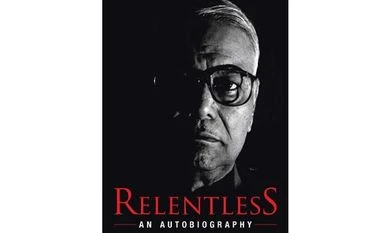 "Cover of Relentless: An Autobiography. Credits: Amazon.in")
premium
Cover of Relentless: An Autobiography. Credits: Amazon.in
5 min read Last Updated : Jul 23 2019 | 1:31 AM IST
The somewhat mystifying title of this autobiography is taken from its last word: Relentless. That is how, says Mr Sinha, he is going to continue his pursuit of the national interest.
Obstinate and stubborn might have done just as well because that’s how the author’s persona emerges from this long — but never tedious — book. I read it in a single sitting of five hours last Friday.
At no point do you get the feeling that he is prevaricating. It is what the blurb writers call an “honest” account. And if Mr Sinha can be accused of something at all, it is of sacrificing depth for width and, possibly, some omissions.
There is, for example, no reference to his elder son Jayant’s all-too-brief political career. Jayant Sinha was a minister in the first Modi government and incurred his father’s wrath over what was, at best, poor judgement on his part.
His resignation from the BJP also gets short shrift and he mentions Narendra Modi just once — when he came to canvass for Jayant in 2014.
His publishers, too, have been guilty of an omission. There is no index, which, in a book of this size and nature, is an unnecessary irritation. Mr Sinha should have insisted on one.
Mr Sinha is the ninth amongst 11 siblings. He doesn’t know exactly when he was born but November 1937 is the official date. He says he might be a little older. He also says but for his brother who chose the surname Sinha, he might have been Yashwant Saran. He went to school, and then to Patna college where he fell in love with a Bengali girl. When he asked her to marry him, she said no. “I am Bengali, you are Bihari.”
Narrow escape
In 1958, he almost joined the army but was dissuaded by his mother who thought a career in the “paltan” to be too dangerous. Had he joined — and if been lucky — he would almost certainly have seen action in 1962, 1965 and 1971.
The Indian Administrative Service, which he joined in 1960, has always been a much safer option with nothing more lethal than corrupt politicians as the enemy. From then until 1984, when he quit the service, life went on as it does for bureaucrats — one posting after another.
But from 1984 onwards the book moves from being merely interesting to fairly riveting. One day he had a Nike-type “just do it” moment. He says he sought voluntary retirement from the IAS on an impulse. Even Mrs Sinha didn’t know. She was incensed. It took him several months to extricate himself from the maws of the government. When he finally did, he met Chandra Shekhar, who was then heading the Janata Party.
Unlike his college love, Chandra Shekhar didn’t spurn him. And it turned out to be a marriage made in heaven. They brought each other luck.
In 1991 when either a sling or an arrow of “outrageous fortune” propelled Chandra Shekhar into the prime minister’s seat, Mr Sinha became finance minister for all of six months. As is common knowledge now, those six months were the most momentous in independent India’s history.
Mr Sinha had to steer the economy out of its direst moments to date. He says Rajiv Gandhi, on whom the Chandra Shekhar government was dependent, prevented him from presenting a regular Budget.
Annoyed and disappointed he resigned but Chandra Shekhar tore up the resignation letter. A few weeks later, India mortgaged its gold to the Bank of England and Bank of Japan for a small loan. It was humiliating moment, he says.
Sleeping with saffron
In 1993, a few months after the Babri Masjid was demolished with the approval of the BJP, Mr Sinha joined it. Earlier he had been approached by then Prime Minister P V Narsimha Rao to join the Congress.
The other alternative was to stay on with Chandra Shekhar whose party was thinking of merging Janata Party. But that meant kowtowing to a fellow Bihari, Lalu Prasad Yadav.
So the BJP it was and it turned out to be a good decision, personally for Mr Sinha. He became the finance minister in 1998 and the external affairs minister in 2002.
The latter was seen as a demotion at the time. Mr Sinha says he “incurred the wrath of powerful people” when he imposed a tax on dividends. They eventually forced Atal Bihari Vajpayee to move him out of the finance ministry.
There are scores of stories that Mr Sinha tells but none so juicy as the one about Manmohan Singh. In 1993, when the Joint Parliamentary Committee was investigating the Harshad Mehta scam, Dr Singh told the committee that he hadn’t appointed N J Pherwani but his predecessor had.
Mr Sinha called for the files and, he records with justifiable glee, it was Manmohan Singh who had!
Relentless: An
Autobiography
Yashwant Sinha
Bloomsbury, Rs 800, 530 pages
Topics : Yashwant Sinha BJP BOOK REVIEW