


Not woke enough
My heart bleeds when I see that a well-intentioned story is botched up for monetary reasons
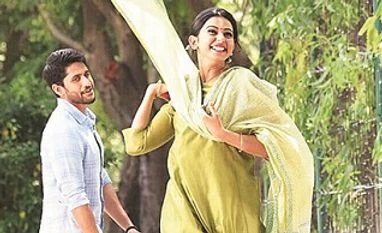 "A still from Rarandoi Veduka Chuddam")
premium
A still from Rarandoi Veduka Chuddam
Last Updated : Jun 09 2017 | 11:56 PM IST
Urbandictionary.com describes ‘woke’ as “being aware of the social and political environments regarding all demographics and socio-economic standings”. I felt like explaining this latest entrant in liberal lingo to Kalyan Krishna, director of the Telugu movie Rarandoi Veduka Chuddam.
The movie’s about Brahmarambha (played with scintillating ease by Rakul Preet Singh), a village belle who moves to Visakhapatnam for higher studies and meets Siva (a functional-but-adorable Naga Chaitanya). They hang out all the time but she makes it clear that she just wants to be friends and the smitten hero is fine with that, even though he inherently believes the friendship can be converted into a romantic dalliance.
The movie’s interval scene is about him confronting her that she basically ‘friendzoned’ him. For someone like me who is habituated to sunk cost fallacy involved in buying ticket to a Telugu movie, this was radical: a heroine of a Telugu movie tells the protagonist that there won’t be any romance involved, ever. Sadly, soon enough she starts pining for his company and ‘realises’ she’s fallen for him from the core of her being.
I knew from a mile’s distance that this is exactly what will happen in the latter proceedings, which are enormously dull and cliché-ridden, what with a sucky flashback and mindless fights ensuing. Nearly two decades ago, Karan Johar told us explicitly through Kuch Kuch Hota Hai that a girl and a guy can “never be friends”. In a country where pop culture is purely cinema, this line stuck to the frontal lobe of each easy-to-impress person in the country. Indian cinema still milks it to the hilt.
That’s why I found it a bit rich when in Johar’s latest movie, Ae Dil Hai Mushkil, Anushka Shar-ma’s character tells Ranbir Kapoor’s Ayan that “pyar mein junoon hai par dosti mein sukoon hai”.
By the way, KKHH also perpetuated the hideous dating philosophy that girls are better off being ‘feminised’ to find themselves desirable. I know, I’m digressing. In her wonderfully argued Vice article on the subject matter, Christine Estima recently wrote, “By using ‘the friend zone,’ men are telling women that we owe them something. It tells us we don’t have autonomy over our own lives, and that that should be decided for us. We owe them sex or a romantic relationship because we should be grateful that a dude — any dude — is being nice to us. Even though being nice is literally the bare minimum. You don’t get a cookie for passing the lowest possible bar of humanity.”
A still from Rarandoi Veduka Chuddam
Kalyan Krishna, bogged down by the pressure of making a movie under the watchful eye of his producer Nagarjuna (who also happens to be Chaitanya’s father), clearly didn’t know that a persistent man like his protagonist is a strict no in a civil world. The Vice article with an unprintable headline further says, “Often, the love-stricken friend in this non-existent ‘zone’ launches into a volley of romantic gestures: he sends you little hello texts every morning, he comes to all your house parties, he likes everything you post on Facebook and he tells all his friends about you. Sweet. Charming. Harmless. Because he just ‘knows’ you’re meant to be together, and if society has taught men anything, it’s that persistence pays off!”
Now I don’t expect much nuance from mainstream Indian cinema because of the big bucks involved but my heart bleeds when I see that a well-intentioned story is botched up for monetary reasons. Bhaskar’s Orange was one such movie, which says throughout its duration that no one can be in love with just one person for the rest of their lives, but goes kaput by the time end credits roll.
There have been a few exceptions though. A Karunakaran’s Tholi Prema, which catapulted Pawan Kalyan into the cosmos of stardom, is a beautiful take on platonic friendship between a girl and a boy. Shakun Batra’s Ek Main Aur Ekk Tu is another lovely example. But, obviously, exceptions don’t make rules.
The only ‘woke’ artists in this country seem to be the standup comedians who riff on everything from Tinder dates to Netflix and chill. High time Indian film-makers took a leaf out of these vibrant books and make an attempt to have at least one foot ahead of the curve.
jagannath.jamma@bsmail.in