


Big Billion Days: Flipkart witnesses over 1 billion customer visits
The e-commerce firm also said TBBD 2022 marked more than 100 per cent increase in crorepati sellers on the marketplace since the last edition
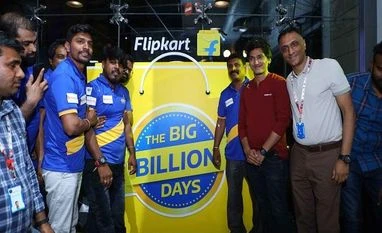 "flipkart, e-commerce")
premium
More than 60 per cent of customers during TBBD came from Tier-2 and -3 cities demonstrating a strong adoption of e-commerce across the country.
6 min read Last Updated : Sep 30 2022 | 11:33 PM IST


E-commerce firm Flipkart’s said it achieved a significant milestone of over 1 billion customer visits on its platform during the e-commerce firm’s 8-day long festive sale event The Big Billion Days (TBBD). Last year’s event witnessed over 700 million such customer visits, according to the sources. They said Flipkart already has a registered customer base of over 400 million.
“Here same customers visited the Flipkart platform multiple times to shop or browse products during the TBBD event, which equalled 1 billion visits compared to over 700 million such visits during the last year’s BBD,” said a company insider, who didn’t wish to be quoted.
Flipkart declined to reveal the number of customers who actually transacted or bought products from the platform during TBBD.
Flipkart conducted the ninth edition of its flagship event, TBBD between September 23-30. It is competing with players such as Amazon, Reliance's JioMart, Tata Group and SoftBank-funded Meesho, which are also running parallel sale events. They are eyeing a share of the $45-50 billion e-commerce market, which is expected to grow to $350 billion by 2030.
More than 60 per cent of customers during TBBD came from Tier-2 and -3 cities demonstrating a strong adoption of e-commerce across the country. Flipkart said it served millions of customers in the remotest parts of the country. These include places such as Khonsa in Arunachal Pradesh, and Port Blair, Medinipur, Bankura, Puri and Bhagalpur being among the top 10 Tier-3 cities from where Flipkart’s customers shopped the most.
“This TBBD has already fostered immense growth opportunities for our sellers, brands, transport and Kirana delivery partners,” said Manjari Singhal, Senior Director – Customer, Growth, and Events, Flipkart. “In its ninth year now, TBBD has evolved into an experience that nationwide customers and sellers look forward to.”
For the first four days (September 22–September 25) of the festive week, e-commerce retailers--led by Flipkart, Amazon and others clocked sales of $3.5 billion (Rs 24,500 crore), according to a report by consulting firm Redseer. These firms were on track to register sales worth $5.9 billion (Rs 41,000 crore), a 28 per cent increase over last year ($4.8 billion) during the first festive week.
The first four days of festive sales saw the overall daily average gross merchandise value (GMV) rise to 5.4x compared to business-as-usual days for online retail sales. An estimated 50-55 million shoppers made purchases during the first four days itself.
Overall, these e-commerce firm are expected to garner sales worth $11.8 billion this festive season. This is comfortably more than double the pre-pandemic figure of $5 billion in 2019.
Analysts said the average ticket size of purchases for e-commerce firms during the first week is estimated to remain similar to last year. While the ticket size (per person) is expected to be around Rs 5,400 in the first half of the festive week of 2022, it was in the range of Rs 5,000-5,200 during 2021 and 2020.
More than 50 per cent of Flipkart’s transacting sellers saw a 1.5x increase in their business. Flipkart said TBBD 2022 marked more than 100 per cent increase in crorepati sellers on the marketplace since the last edition. “The number of sellers who became crorepati during this year’s TBBD has doubled compared to last years’ event,” said a person.
However, the company declined to reveal the number of sellers who became crorepatis compared to the last year’s TBBD.
During the event, customers upgraded themselves with categories like mobiles and electronics, and large appliances, which witnessed a growth of over 70 per cent and 30 per cent each, respectively.
Fashion and lifestyle continued to be a big attraction in Tier-2 and -3 cities. Suitcases, running shoes, men’s jeans and footwear were some of the top-selling products, drawing in 45 per cent more customers over last year. The segment saw 3 sarees and 2 kurtis being sold every second. As many as 250 shoes, 200 kids' clothing and fashion wear and 7 t-shirts and 4 bottom wear (jeans and trousers) were sold every minute.
Electronic devices, including laptops, true wireless audio devices and smartwatches, saw over 20 per cent growth, with the student community driving the majority of the demand.
Beauty and general merchandise categories saw a 30 per cent jump, with diapers, wipes, moisturizers, toothpaste, pressure cookers, gas stoves and double bed sheets, being the most bought products. Close to 25 per cent of users who browsed for Makeup products, used the Virtual Try-On feature.
Grocery witnessed a 2.3x increase in new customers using the platform; the number of cities shopping for groceries more than doubled to almost 1,700 this TBBD. Nearly 70 per cent of the grocery demand was recorded from Tier-2 and -3 cities including Guwahati, Indore, Lucknow, Nagpur, Patna and Vijayawada
Flipkart also said as shoppers prepared their wishlist for the festive shopping, 35 million app downloads happened in the run-up to the TBBD (on Android and iOS play store), with 1 in 5 new customers choosing the vernacular experience. Brand Mall and Virtual Try saw the adoption of over 22 per cent and 40 per cent respectively, while there were more than 55 million visits on the unique 3D AR viewing catalogue across various categories.
Flipkart’s social commerce arm Shopsy also scaled by 5X with a strong adoption from Tier-2 and -3 cities. The platform observed heightened participation from Bharat, with nearly 60 per cent of consumers and local sellers coming from Tier-3 cities. In the first few days of TBBD, the Kirana partners have delivered millions of shipments and are making 10 per cent higher deliveries.
Flipkart’s TBBD sale event
- 1 billion customer visits during TBBD.
- 35 million app downloads in the run-up to TBBD.
- Growth in the number of first-time sellers was over 100%.
- Over 50% of the transacting sellers saw a 1.5X increase in their business.
- Over 100% increase in the number of crorepati sellers year-on-year
- With 4 million first-time customers this TBBD, the platform registered 3 sarees and 2 kurtis being sold every second.
- Premium mobile phones costing Rs. 20,000 and upwards comprising almost 50% of the total mobiles sold.
- 45% increase in customers choosing a vernacular language for festive purchases.