


Volkswagen Beetle to Ford Mustang: Why every carmaker needs a 'Halo car'
When a car stands out from the crowd, creates a splash, has a positive rub-off on stablemates, and drives sales, it is set for what its makers intended - achieving a halo car status
 "Volkswagen Beetle")
premium
Last Updated : Mar 30 2018 | 3:14 PM IST
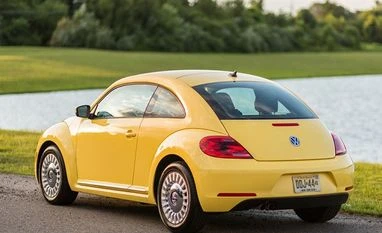
Anyone who has been in a Volkswagen Beetle will agree that not getting distracted by constant appreciation coming from neighbouring lanes is the hardest challenge while driving this car. Curious stares, victory signs, and thumbs-ups are some of the common reactions to the modern version of what was originally designed as a rear-engine four-seater for the masses. With a friendly, three semi-circle body design, it was no Ferrari challenger; it was made for families, and by the early 1990s, more than 21 million of its units had been sold.
How then does a mass-made people-mover made almost a century ago become a style statement and what the industry calls a halo car today? The answer might lie in discriminating between halo cars, cult classics and iconic cars. One could be all three, but never at the same time. Put simply, when a car has stood out from the crowd, created a splash, had a positive rub-off on stablemates, and driven sales, it is set for what its makers intended – achieving a halo car status.
Halo cars, like vintage wines, are brewed in small batches, tantalise the imagination of enthusiasts, and show off a brand. It is almost always consciously planned. An example is Tata Motors’ last attempt to showcase its version at the 2017 Geneva Motor Show. The previews then indicated a sporty new vehicle radically different in concept from anything Tata ever made. Branded Tamo, the model was called the Futuro, and was expected to be priced at around Rs 2.5 million. The word was that Tata Motors would make just 250 of these cars, to be outfitted with a 1.2-litre engine for delivering 180 bhp.
A Halo car? Possibly.
But going back to the Beetle and the very construct of defining a halo car, the Volkswagen product had originally been designed as a mass product. In the present time, its successor might disappoint purists – served up with American Diner-style interior panels, a front-mounted engine, and the absence of exterior chrome trims as a deviation. Today, the Beetle is a luxury ride, with sporty turbo engines, a sunroof and a sticker price of Rs 3 million – almost as much as a BMW.
So, a car that was once iconic, became a cult car along the way and is a halo product now. That was almost the same arc for the Ford Mustang, which Lee Iacocca introduced in 1964 in an effort to juice up flagging sales for Ford, except that it was intended to be a sporty ride. Ford sold a half million Mustangs in its second year, and the car was re-launched in multiple variations. Today, it comes in bright colors, revved-up engines, and a price tag starting Rs 6.5 million. It has been relaunched purely to spur sales for the company’s other products. Originally an everyday sports car that became iconic with commercial success, it burnished itself deeper on consumer psyche after actor Steve McQueen’s 10-minute car-chase in Bullitt endowed the car with a cult classic status. Forty-five years later, it’s a halo car with little resemblance to the original in engine, interiors, performance or body.
Then, on rare occasions, a car built for racing ends up becoming a brand all by itself. That happened with the Cooper born as a racing car before being acquired and redesigned by the British Motor Corp and Sir Alex Issigonis in the 1950s as a response to a gaping demand for fuel-efficient city cars. To cut the long story short, after changing hands many times over even more years, the brand became Mini Cooper, owned by the BMW Group.
That is how most cult cars end up. Take the Ford GT for example. It was designed to take on Ferrari, and it did just that: It showcased Ford’s technical capabilities as a sports car maker; it was made in small volumes but wanted by everyone. It started out as a halo car and remained just that, never being a cult classic or an iconic car that would have generations reminiscing over a bygone era. It is still around, though with futuristic performance specifications that would still go head-to-head with any exotic car in the world.
Tata’s efforts announced last year are ambitious for multiple reasons. For one, Indian manufacturers have shied away from launching Halo cars. In 2011, Maruti Suzuki tried it with the Kizashi, a sporty sedan. But its high cost did not find many takers and the company took it off the market it in just a year.
The Nano could have traversed the arc of the Beetle, had it started off as planned in Singur, but changes in factory sites and disruptions in production threw it out of gear and rendered it a non-starter. However, it had everything in common with the Beetle: A unique body style, positioning for the masses and a price that was affordable. In time, if its volumes had risen to the level that was expected, sportier and modern versions of the Nano could have moved up the value chain.
If there was a cult classic and iconic car in India, it had to be the Maruti 800, which provided motoring to millions; many Indians born before 1990 had these. But making the car halo-grade would have involved not just millions in re-engineering it to meet modern safety and emission norms, but also the will to do so.
The Futuro could turn out to be the halo car that Tata Motors needs to regenerate interest in its passenger cars and wipe the slate clean for consumers who associate the brand with fleet cars and a promise of what the Nano might have been. Of course, it remains to be seen if the associated passenger vehicle brand TaMo will go top-down and introduce its best first and have more affordable hatchbacks and sedans following in its footsteps, hopefully benefitting from the Futuro’s rub-off. That is the other thing about Halo cars; they only are that when you have an existent pipeline of products that can benefit from a star in the stable.