


Knitting human bonds
A small enterprise manufacturing woolen garments has helped empower women in Uttarakhand
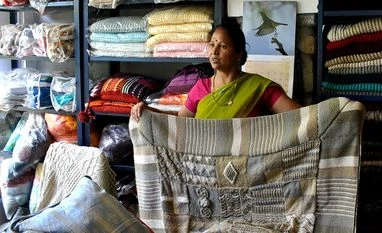 "The number of women participating varies from 40 to 100 and when they have large orders, they are usually able to get more women to work through word-of-mouth")
premium
The number of women participating varies from 40 to 100 and when they have large orders, they are usually able to get more women to work through word-of-mouth
The villages of Guniyal and Chandroti in Uttarakhand are less than a kilometre from each other. Yet, until Shubh Chopra came and settled down in Chandroti almost two decades ago, the women of the two villages had never met or seen each other. For whatever reason, the two villages had a watertight divide. The residents lived as virtual strangers despite the proximity.
The birth of Chandroti Woolens changed all that. Chopra moved to the village around 1992 and eight years followed without any upheavals. In 2000, when she had her first granddaughter she knitted a blanket for her and whoever saw it fell in love with it instantaneously. Encouraged by the response, she asked one of the women working for her to ask around the village if there were any others interested in doing this on a larger scale.
Within a few weeks, one village woman turned up at her doorstep, saying she had come to knit. Chopra found some nice pattern books and together they knitted a patchwork woolen quilt. She paid the woman for her efforts at the end of the month, pleasing her very much.
Word quickly spread and within a couple of months, as many as 40 women expressed a desire to work with Chopra. Almost all of them could knit — some very well, in fact. Chopra started helping them with designs, colour schemes and raw materials, which she began sourcing immediately. So involved was Chopra in the venture that she invested her own (and her husband’s) savings to buy the yarn, needles (she bought around a hundred pairs) and other fabrics that the women required. To start with, Chopra gave the women Rs 8 a patch. “The women didn’t have much time and no other avenue to earn any income. Most didn’t want to do any domestic work as they were already doing that at home,” she says.
As the number of women working with her grew, Chopra realised that she needed to find a market for her blankets and throws. However, Chopra had been a housewife all her life and didn’t know anything about running an enterprise of this sort.
The birth of Chandroti Woolens changed all that. Chopra moved to the village around 1992 and eight years followed without any upheavals. In 2000, when she had her first granddaughter she knitted a blanket for her and whoever saw it fell in love with it instantaneously. Encouraged by the response, she asked one of the women working for her to ask around the village if there were any others interested in doing this on a larger scale.
Within a few weeks, one village woman turned up at her doorstep, saying she had come to knit. Chopra found some nice pattern books and together they knitted a patchwork woolen quilt. She paid the woman for her efforts at the end of the month, pleasing her very much.
Word quickly spread and within a couple of months, as many as 40 women expressed a desire to work with Chopra. Almost all of them could knit — some very well, in fact. Chopra started helping them with designs, colour schemes and raw materials, which she began sourcing immediately. So involved was Chopra in the venture that she invested her own (and her husband’s) savings to buy the yarn, needles (she bought around a hundred pairs) and other fabrics that the women required. To start with, Chopra gave the women Rs 8 a patch. “The women didn’t have much time and no other avenue to earn any income. Most didn’t want to do any domestic work as they were already doing that at home,” she says.
As the number of women working with her grew, Chopra realised that she needed to find a market for her blankets and throws. However, Chopra had been a housewife all her life and didn’t know anything about running an enterprise of this sort.