Rajasthan Chief Minister Ashok Gehlot — in his Budget speech on February 23 — had said to provide relief to farmers for irrigating fields at night, an arrangement is being made to supply electricity in two shifts during the day in 16 districts.
He said that he was aware of the problems faced by farmers irrigating their fields at night, especially during winters. The CM said he will provide electricity to the remaining 17 districts within a year.
Chief secretary Usha Sharma said that fulfilling the electricity supply in the agriculture sector through solar energy would provide relief to the government from the heavy subsidy being given to the sector.
It will also reduce the amount spent on electricity by the farmers.
She said that efforts are being taken to make Rajasthan one of the largest suppliers of solar energy. The state has immense potential in solar energy and has emerged as a leading state in this sector.
Sharma said that directions are being given to decentralise solar energy generation by setting up small solar projects, according to the requirements of the districts.
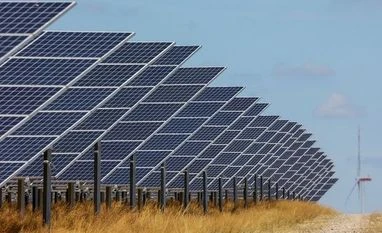
Rajasthan's solar generation potential has been assessed at 142 Gw. The state government plans to harness this potential systematically and has set an ambitious target of 30 Gw capacity by 2024-25.
According to estimates, the state receives the highest amount of solar radiation in the country (5.72 Kwh/m2/day). Also, it has the highest number of clear sunny days in a year.
Discussing the ‘PM Kusum Scheme’, the chief secretary said that instead of individual farmers, if groups of farmers adopt it with cooperatives, then better results could be obtained. A few farmer groups or small villages should be inspired to adopt this scheme, she added.
The state government has made policies to make Rajasthan a hub for renewable energy. She said Rajasthan is one of the top states in solar energy generation and is in the fifth position in wind energy.


 "renewable energy")