


Home / India News / Western Railway chugs into 100-million tonnes freight club in FY23
Western Railway chugs into 100-million tonnes freight club in FY23
First ever non-coal zone to achieve the feat
 "freight loading, goods, minerals, railways, transport, workers")
premium
3 min read Last Updated : Mar 12 2023 | 10:43 PM IST
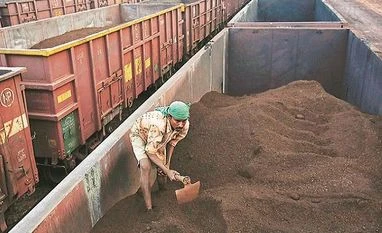
Western Railway (WR) recently became the sixth zonal railway to ferry 100 million tonnes (mt) of freight in a single fiscal year, making it the first-ever non-coal zone to achieve this feat.
The zone, which primarily covers a small part of Maharashtra and Rajasthan, along with the entirety of Gujarat, saw a substantial 24 per cent jump in its traffic in 2022-23 (FY23).
While the zone has historically catered to industrial traffic, an analysis of its freight mix shows that imported coal was the game-changer for WR this fiscal. A reorientation of industrial logistics also facilitated rail growth. After a nationwide coal crisis pushed the Centre into relying on imported coal to avert a power crisis, imported coal transported by WR rose by a whopping 7.7 times (see chart) in FY23, as some of it was directly reaching the ports of Gujarat. Experts said that some imported coal for power plants in Eastern India was also being carried through the rail-sea-rail mode, or coastal shipping.
While the zone has historically catered to industrial traffic, an analysis of its freight mix shows that imported coal was the game-changer for WR this fiscal. A reorientation of industrial logistics also facilitated rail growth. After a nationwide coal crisis pushed the Centre into relying on imported coal to avert a power crisis, imported coal transported by WR rose by a whopping 7.7 times (see chart) in FY23, as some of it was directly reaching the ports of Gujarat. Experts said that some imported coal for power plants in Eastern India was also being carried through the rail-sea-rail mode, or coastal shipping.
With the Centre focussed on pushing coastal shipping for movement of coal and other commodities, non-coal zones such as WR are widely expected to benefit from the coal traffic. Even though there was a surge in imported coal volumes of WR, coal still accounts for only 15 per cent of the zone’s cumulative traffic.
This is much lower than Indian Railways’ overall dependence on coal, at 50 per cent.
WR’s exceptional fiscal year has also been marked by significant growth in industrial traffic.
In FY23, cement traffic originating from the zone grew by nearly 16 per cent. Fertilisers saw an increase of almost 18 per cent, and mineral oil freight rose by 25 per cent.
Movement of finished goods, which has been a particularly weak area for the national transporter, also saw steady growth.
The balance and other goods segment of WR’s freight grew by 17 per cent. This signals that the shift of industrial traffic from roadways to railways is in full swing, according to experts. “Partial commissioning of the Delhi-Mumbai industrial corridor and Western dedicated freight corridor (DFC), with all sea ports in Gujarat now linked to the DFC, has spurred industrial activity,” Lalit Chandra Trivedi, former general manager of East Central Railway, told Business Standard.
Railways has also been able to provide stable pricing to industry at a time when logistics have been volatile. “On account of railways keeping its tariff constant and truck owners being forced to increase tariff on account of higher diesel prices, there has been a definite shift towards railway,” Trivedi added.
Sector watchers believe that with the two DFCs getting closer to completion and 100 per cent electrification in railways also round the corner, turnaround times of freight trains are expected to improve substantially. This will attract even more interest from the industry.
Under the National Rail Plan, the ministry of railways plans to have a 45 per cent share in national logistics, with close to 3,000 mt of yearly freight volumes (currently 1,418 mt). For this, the national transporter needs to rapidly capture finished goods and industrial traffic, which predominantly is ferried via roads.
Topics : Indian Railways Coal imports Shipping logistics