


India-US trade oil in troubled waters over wave of protectionism
Even as India opens its doors to US oil and gas, trade ties between the two nations do not look to be improving
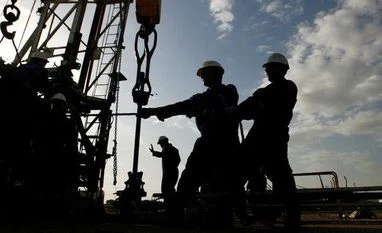 "Shale")
premium


On March 29, when the first American shale gas lands at Dabhol regasification terminal in Maharashtra, US president Donald Trump’s war cry against trade imbalances will be partly addressed. Trump earlier this month ordered imposing duty on steel and aluminium imports from all countries except Canada and Mexico, unleashing what is being seen as a “trade war” that goes against the spirit of the World Trade Organisation. Protection of domestic industry and generating employment are the underlying reasons for imposing these duties, under section 232 of the Trade Expansion Act that applies in cases where national security is at risk.
Though India, in principle, is against the imposition of the duties, the direct hit on Indian steel and aluminium exporters is not much. At the same time, oil and gas imports from the US could mean India addressing some of Trump’s concern. The US is the second biggest trading partner of India after China but India enjoys a trade surplus with it.
Earlier this month, one of America’s leading LNG player, Cheniere Energy, dispatched its first shipment of natural gas to India from its Sabine Pass LNG terminal in Louisiana. The Houston-based company had in December 2011 signed a 20-year sale purchase agreement (SPA) with GAIL India, to supply 3.5 million tonne per annum (mtpa) LNG annually starting 2018.
Besides Cheniere, GAIL has a contract with Dominion Energy’s Cove Point liquefaction plant for the supply of another 2.3 mtpa in 2012. The landing of American LNG is coming after India received its first consignment of crude oil from the US at Paradeep in Odisha last year on October 2. This was followed by another oil cargo that came at Vadinar port in Gujarat with 1 million barrels each of Eagleford and Mars shale crude grades.
The energising of trade ties between the two countries has started happening after the US opened up export of crude oil and natural gas from its shores in 2016, 41 years after it was banned, following OPEC sanctions that pushed up prices. “Since the lifting of curbs on crude export, a number of countries have been exploring buying crude from the US. Last year, this was also helped by some short term (price) shocks which led to a spike in the Brent — WTI spread (differential),” says Aditya Gandhi, senior director, Sapient Global Markets.
For most of 2016 and the first half of 2017, the spread was in the range of $0-2 a barrel but it rose to $5-7 in the second quarter of 2017. Events, like shutdown of the Fortis pipeline system that brings crude oil from the North Sea to Europe, had a severe impact on Brent prices. US crude (indexed on WTI), however, was insulated from it. “This meant that in some cases, US crude price and shipping cost to India was cheaper than Brent indexed crude and its shipping. Because of this Indian import of US crude increased last year,” he says.
Though India, in principle, is against the imposition of the duties, the direct hit on Indian steel and aluminium exporters is not much. At the same time, oil and gas imports from the US could mean India addressing some of Trump’s concern. The US is the second biggest trading partner of India after China but India enjoys a trade surplus with it.
Earlier this month, one of America’s leading LNG player, Cheniere Energy, dispatched its first shipment of natural gas to India from its Sabine Pass LNG terminal in Louisiana. The Houston-based company had in December 2011 signed a 20-year sale purchase agreement (SPA) with GAIL India, to supply 3.5 million tonne per annum (mtpa) LNG annually starting 2018.
Besides Cheniere, GAIL has a contract with Dominion Energy’s Cove Point liquefaction plant for the supply of another 2.3 mtpa in 2012. The landing of American LNG is coming after India received its first consignment of crude oil from the US at Paradeep in Odisha last year on October 2. This was followed by another oil cargo that came at Vadinar port in Gujarat with 1 million barrels each of Eagleford and Mars shale crude grades.
The energising of trade ties between the two countries has started happening after the US opened up export of crude oil and natural gas from its shores in 2016, 41 years after it was banned, following OPEC sanctions that pushed up prices. “Since the lifting of curbs on crude export, a number of countries have been exploring buying crude from the US. Last year, this was also helped by some short term (price) shocks which led to a spike in the Brent — WTI spread (differential),” says Aditya Gandhi, senior director, Sapient Global Markets.
For most of 2016 and the first half of 2017, the spread was in the range of $0-2 a barrel but it rose to $5-7 in the second quarter of 2017. Events, like shutdown of the Fortis pipeline system that brings crude oil from the North Sea to Europe, had a severe impact on Brent prices. US crude (indexed on WTI), however, was insulated from it. “This meant that in some cases, US crude price and shipping cost to India was cheaper than Brent indexed crude and its shipping. Because of this Indian import of US crude increased last year,” he says.
Topics : US India relations