


New projects inched higher in March compared to December quarter
Completed projects are down 69.4 per cent year-on-year to Rs 0.53 trillion
 "highways, nhai, roads, construction, transport")
premium
Completed projects are down 69.4 per cent year-on-year to Rs 0.53 trillion. It is down 31.2 per cent over the December quarter.
The value of new projects is up 13.2 per cent in the March quarter over December, while on a year-on-year basis, it is 69.3 per cent lower.
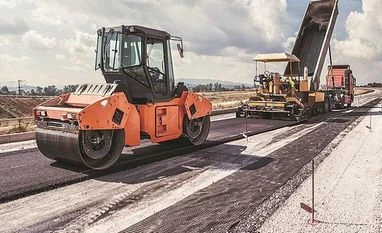
New projects track money spent on long-term assets which includes initiatives like companies setting up factories and the government building roads. This kind of capital expenditure (or capex) is seen to be important for economic growth.
The value of new projects was Rs 1.2 trillion in March 2021 compared to Rs 1.06 trillion in December 2020, and 3.91 trillion in March 2020, showed data from project tracker Centre for Monitoring Indian Economy (CMIE). Completed projects are down 69.4 per cent YoY to Rs 0.53 trillion. It is down 31.2 per cent over the December quarter.
Companies are typically reluctant to spend on setting up new factories when existing factory capacity is not being fully utilised. Capacity utilisation has been lower after the Covid-19 pandemic, showed the latest Reserve Bank of India’s Order Books, Inventories and Capacity Utilisation Survey (OBICUS) for the July-September quarter. The data appears with a lag. The September quarter data was released in February 2021.
“After recording the historical low of 47.3 per cent in Q1FY21, which witnessed Covid-19 pandemic related restrictions and lockdown, aggregate level capacity utilisation (CU) recovered to 63.3 per cent in Q2. Seasonally adjusted CU also increased to 64.1 per cent in Q2FY21 from 47.9 per cent in the previous quarter,” it said.
Reluctant capex in uncertain environments has been a global phenomenon, noted a March 12 2021 ‘Quantamentals Microstrategy — Margin Risk from Inflation’ research report from the Jefferies Group, which provides financial services across multiple countries.
Companies were more willing to keep investing even at the cost of lower margins in the days preceding the Global Financial Crisis (GFC) which happened around 2008, according to the report.
New projects track money spent on long-term assets which includes initiatives like companies setting up factories and the government building roads. This kind of capital expenditure (or capex) is seen to be important for economic growth.
The value of new projects was Rs 1.2 trillion in March 2021 compared to Rs 1.06 trillion in December 2020, and 3.91 trillion in March 2020, showed data from project tracker Centre for Monitoring Indian Economy (CMIE). Completed projects are down 69.4 per cent YoY to Rs 0.53 trillion. It is down 31.2 per cent over the December quarter.
Companies are typically reluctant to spend on setting up new factories when existing factory capacity is not being fully utilised. Capacity utilisation has been lower after the Covid-19 pandemic, showed the latest Reserve Bank of India’s Order Books, Inventories and Capacity Utilisation Survey (OBICUS) for the July-September quarter. The data appears with a lag. The September quarter data was released in February 2021.
“After recording the historical low of 47.3 per cent in Q1FY21, which witnessed Covid-19 pandemic related restrictions and lockdown, aggregate level capacity utilisation (CU) recovered to 63.3 per cent in Q2. Seasonally adjusted CU also increased to 64.1 per cent in Q2FY21 from 47.9 per cent in the previous quarter,” it said.
Reluctant capex in uncertain environments has been a global phenomenon, noted a March 12 2021 ‘Quantamentals Microstrategy — Margin Risk from Inflation’ research report from the Jefferies Group, which provides financial services across multiple countries.
Companies were more willing to keep investing even at the cost of lower margins in the days preceding the Global Financial Crisis (GFC) which happened around 2008, according to the report.
Topics : infrastructure Real Estate CMIE