


India shows Hidesign how to bag buyers
The leather goods brand is going with standalone stores abroad even as it repositions in India
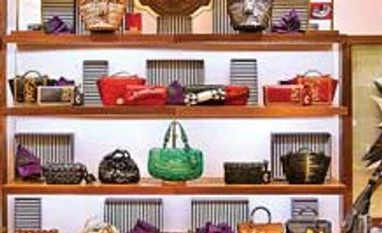)
As foreign luxury brands made a beeline for the recession-proof buyer in India, a made-in-India brand charted the opposite course. The Puducherry-based, luxury leather goods brand Hidesign, which began its journey in 1978, entered India only in 2000. Dilip Kapur, the owner and president, had preferred to stay out of India, expanding to other shores. But now, Hidesign is taking a page out of its Indian business to improve its prospects abroad.
Once Hidesign entered India, it knew why the rest were rushing to cater to the luxury clientele which had moved on from just comprising the maharajahs. "Our growth in India was so rapid that our international markets felt the lack of attention," says Kapur, admitting that it was a mistake to be so late to the party.
While Kapur was selling products through distributors in multi-brand stores in international markets, he established standalone and shop-in-shop Hidesign stores in India. "There has always been a gap between us, the brand owner, and the consumers in all the markets we operate, except in India. This is, undoubtedly, a cause of concern in the long run," Kapur says.

The concept of standalone stores will now be taken to all the countries Hidesign sells in. "We will replicate the Indian model in all the markets, but slowly. We have realised that we need more direct consumer connect," he adds. Outside India, Hidesign has 18 distributor-owned standalone outlets at present. In all, it has 74 standalone stores.
It will begin with shop-in-shops, and is likely to explore the franchisee route as well. In India, it has 150 shop-in-shops. "We will not go for any big investment soon. So, shop-in-shop works better for us. But, we will avoid high-streets which are very capital-intensive (high rent)," says Kapur, adding that the economic and consumer sentiments in the US and the UK are "very negative" at the moment. "Our future growth markets would be Asia and Africa," he says.
The flagship stores, that are more brand-oriented and not "just a buy and sell" trading model for markets outside India will be piloted at first. "We will go for six months, one year to two years strategy, and will expand depending on the response in each market," Kapur says.
Hidesign is present in 23 countries, which includes India. "The number is going to grow substantially over the next one year," says Kapur. The company is all set to enter Philipines, Ghana and South Africa over the next few months.
Meanwhile, Hidesign is also tapping the e-commerce space. "We are slowly tapping the route by creating a store online," he adds. It has also tied up with Amazon for markets in the US, UK, Germany and France. "But, we do not offer discounts. It would dilute the brand. If any e-commerce site offers it, that would be its own cost," points out Kapur.
With international markets needing a rethink, marketing spends in these would go up by about 60 per cent this year. "We would also pay the distributors for strong marketing initiatives," adds Kapur.
Last year, it had spent about $210,000 (around Rs 11.3 crore) in promotions in the international markets, and about Rs 7-8 crore in India. Its Indian marketing spend is also likely to increase by about 30 per cent this year.
Though Hidesign's growth story in India has been exponential, the market is fragmented, with the entry of top-end luxury brands such as Dior, Hermes, Gucci and Louis Vuitton. It is not just the products of the brands that are a threat, but also the fact that these companies, while setting up shop in India, have been picking up well-trained people from Hidesign's flagship outlets across the country.
Hidesign is repositioning its brand, as a result. If earlier, it was positioned as a product for high society, the elite, it is now being increasingly positioned for the young achievers, who have purchasing power similar to the traditional luxury consumers. "We now focus more on the career-oriented young crowd, essentially who are status-conscious," he adds.
In India, Hidesign sees more footfalls of women (about 60 per cent), while it is of men (about 60 per cent) in the international markets where the sales are more of large bags and products that are priced about five times that of India, says Kapur.
While it already sells accessories, within a year, the brand is slated to introduce footwear, followed by watches. It has already piloted sunglasses.
Hidesign earned about Rs 140 crore last year in India. Sales in the international markets (retail revenue and ex-factory revenue from exporters), of which Hidesign gets a share (from JV partners and distributors) would be in the range of Rs 120-130 crore as well. For Hidesign, India is a fascinating growth story, but it alone can not be the focus. Hidesign is an international brand, and not just Indian, says Kapur.
Don't miss the most important news and views of the day. Get them on our Telegram channel
First Published: Aug 29 2013 | 9:50 PM IST