


Moong falls below MSP despite govt buying
Trade sources said the government-owned Food Corporation of India (FCI) had started procuring moong at the MSP for release in future
 "Moong lentils")
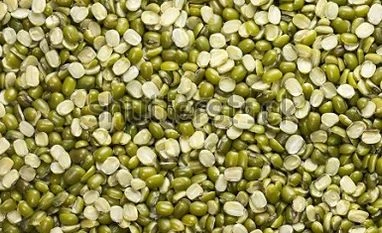
Background of moong lentils (<b>www.shutterstock.com</b>)
Prices of moong (green gram) have slipped below the minimum support price (MSP) in mandis despite procurement by government agencies.
Data compiled by the price tracking agency Agmarknet showed that moong (whole) was on Monday trading at between Rs 4,450 and Rs 4,550 a quintal across the country, barring in a few demand-centric spot markets, as against the MSP of Rs 5,225 a quintal, including bonus. Moong prices have fallen over 50 per cent since sowing started in June. Farmers' realisation from moong will thus decline proportionately. Trade sources said the government-owned Food Corporation of India (FCI) had started procuring moong at the MSP for release in future.
"Moong prices have fallen below the MSP on new season arrivals from across the country, especially the early variety from Karnataka and Maharashtra," said Bimal Kothari, vice-chairman of the India Pulses and Grains Association and managing director of Pancham International, a city-based importer of pulses.
Encouraged by surging prices before the sowing season, farmers increased area under moong substantially. The agriculture ministry in its first advance estimates presented on September 22 forecast India's moong output at 1.35 million tonnes for 2016-17, a 35 per cent increase over 2015-16. The kharif crop contributes two-thirds of India's annual moong output.
Apart from moong, the kharif pulses' output is estimated to rise over 57 per cent in 2016-17 to 8.7 million tonnes from 5.54 million tonnes in 2015-16. Kharif pulses make up for 67 per cent of India's total pulses production.
Trade sources said falling moong prices were part of an overall downward trend in pulses over the past few months since the government imposed stock limits and raided importers. Prices of other pulses have also fallen in the last four months. But most of them are holding above the MSP. "Looking at arrivals of the new season in major mandis and the imported quantity due for delivery between October and December, pulses prices are unlikely to move up. Other pulses might also fall below the MSP," said SP Goenka, director, U Goenka & Sons, a importer of pulses.
Importers have contracted 1.5-2 million tonnes of pulses for delivery till December, for which they are incurring losses due a decline in prices. Trade sources anticipate import defaults, and re-negotiation of prices to begin soon.
"Reports of crop damage are holding up urad prices. Indications are that urad prices will decline in the near future," Goenka said.

Don't miss the most important news and views of the day. Get them on our Telegram channel
First Published: Oct 03 2016 | 10:32 PM IST