


<b>Bibek Debroy:</b> The history of light railways
Development of road transport killed light railways, except where they survived as heritage railways
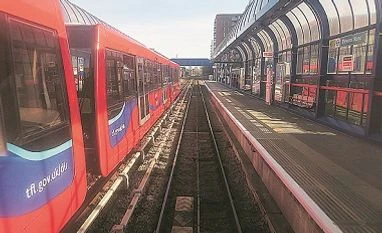 "Railways")
premium
On February 20, 1973, Lalit Narayan Mishra presented the Railway Budget for 1973-74. That speech had a specific section on light railways. “The assets of these light railways are in a completely worn-out and dilapidated condition and have very little residual lives left. Besides, in the case of Shahdara-Saharanpur Light Railway, the party who had purchased the assets of the company has already removed a considerable portion of the track. If these Railways are to be revived and their operation continued, the assets will have to be, sooner than later, replaced at a heavy cost. There may be difficulty in procuring adequate spares and narrow gauge rolling stock for replacement. In view of this position and keeping in view the future needs of traffic, the Ministry of Railways is considering the feasibility of broad gauge lines in the area served by Howrah-Amta and Howrah-Sheakhalla Light Railway.” What is “light railways”, not to be confused with light rail rapid transit? To understand history of railway development in India, one needs to go back to the British Light Railways Act of 1896. Unfortunately, that statute doesn’t give a specific definition.
Instead, I will recommend a book/monograph published in 1896 by John Charles Mackay, with the long title of “light railways for the United Kingdom, India, and the colonies. A practical handbook setting forth the principles on which light railways should be constructed, worked and financed and detailing the cost of construction equipment, revenue, and working expenses of local railways already established in the above-mentioned countries, and in Belgium, France, Switzerland, etc.” This book starts with the following sentence: “In talking about light railways many people at once jump at the conclusion that a light railway means a narrow-gauge railway.” Thus, light railways were built at lower costs (fixed and operational), with lighter tracks, lower standards, tighter curves, sharper gradients and reduced passenger comfort, meant to run at lower speeds. The correlation between narrow gauge and light railways was close, but not one to one. The development of road transport killed light railways, unless they survived as heritage railways.
There was a company known as Martin’s Light Railways (MLR), sometimes also referred to as Messrs Martin and Co, with headquarters in Calcutta. MLR was a management company. It started its construction work in 1897/1898, with Howrah-Sheakhalla Light Railway (1897, closed in 1971), Howrah-Amta Light Railway (1897, broad gauge by Indian Railways in 1962) and Santipur-Krishnager-Nabadwip Light Railway (1898, incorporated into Eastern Bengal Railway in 1904). Ranaghat-Krishnagar Light Railway (1899, incorporated into Eastern Bengal Railway in 1904), Bukhtiarpur-Bihar Light Railway (1902, nationalised 1962), Barasat-Basirhat Light Railway (1905, nationalised 1952), Shahdara-Saharanpur Light Railway (1907, closed 1970 and then taken over by IR), Arrah-Sasaram Light Railway (1911, closed 1978 and then taken over by Indian Railways) and Futwah-Islampur Light Railway (1922, nationalised 1986) followed. Of these, Bukhtiarpur-Bihar Light Railway is unusual. Prior to being taken over by Indian Railways in 1950, it was taken over by the District Board. All MLR lines were narrow gauge, most two feet six inches and some two feet. Unless, we call everything heritage, there is nothing remotely attached to heritage in the MLR lines. Faced with competition from road transport, as is the case elsewhere in the world, they should simply close down. Lest I forget, MLR is of course associated with the name of Rajendra Nath Mookerjee.
Instead, I will recommend a book/monograph published in 1896 by John Charles Mackay, with the long title of “light railways for the United Kingdom, India, and the colonies. A practical handbook setting forth the principles on which light railways should be constructed, worked and financed and detailing the cost of construction equipment, revenue, and working expenses of local railways already established in the above-mentioned countries, and in Belgium, France, Switzerland, etc.” This book starts with the following sentence: “In talking about light railways many people at once jump at the conclusion that a light railway means a narrow-gauge railway.” Thus, light railways were built at lower costs (fixed and operational), with lighter tracks, lower standards, tighter curves, sharper gradients and reduced passenger comfort, meant to run at lower speeds. The correlation between narrow gauge and light railways was close, but not one to one. The development of road transport killed light railways, unless they survived as heritage railways.
There was a company known as Martin’s Light Railways (MLR), sometimes also referred to as Messrs Martin and Co, with headquarters in Calcutta. MLR was a management company. It started its construction work in 1897/1898, with Howrah-Sheakhalla Light Railway (1897, closed in 1971), Howrah-Amta Light Railway (1897, broad gauge by Indian Railways in 1962) and Santipur-Krishnager-Nabadwip Light Railway (1898, incorporated into Eastern Bengal Railway in 1904). Ranaghat-Krishnagar Light Railway (1899, incorporated into Eastern Bengal Railway in 1904), Bukhtiarpur-Bihar Light Railway (1902, nationalised 1962), Barasat-Basirhat Light Railway (1905, nationalised 1952), Shahdara-Saharanpur Light Railway (1907, closed 1970 and then taken over by IR), Arrah-Sasaram Light Railway (1911, closed 1978 and then taken over by Indian Railways) and Futwah-Islampur Light Railway (1922, nationalised 1986) followed. Of these, Bukhtiarpur-Bihar Light Railway is unusual. Prior to being taken over by Indian Railways in 1950, it was taken over by the District Board. All MLR lines were narrow gauge, most two feet six inches and some two feet. Unless, we call everything heritage, there is nothing remotely attached to heritage in the MLR lines. Faced with competition from road transport, as is the case elsewhere in the world, they should simply close down. Lest I forget, MLR is of course associated with the name of Rajendra Nath Mookerjee.
Disclaimer: These are personal views of the writer. They do not necessarily reflect the opinion of www.business-standard.com or the Business Standard newspaper