


Counting wagons
Despite an electronic system of tracking wagons, their number cannot be declared with certainty by Indian Railways
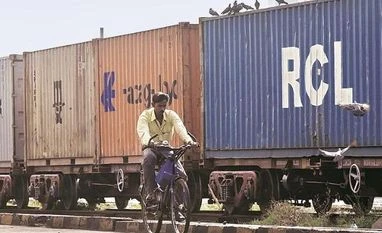 "freight operations, Indian Railways, IR")
premium
CARRIAGE CONCERN Modernisation of freight operations started in 1985, but only on paper. A proper electronic tracking of wagons started in 1999.
In those days, in the early 1970s, I was an undergraduate student in Kolkata. My father got transferred to Delhi. I suspect the imagery of a firearm is inappropriate. Nevertheless, lock, stock and barrel, the family had to move from Kolkata to Delhi. Perhaps trucks weren’t the preferred mode then. One needed to get a wagon from the Indian Railways (IR). Nor were those days when you did everything online through the IR’s freight operations information system (FOIS). But you could apply for single wagons then, though as with every period of shortage, wagons were impossible to get. (People will argue there is a shortage of wagons even today.) A shortage results in higher prices or rationing. The former wasn’t permissible, the latter wasn’t transparent. Therefore, despite working for the government, my father couldn’t get a wagon. There was providential help in the form of a classmate whose father was with the Indian Railway Accounts Service. My friend and I turned up at his dad’s office in Fairlie Place and were suitably impressed. After all, Eastern Railway (its predecessor, East Indian Railway) has been there since 1879 and William Fairlie (Scottish merchant and sheriff of Kolkata in 1808) has walked in that building (it was actually renovated in 1879) in the late 18th century. Truth be told, we were even more impressed with a piece of paper that was an entitlement certificate to a wagon. It was one of those wagons where household goods were loaded at one end and the car (an Ambassador) at the other.
Disclaimer: These are personal views of the writer. They do not necessarily reflect the opinion of www.business-standard.com or the Business Standard newspaper