


Firm foothold
Aim to become a stable wheat supplier
 "crop, food grain, FCI, coronavirus")
premium
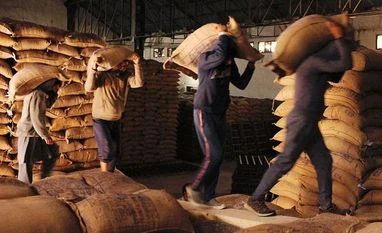
Labourers carry sacks of rice after unloading them from trucks at Food Corporation of India (FCI) godown during a nationwide lockdown. Photo: PTI
The supply crunch-driven sharp spike in global wheat prices in the aftermath of the Russia-Ukraine conflict is being viewed as an opportunity for India to step up its wheat exports for the benefit of all stakeholders in this sector. While the government, whose grain coffers are brimming over, is hoping to downsize its inventories to save on the carrying cost of surplus stocks, the private sector is mopping up huge quantities of the freshly harvested grains in anticipation of lucrative exports. The farmers, as a consequence, are getting prices higher than the government-fixed floor rates. Substantial quantities of wheat are said to be sold outside the mandis, forcing the governments of some states, notably that of Punjab, to warn about penal action against those indulging in such transactions. The relatively low arrival of wheat in the regular markets and the perceptible shortfall in its procurement by the Food Corporation of India (FCI) bears this out. An unintended upshot of these developments is the realisation by the farmers and many of their unions of the logic behind enacting the three reforms-oriented marketing laws that had to be repealed after their protest at the Delhi borders.