


Irreversible damage
Erosion of glaciers must be slowed
 "Irreversible damage")
premium
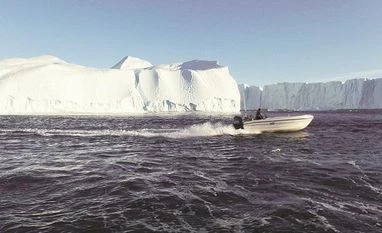
The recent collapse of a massive glacier of New York’s size in East Antarctica and persistent loss of age-old ice deposits in the Arctic region have worrisome oceanic and terrestrial upshots that cut across the continents. The rise in sea level and changes in the temperature and acidity of the sea waters as a consequence of unabated global warming bode ill for the existence of several small island nations and coastal habitations, apart from marine fisheries and aquatic biodiversity. The Arctic Report Card 2021, the 16th in the series of peer-reviewed annual reports issued by the US National Oceanic and Atmospheric Administration (NOAA) on the state of the earth’s once reliably frozen zone, reveals this region is warming more than twice as fast as the rest of the globe. The October-December 2020 quarter was the warmest period on record dating back to the year 1900. Consequently, the mass of older, multi-layered ice has shrunk to its second-lowest level since 1985. Shockingly, a 3,200-metre-high summit in Greenland, in the vicinity of the North Pole, got history’s first rainfall, instead of the usual snowfall, in August last. The entire polar region has, thus, turned substantially different from what it was a few decades ago due, predictably, to human-induced climate change.
Topics : Climate Change Antarctica Global Warming