


T N C Rajagopalan: Donald Trump impact on trade deals
Shinzo Abe, prime minister of Japan, warned that the TPP would be meaningless without US participation
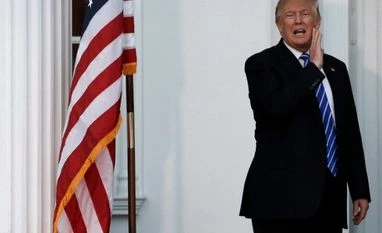 "Donald Trump's team to raise millions for Jan 20 events")
Last week, Donald Trump, president-elect of the United States of America, said on the first day of his taking over he’d issue a notification of intent to withdraw from the Trans-Pacific Partnership (TPP) trade deal, ‘a potential disaster for our country’.
Instead, he said, he’d negotiate fair bilateral trade deals that bring back jobs and industry. The statement is in keeping with his promises during the election campaign.
Yet, many leaders are dismayed. Shinzo Abe, prime minister of Japan, warned that the TPP would be meaningless without US participation. Angela Merkel of Germany said she was not happy that TPP would now probably not become a reality. John Key, the PM of New Zealand, said: “The US is not an island. It can't just sit there and say it's not going to trade with the rest of the world. At some point, it will have to give some consideration to that.”
Similar views have come from other leaders, economists and trade bodies. TPP is an agreement between 12 countries in the Pacific Rim with a collective population of about 800 million that account for almost 40% of the world’s trade. It aims to move towards common standards on environmental protection, workers' rights and regulatory coherence, besides reduction or elimination of tariffs on many products. Countries not part of the TPP, like India and China, have apprehensions that their market access to these signatory countries would suffer, as goods originating in non-TPP countries will attract higher customs duties; those originating in TPP countries will move within the trade bloc free of any trade or tariff barriers. So, some of them have tried to move faster on alternative agreement.
This is termed Regional Comprehensive Economic Partnership (RCEP), covering member-states of the 10-country Association of Southeast Asian Nations and India, China, Japan, Australia, New Zealand & South Korea. RCEP was seen as a possible pathway to the emerging free trade area of the Asia-Pacific, a contribution to a momentum for global trade reform.
Also Read

However, the progress in RCEP negotiations has not been fast. It involves complex negotiations between multiple parties, across numerous sectors. And, now, Donald Trump’s decision to take his country out of TPP takes away pressure to move the RCEP negotiations faster.
Consistency is not a Trump virtue. It is quite possible that he would agree to renegotiate certain parts of TPP and move it forward. The Australian PM has said that time will tell whether and to what extent the new US administration and legislature engages with the TPP or an evolved version.
New Zealand’s PM talked of saving the deal by renaming it Trump Pacific Partnership. "We might have to be a little bit creative to work out how to get the US there," he has said. The best option for all is to work towards strengthening the multilateral trade negotiations under the aegis of the World Trade Organization. There, decision making is slow, as unanimity of all parties is necessary to get an agreement through. However, the stability of a global rules-based trading system gives lasting benefits.
E-mail: tncrajagopalan@gmail.com
Disclaimer: These are personal views of the writer. They do not necessarily reflect the opinion of www.business-standard.com or the Business Standard newspaper
Don't miss the most important news and views of the day. Get them on our Telegram channel
First Published: Nov 27 2016 | 10:31 PM IST