


The chancellor's legacy
Repair work needed on Germany's external relations
 "Angela Merkel")
premium
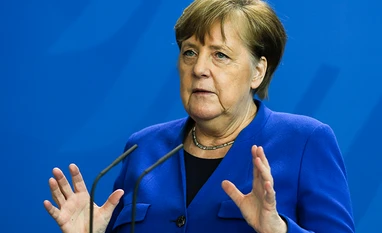
German Chancellor Angela Merkel brief the media about measures to avoid further spread of the coronavirus and the COVID -19 disease after a government meeting at the chancellery in Berlin, Germany. Photo: PTI
The divided mandate given by voters in the Bundestag election in Germany means that Chancellor Angela Merkel will have to remain in office for weeks or months yet, as the country goes through a complex process of coalition negotiation and formation. After the last election, this process took six full months. In this one, there is at least one clear shift: Ms Merkel’s ruling Christian Democratic Union/Christian Social Union party won only 24.1 per cent of the vote, the lowest vote share in its history. Meanwhile, the other major party and the CDU/CSU’s partner in the three recent “grand coalition” governments, the Social Democrats, increased their share of the vote by over 5 percentage points to top the CDU/CSU at 25.7 per cent of the vote. This is both a sign of stability and one of change. It is a sign of stability that, given the SPD and CDU/CSU have ruled in coalition for 13 of the past 16 years, they have together still received a simple majority — half the votes cast. It is also one of change in that it is clear that voters have rejected the CDU/CSU’s nominee for chancellor, Armin Laschet. Indeed, the rejection of the two major parties is particularly strong among young people, who have voted in much larger numbers for the liberal Free Democrats and the Greens.