


Unstable development
Indiscriminate construction is destroying Uttarakhand
 "Uttarakhand glacier burst, flood, rescue operations")
premium
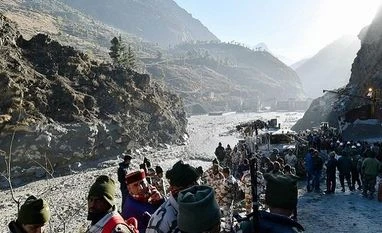
Rescue operations underway near Tapovan Tunnel, after a glacier broke off in Joshimath causing a massive flood in the Dhauli Ganga river, in Chamoli district of Uttarakhand
Uttarakhand’s location at the point where the Indian tectonic plate slides under the Eurasian tectonic plate makes it one of India’s most ecologically fragile regions, a perilous position that global warming and climate change have enhanced. This much was clear in Sunday’s tragedy when a chunk of the Nanda Devi glacier near Joshimath broke off, falling into the river below and triggering an avalanche of mud and water that destroyed two power stations downstream, washed away several villages and left over 100 people, mostly labourers working on NTPC’s hydro-power sites, missing. Early investigations suggest that a glacial lake had formed under the glacier, causing a chunk of it to break off, a geological development associated with global warming. The lesser Himalayas are one of the epicentres of the climate change crisis with glaciers retreating at a rapid pace. This is not the first time this area has been devastated by landslides and floods. In this century alone, there have been similar incidents in 2004, 2005, and, most devastatingly, in 2013, when a cloudburst caused flash floods around the pilgrimage site of Kedarnath, killing over 5,700 people during the annual Char Dham yatra.