


Home / India News / Do Indian governors carry their own weight or are they mere rubber stamps?
Do Indian governors carry their own weight or are they mere rubber stamps?
While the nominal head of a state or union territory is its de facto CEO, he is quite often the conveyor of the Centre' agenda. There are, of course, exceptions
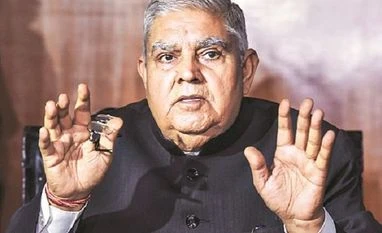 "Jagdeep Dhankar")
premium
When West Bengal governor Jagdeep Dhankar (pictured) raises the law and order issue in the state, he is not out of line. He is just performing his duty as a state executive
11 min read Last Updated : Jul 14 2021 | 6:26 PM IST
India’s first Prime Minister Jawaharlal Nehru wanted the governor to be an eminent person, respected in his or her field, whether in academics, science or art. He did not favour a political appointee—a person whom the ruling party sought to give the office. During a debate of the Constituent Assembly, he said: “I think it would be infinitely better if he were not so intimately connected with local politics of the province.” But today, 25 of the 28 governors are former politicians; while one is an army man. Of the remaining two, one is a bureaucrat, and the other an educationalist and naturopath.
How are governors appointed?
According to Articles 155 and 156 of the Constitution, the governor of a state is appointed by the President, and he or she holds office “during the pleasure of the President”. If a governor continues to enjoy the “pleasure of the President”, he or she can be in office for a term of five years.
Because the President is bound to act on the aid and advice of the Council of Ministers under Article 74 of the Constitution, in effect, it is the central government that appoints and removes governors. “Pleasure of the President” merely translates into the will and wish of the Central Government, and this is a bone of contention.
A governor should be a citizen of India and at least 35 years old. He/she must not be a member of the legislature or Parliament.
What are the duties of a governor?
He/she has to serve as the state's chief executive officer and oversee the functions of the executive branch of the government. Take the current case of the tiff between the West Bengal government and state governor Jagdeep Dhankar. When Dhankar raises the law and order issue in the state, he is not out of the line. He is performing his duty as a state executive, whatever his intentions may be.
A governor has to report to the General Assembly and the citizens about the condition of the state, besides recommending legislation to the Assembly. Though governors are supposed to say whatever state governments wish, a controversy broke out in January 2020 when Kerala Governor Arif Mohammad Khan said in the House: “I am going to read this para (against CAA) because the Chief Minister wants me to read this, though I hold the view that this doesn’t come under policy or programme. The CM has said this is the view of the government and to honour his wish, I am going to read this paragraph.”
He/she also has to review Bills that are approved by both Assembly and Council. The governor can sign a Bill passed by the Assembly into law, or veto it. In the latter case, the Bill would be returned to the Assembly.
Governors can issue executive orders on matters important to the state. They also have the power to reprieve convicts.
What is the role of a governor?
The power to identify the chief minister/government following an assembly election or a crisis, in order to provide a stable regime in the state, is perhaps the most important power that a governor enjoys. This power of discretion, which governors draw from Article 163 of the Constitution, has often been a bone of contention.
In 1952, after Independent India’s first election, the then governor of Madras called Congressman C Rajagopalachari to form the government, even though the United Front had more seats than the Congress and, remarkably, Rajagopalachari wasn't even an MLA.
In recent years, similar tricky situations played out following the Assembly elections in Goa, Manipur, Maharashtra, and Karnataka, where the governor either invited the leader of the largest alliance, or the leader of the single largest party.
The second-most important power of a governor is dismissing chief ministers or dissolving legislative assemblies. In 1959, the then governor apparently helped the Nehru government dismiss the Communist government of Kerala, even as it was fighting the Congress electorally.
In 2018, the then Jammu & Kashmir governor, Satya Pal Malik, dissolved the Assembly amid rumblings of the PDP and the National Conference joining hands, months after the government led by Mehbooba Mufti fell, after the BJP withdrew its support.
Other powers of a governor include testing the majority, recommending President’s Rule, and reserving Bills for the resident’s consideration.
In 1994, the Supreme Court in the SR Bommai judgment put an end to the arbitrary dismissal of State governments under Article 356 by spelling out restrictions. The Supreme Court remarked: “The President shall exercise it only after the Proclamation is approved by both Houses of Parliament and not before. Until such approval, the President can only suspend the Legislative Assembly.”
SC stated that the proclamation of the imposition of Article 356 is subject to judicial review.
The verdict also categorically ruled that the floor of the Assembly is the only forum that should test the majority of the government of the day and not the subjective opinion of the Governor. The ruling redefined the power of the governor.
In one of the first instances of the impact of the case, the Atal Bihari Vajpayee government in 1999 was forced to reinstate a government it dismissed. The Rabri Devi government, which was sacked on February 12, 1999, was reinstated on March 8, 1999 when it became clear that the Central government would suffer a defeat in the Rajya Sabha over the issue.
How independent are governors really?
In 1961, Nehru publicly criticised the then Madhya Pradesh Chief Minister K N Katju on the Jabalpur communal riots. But the then Governor H V Pataskar wrote to Nehru saying that since law and order was a state subject, the Centre shouldn't interfere in this matter. He also highlighted that under the federal structure, the Prime Minister cannot accuse a chief minister in such a way.
But such cases are too few and far between. In recent years and even before, governors have been accused of being pawns in the hands of the Centre.
Advocate Faisal Sherwani, Supreme Court advocate and partner at L&L Partners, noted the recent cases of the Kerala governor calling protests against the CAA a form of "terrorism" and Rajasthan Governor Kalyan Singh calling himself a "BJP worker" and wishing PM Narendra Modi would retain power, as instances that show us how the office of governor has lost much of its constitutional credibility. “We have not seen many governors standing their ground as is expected or required under the constitutional scheme. The central government should ensure that governors act with independence and be largely detached from the political dispensation. There is a need to keep an eye on the functioning of governors and if governors are to just act as the mouthpiece of the ruling dispensation, we might as well be better off without a governor.”
Kapil Sibal, former Union minister, and senior lawyer said: "In the present regime, governors are openly displaying their party loyalty by calling themselves BJP and RSS workers; no governor in the past had done this. They are directly interfering with the ruling of state governments and becoming agents in destabilising state governments."
On being reminded that the UPA/Congress governments had also been accused of misusing the office of the governor, Sibal, a Congress leader, said: “Suppose that the Congress did that, but then it shouldn't be repeated. In the past, governors' discretion was wrongly applied but no governor in the past did politics like the current governors of Bengal and Kerala."
How can governors be removed?
Article 156 neither lays down the grounds upon which a governor may be removed by the President, nor does it require that the reasons be disclosed.
The practice of calling back governors began during the reign of Indira Gandhi, when in 1969 the sixth governor of West Bengal, Dharma Vira, became one of the first to be removed under controversial circumstances.
Shanti Swarup Dhawan, the 7th Governor of West Bengal, was also removed from the post in 1971 by Indira Gandhi, for not following the Centre’s orders. Senior Supreme Court advocate Rajeev Dhavan (also the son of Shanti Swaroop Dhavan) said: “My father was sacked because he did not listen to Indira Gandhi asking him to imprison and detain more Naxalites.”
The practice of recalling governors with a change of guard at the Centre began in 1977, when the Janata Party came to power after routing the Congress and replaces the governors appointed by the previous regime. Since then, it has become a norm.
In 2014, within months after taking power, the Narendra Modi government recalled then Mizoram Governor Kamla Beniwal just two months before her term would have ended.
Ever since the Janata Party replaced governors installed by the previous regime, a large number of governors have chosen to quit as soon as a new administration comes in at the Centre. In 2014, after the NDA came to power, at least eight governors resigned or were removed within months.
In 1989, the V P Singh government decided to secure the resignations of all governors so that the government alone could decide who should stay and who coudn't. The unique initiative couldn't be pursued as there were intra-government differences.
In 2010, the Supreme Court remarked: “The governor cannot be removed on the ground that he is out of sync with the policies and ideologies of the Union government or the party in power at the Centre. Nor can he be removed on the ground that the Union government has lost confidence in him.”
The Punchhi Commission (2010) suggested that the phrase “during the pleasure of the President” be deleted from the Constitution because a governor should not be removed at the will of the central government; instead, he or she should be removed only by a resolution of the state legislature.
In 2016, a Presidential order led to the removal of Arunachal Pradesh governor Jyoti Prasad Rajkhowa, when he refused to put down his papers.
Earlier, in December 2009, then Andhra Pradesh Governor N D Tiwari resigned on "health grounds" amid mounting pressure on the UPA government to sack him following the controversy surrounding a sex tape.
How can Raj Bhavans be made truly independent?
While this has been demanded by political parties and activists for long, there is no headway in this direction, so far. But several legal experts have suggested measures to ensure governors remain neutral.
Some of such measures suggested by Senior Supreme Court advocate Rajeev Dhavan include:
Term: There should be no forced resignation. A governor should be allowed to complete his/her full 5-year term.
Nature and process of appointment: Selection of governors should be through a collegium.
Discretion: To deal with parties in a neutral and transparent way, there should be firm and clear principles to practice discretion.
“The Governor's post is ceremonial. He/she should not become a public figure so generous,” Dhavan stressed.
What are the legal immunities that a governor enjoys?
Under Article 351 of the Constitution, a governor is protected from appearing in court, unless he/she chooses to do so. He/she can not be prosecuted and imprisoned during his tenure, but he can be subjected to trial in court after he/she steps down from the post for actions taken during his/her term of governorship.
No governor has resigned on impropriety to continue in office for declaring and nullifying his/her decisions as unconstitutional by the court until now. No criminal case, at least on the grounds of disrespecting the Constitution, has been lodged.
How much does a governor earn?
Well-known socialist leader Madhu Limaye used to say in the 1970s and 1980s that the post of the governor should be abolished. He used to say that "the governor is a white elephant" on which a lot of government money is spent unnecessarily.
A governor's salary is based on the Governors (Emoluments, Allowances, and Privileges) Act, 1982. Announcing a hike in their pay in his Budget speech, then Finance Minister Arun Jaitley had said the emoluments of governors were last revised on January 1, 2006. Their emoluments was raised from Rs 1.1 lakh per month to Rs 3.5 lakh in the 2018 Budget.
Twitter: @nitinaayog
Twitter: @nitinaayog