


Waiting to exhale, then get going
The snap and crackle generated by legislative Assembly elections in five states was electrifying
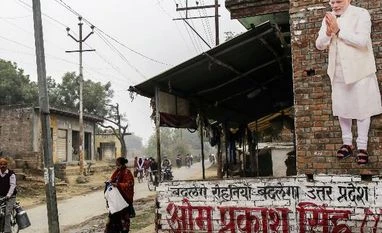 "election")
premium
Writing in a blog for the Vivekananda International Foundation, the chairman of Prasar Bharati, A Surya Prakash, has some advice for Prime Minister Narendra Modi. The context was demonetisation. Prakash praised the PM for out-of-the-box thinking but declared that execution of his plans needed a different type of bureaucracy.
“Since Mr Modi is given to questioning the efficacy of existing practices, he could look at the possibility of opening the doors of government to management specialists hired specifically to manage national programmes. This can happen if he can end the stuffiness of the Indian bureaucracy, which has the reputation of resisting ‘outsiders’ and killing their creativity,” Prakash suggested. He rued the dominance in government of the thinking that “those who do not have a ‘batch’, a ‘service’ and a ‘year’ to refer to have no business being in government!”
Prakash said: “This will have to change. The new India that Mr Modi wishes to build will need a new administrative machinery. Given the Indian reality – a good percentage of the people still below the poverty line and still not literate; an aspirational middle class that wants a quick transition to the better life; and well-meaning governments both at the Centre and in many states which want well-crafted schemes to reach the right beneficiaries, without huge transmission losses, the new structure will have to be a proper blend of bureaucrats who have grappled with problems at the grassroots and management specialists from outside government, who are not weighed down by bureaucratic baggage. In other words, it will have to be a combination of the old and the new, the traditional and the radical.”
Deciding on heads
Now that elections are over, a bureaucratic reshuffle seem on the cards. Possibly even along the lines suggested by Prakash. Several senior positions are becoming vacant. The term of the Chief Election Commissioner ends in June, a prize appointment. The Comptroller and Auditor General will also complete his term in June. Cabinet Secretary P K Sinha took over on June 13, 2015, for a two-year term. By about April, the government will have to begin thinking about whether to extend his term or appoint a successor. The senior most in the 1981 batch of the IAS is Anjuly Chib Duggal, secretary, financial services; however, she is to retire on September 1. By becoming cabinet secretary, she will get an extension immediately. On the other hand, can the finance ministry really let her leave?
Economic affairs secretary Shaktikanta Das got a three-month extension on January 23. He has to be replaced in April. Finance Secretary Ashok Lavasa retires in October and is also in the running for cabinet secretary. Several other secretaries are due to retire, including the power secretary.
“Since Mr Modi is given to questioning the efficacy of existing practices, he could look at the possibility of opening the doors of government to management specialists hired specifically to manage national programmes. This can happen if he can end the stuffiness of the Indian bureaucracy, which has the reputation of resisting ‘outsiders’ and killing their creativity,” Prakash suggested. He rued the dominance in government of the thinking that “those who do not have a ‘batch’, a ‘service’ and a ‘year’ to refer to have no business being in government!”
Prakash said: “This will have to change. The new India that Mr Modi wishes to build will need a new administrative machinery. Given the Indian reality – a good percentage of the people still below the poverty line and still not literate; an aspirational middle class that wants a quick transition to the better life; and well-meaning governments both at the Centre and in many states which want well-crafted schemes to reach the right beneficiaries, without huge transmission losses, the new structure will have to be a proper blend of bureaucrats who have grappled with problems at the grassroots and management specialists from outside government, who are not weighed down by bureaucratic baggage. In other words, it will have to be a combination of the old and the new, the traditional and the radical.”
Deciding on heads
Now that elections are over, a bureaucratic reshuffle seem on the cards. Possibly even along the lines suggested by Prakash. Several senior positions are becoming vacant. The term of the Chief Election Commissioner ends in June, a prize appointment. The Comptroller and Auditor General will also complete his term in June. Cabinet Secretary P K Sinha took over on June 13, 2015, for a two-year term. By about April, the government will have to begin thinking about whether to extend his term or appoint a successor. The senior most in the 1981 batch of the IAS is Anjuly Chib Duggal, secretary, financial services; however, she is to retire on September 1. By becoming cabinet secretary, she will get an extension immediately. On the other hand, can the finance ministry really let her leave?
Economic affairs secretary Shaktikanta Das got a three-month extension on January 23. He has to be replaced in April. Finance Secretary Ashok Lavasa retires in October and is also in the running for cabinet secretary. Several other secretaries are due to retire, including the power secretary.
The Centre will have concrete numbers to justify the ban on 86 per cent of cash by value that existed before November 8, and will be empowered to go after those who continue to evade taxes