


Beneath the pink glitter, Barbie is a tale of theft and ruthlessness
Barbieland is a book written from outside Barbieland's high-security gates; we meet Hitt - an editor and contributor with The Drift magazine
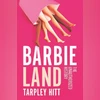 "BARBIELAND: The Unauthorized History")
BARBIELAND: The Unauthorized History
Listen to This Article
BARBIELAND: The Unauthorized History
by Tarpley Hitt
Published by
Atria/One Signal
343 pages $30
Also Read

 "The Eleventh Hour: A Quintet of Stories")
 "Mafia Queens of India")
 "Things In Nature Merely Grow")
 "Breaking the Engagement: How China Won & Lost America")
 "World of the Right")
By Amanda Hess
The 2023 film Barbie begins with a parodic homage to 2001: A Space Odyssey. We open on a prehistoric desert landscape. Little girls in fusty dresses tend to a fleet of baby dolls. One wearily pushes hers in a creaky pram. Then a larger-than-life Barbie materialises, à la the monolith, in her original stiletto slides and strapless swimsuit. The girls are moved to rebellious action. They rip off their aprons and smash their baby dolls’ heads in.
This is just the most recent retelling of Mattel’s central lore, which maintains that toy companies exclusively sold babyish dolls until the Mattel co-founder Ruth Handler dreamed up Barbie, freeing girls to centre their imaginative play on an actual woman — as if it took this brilliant inventor to unlock their natural (and yet also progressive, sophisticated, even feminist) desire for a doll with breasts.
It’s a gripping pitch, though little of it is true. The real story of Barbie’s origins is much messier, and more interesting — especially as told in Barbieland, Tarpley Hitt’s rollicking tale of how Mattel spied, copied and stole its way to market dominance, then fought with military intensity to compel us to buy more and more.
Barbieland is a book written from outside Barbieland’s high-security gates; we meet Hitt — an editor and contributor with The Drift magazine — as she’s being escorted off the premises of Mattel’s headquarters in El Segundo, California. Her book proceeds in a somewhat paranoid style, which is justified by its content. This is less an account of how Mattel made Barbie than an investigation of how Mattel wants us to believe it made Barbie, and the lengths to which it has gone to enforce this version of events.
As Hitt digs into legal records and traces a conspiratorial LinkedIn comment, she rips off layer after layer of Mattel’s mythos to reveal the corporate espionage, employee surveillance and histrionic corporate memo-writing underneath. Along the way, Hitt illuminates the intertwined histories of motivational research and intellectual property, labour and plastics.
Handler likely did not, as she claimed, conceive of Barbie while observing her daughter, Barbara, playing with paper fashion dolls. She spied a German doll called Lilli — probably, Hitt discovers, at a high-end toy importer near the Handler home in Beverly Hills — then set about copying it and scheming to bury the foreign competition. And Lilli, for her part, was based not on the unarticulated desires of girls but on an exhaustively replicated male fantasy: The Lilli character was an illustrated comic pinup girl drawn to sell copies of Bild, a newspaper owned by the German publisher Axel Springer.
Parts of this story have been told before, as journalists and historians have worked, decade after decade, at disentangling Mattel’s regenerating promotional web. But Hitt has a special skill for enlivening the archive, and its gaps. She builds a propulsive story with players who double-delete their emails and burn confidential correspondence. She has an eye for the absurd detail, and she transforms toy executives into indelible characters whose lives are consumed by the cartoonish drama of competitive children’s entertainment.
She introduces us to Jack Ryan, a womanising Raytheon engineer turned head of Barbie research and development who once took a shipment of Barbie prototypes with “delineated nipples,” she writes. The Austrian psychologist Ernest Dichter enters her story to apply Freudian theory to Mattel’s target consumers. When Mattel introduced Ken, it called Dichter to consult on the dimensions of his genital bulge.
Then there is Handler. In the film, she takes the form of Rhea Perlman, a goddess mommy type who transforms Barbie, Pinocchio-style, into a living woman. In Hitt’s book, Handler is funny, cutthroat, reckless, vengeful and obsessed. It’s in these pages that she gets to become an actual human being. When a manufacturer shrank Ken’s aforementioned bulge to save one and a half cents of plastic per doll, Handler never let it go. Colleagues called her “Ruthless.”
And though the movie’s Handler congratulates Barbie for smashing the patriarchy in Barbieland, the actual Handler worked to ensure that the women’s movement did not breach the Mattel campus. She stuffed her C-suite with men and advised the Nixon administration against supporting federal maternity leave. “Women had always bored me,” she once said.
I finished the book at a play space near my apartment, while my two boys played wildly with a Barbie Dreamhouse, manipulating the often-nude bodies of Barbies and Kens in their little hands. It is striking how little of Mattel’s storied shenanigans have to do with the lives and minds of actual children. Barbie, Malibu Barbie, Doctor Barbie, President Barbie, the “Barbie” movie, the Barbie x Stanley tumbler — it is the company, and its shareholders, whose urges are satisfied by this relentless cycle of production.
And yet, somehow she is always around, this moulded plastic doll who is moulding all of us. After the marketing blitz of the “Barbie” movie, I thought I couldn’t stand to hear her name ever again, but I was wrong. Barbieland is for anyone who liked the movie — or did not — and is ready for the human version.
The reviewer is a writer at large for The Times ©2025 The New York Times News Service
More From This Section
 "CAPITALISM: A Global History")
 "More from Less for More: Innovation's Holy Grail")
 "The Art of Spending Money: Simple choices for a richer life")
 "The Niche Code: Building Big Businesses in Small Markets")
 "Scam Lands: Inside the Asian Empire of Fraud that Preys on the World")
Topics : Book Reviews Book Literature
Don't miss the most important news and views of the day. Get them on our Telegram channel
First Published: Dec 07 2025 | 11:11 PM IST