


The Oak And The Larch: Russian history through a prism of woods and trees
A new book traces how Russia's forests shaped its history, literature and power - from religious exiles and empire-building to gulags, nationalism and climate change
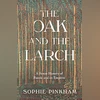 "THE OAK AND THE LARCH: A Forest History of Russia and Its Empires")
THE OAK AND THE LARCH: A Forest History of Russia and Its Empires


Listen to This Article
THE OAK AND THE LARCH: A Forest History of Russia and Its Empires
By Sophie Pinkham
Published by Norton
286 pages $35
Also Read

 "Volodymyr Zelenskyy, Zelenskyy")
 "gold, gold prices, gold silver prices")
 "Ukraine flag")
 "uk attack, uk police, uk, manchester")
 "Sunil Thapa")
Joshua Hammer
In 1978, a team of Russian geologists surveying the Ural Mountains spotted something remarkable: a small, cultivated clearing carved out of a vast wilderness. When they reached the site, they discovered the Lykovs, members of the Old Believers — a conservative sect whose adherents had dispersed to remote regions after the Romanovs brutally consolidated their control over the Orthodox Church in the 17th century.
Driven deep into the forest by their leaders’ paranoia and demands for purity, the family had survived 44 years of total isolation. They subsisted on little more than pine nuts, dried potatoes, turnips and rye. One member had died of starvation; others barely endured a winter famine. They wore birch-bark shoes, had ghostly white skin from carotene deficiency, knew nothing of World War II or Stalin’s purges and remained consumed by ancient feuds.
The discovery resonated deeply across Russia. As Sophie Pinkham writes in The Oak and the Larch, her expansive, often absorbing study of the role of the wilderness in the Russian imagination, their fragile existence underscored the forest’s role as a refuge from civilization’s darker forces. A professor of comparative literature at Cornell specialising in the Soviet and post-Soviet eras, Pinkham observes that Russia’s forests symbolise “what is good and what must be preserved, the last bulwark against annihilation.” Yet they are also entwined with some of the cruellest chapters of Russian history. By examining Russia from the forest’s perspective, she suggests, “we can gain new understanding of Russian power, Russian nationalism, Russian imperialism and Russia’s ideas of itself.”
Pinkham divides Russia’s forests into two broad biomes. The deciduous woods of Eastern Europe, dominated by the oak, nurtured early Slavic settlements and provided protection from steppe invaders. As Muscovite power grew, rulers constructed miles-long defensive barriers made from sharpened trees to slow the nomadic cavalry. Peter the Great transformed these forests into the engines of empire, feeding the Baltic fleet that would project Russia’s power westward.
A number of Russia’s greatest writers, Pinkham argues in some of the book’s liveliest sections, also served as the country’s leading environmentalists. Turgenev’s lyrical depictions of rural life helped feed a moral awakening that culminated in the emancipation of the serfs in 1861. As a young officer, Tolstoy took part in the military clearing of forests in the Caucasus; the experience turned him into a lifelong defender of woodlands, reflected in his stories and in his later decision to channel the proceeds of War and Peace into reforesting his estate.
A dying Chekhov drew renewed energy from a journey to the taiga; in “Uncle Vanya,” the forests’ disappearance becomes a metaphor for the exhaustion of czarist society.
Pinkham is at her sharpest when examining the Soviet era and its aftermath. In the final days of the civil war the taiga harboured holdouts against the Bolsheviks — remnants of the White Army, as well as Indigenous fighters. When the last rebels were defeated in 1925, the regime set about brutally subduing the wilderness.
To many Bolsheviks, nature was regarded as an obstacle to progress, and vast tracts were felled to clear space for factories and other industrial projects. Much of the work was carried out by forced labourers in the gulag, a system designed to place expendable bodies close to natural resources, under conditions of calculated deprivation.
But that devastation also sparked a renewal of Russia’s environmental consciousness, which thrived even under Soviet repression. In the Putin era, the ultranationalists who have supported the war in Ukraine have also fetishised the forests — the “Russian ark” — as symbols of lost empire. But, as Pinkham points out, the privatisation of woodlands exposed them to rampant illegal logging by oligarchs and criminal gangs. And climate change compounded the damage: The wildfires that ravaged Russia in 2021, Pinkham points out, were “larger than those in all the rest of the world combined.”
Even in Russia’s vast expanses, the untouched wilderness Pinkham describes is becoming harder to come by. After they emerged from their isolation, the Lykovs were subjected to the worshipful attention of the Russian public, which regarded them, Pinkham writes, as “human buried treasure.” Over time, the surviving family members became dependent on handouts from charity groups.
Once self-sufficient forest dwellers, they became, writes Pinkham, “like a museum exhibit, or like former dancing bears moved to a wildlife enclosure.” The fate of the Lykovs underscores the Russian forest’s continued allure — and a romantic vision that now exists more in the imagination than reality.
The reviewer is the author of The Mesopotamian Riddle: An Archaeologist, a Soldier, a Clergyman, and the Race to Decipher the World’s Oldest Writing. ©2026 The New York Times News Service
More From This Section
 "RARE – Investing the Rakesh Jhunjhunwala Way")
 "The Dig: Keeladi and the politics of India's past")
 "book review")
 "HATED BY ALL THE RIGHT PEOPLE: Tucker Carlson and the Unravelling of the Conservative Mind")
 "BOOK")
Topics : Russia forests BOOK REVIEW Book reading BS Reads
Don't miss the most important news and views of the day. Get them on our Telegram channel
First Published: Feb 08 2026 | 11:23 PM IST