


Tax relief move has reduced demand uncertainty: CEA V Anantha Nageswaran
Nageswaran says Budget gave a nudge to pvt sector investments
 "Dr V. Anantha Nageswaran, BFSI")
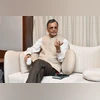
Dr V. Anantha Nageswaran, CEA,Govt. of India at the Business Standard BFS! Insight Summit 2024 in Mumbai. (Photo: Kamlesh Pednekar)


Listen to This Article
The tax cut announced in the Union Budget has reduced the demand uncertainty in the domestic economy and given a nudge to the private sector capital formation, Chief Economic Advisor V Anantha Nageswaran said on Monday.
In a significant move to ease the tax burden on the middle class, Finance Minister Nirmala Sitharaman, in her Budget speech on Saturday, announced a major overhaul of the tax regime, introducing a zero-income tax slab for taxpayers earning up to Rs 12 lakh annually under the new tax regime.
“It is quite clear that the current state of the world in terms of geopolitical and geo-economic uncertainties is very much the driving force behind many of the proposals you see in the Budget, including the widely discussed tax cut and the revision of tax slabs given to various income individual income taxpayers,” Nageswaran said at a post-Budget discussion organised by the Confederation of Indian Industry (CII).
The CEA said the boost to disposable income would be a positive for the Indian economy, regardless of whether it goes into consumption or savings, as the former will bolster the aggregate demand and encourage the private sector to undertake capital formation.
“The private sector has indeed been investing. Maybe the pace is not as much as one would have liked to see because the benchmarks that we use pertain to the first decade of the millennium when the world was a different place,” the Nageswaran said.
Also Read

 "FDI")
 "Capital Goods")
 "Finance Minister Nirmala Sitharaman")
 "Nirmala Sitharaman, Nirmala")
 "paper mill")
He highlighted that the growth in public capital expenditure might not naturally maintain the same pace of growth as the base becomes larger.
“This Budget not only addresses the questions in people's minds about the momentum in the Indian economy but also sets the Indian economy on a stronger path to medium-term growth by addressing issues such as capital formation in the private sector, energy security, employment, and skilling,” Nageswaran said.
The Union Budget FY26 has pegged capex at Rs 11.2 trillion - a growth of around 10 per cent over the previous year’s revised estimates of Rs 10.18 trillion.
Nageswaran, however, said that taking into consideration the capex undertaken by the union government in public sector enterprises and the grants in aid, the capital formation in FY26 is budgeted to be Rs 19.8 trillion against Rs 18.7 trillion in FY25.
The CEA also noted that the Budget had ensured that the supply chain resilience for energy transition is enhanced in view of the concentration of dependence on a single source for many of the inputs that we use for solar energy and E-mobility.
He said that without energy security and energy affordability, the potential gross domestic product cannot rise. “Many of the economic slowdown and stagnation which we are witnessing in different parts of the world can arguably be attributed to higher energy costs, which were induced by the energy transition efforts,” Nageswaran said.
The CEA added that the Budget was a very clear recognition and demonstration of the government's commitment to ensuring that the Indian economy was able to grow on the strength of domestic demand levers in a world that will remain uncertain, both politically and economically.
More From This Section
 "Nirmala Sitharaman Budget")
 "Chandrababu Naidu, Andhra CM")
 "tax, tax planning")
 "budget")
 "BS Opinion, Raisina hill, Budget 2024, Union Budget, Budget 2024-25, budget 2024 date and time, nirmala sitharaman budget 2024, budget 2024 date announcement live, budget 2024 date announcement, Union Budget 2024 Highlights, Union Budget 2024 Live Up")
Topics : Budget 2025 Chief Economic Advisor CEA Investment
Don't miss the most important news and views of the day. Get them on our Telegram channel
First Published: Feb 03 2025 | 4:07 PM IST