


Ola Electric enters $12 bn energy storage market with home batteries
Ola Shakti batteries use the same 4680 cell technology deployed in the company's electric scooters
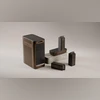 "Ola battery")
Ola Shakti is expected to compete with large players such as Tata Power (Agratas), Exide Industries, Amara Raja Energy & Mobility, Waaree Energies, and AES Corporation. (Image


Listen to This Article
Ola Electric on Thursday launched home battery systems priced Rs 30,000 and up, entering India’s Rs 1 trillion ($12 billion) energy storage market as the electric vehicle manufacturer seeks revenue diversification beyond two-wheelers.
The company expects battery consumption for storage systems to reach 5 gigawatt-hours (Gwh) in a few years, potentially exceeding automotive use. Ola will use its cell manufacturing and distribution infrastructure for the systems, ensuring no additional capital expenditure.
The home batteries, branded Ola Shakti, utilise the same 4680 cell technology deployed in the company’s electric scooters and will be sold through its 4,000-store network. Deliveries begin in January 2026, with the storage market projected to reach Rs 3 trillion ($36 billion) by 2030.
“India doesn't face an energy shortage; it faces an energy storage opportunity,” said Bhavish Aggarwal, chairman and managing director of Ola Electric. “It is a natural next step for us as we leverage our existing 4680 cell technology, Gigafactory production capabilities, and nationwide Ola network as a ready sales and distribution backbone — ensuring rapid scale without any incremental investment."
Ola Shakti is the first residential battery energy storage system (Bess) in India, said the company. It is fully designed, engineered, and manufactured in the country using the advanced 4680 Bharat Cell using the firm’s automotive battery packs. The modular design of Ola Shakti allows for multi-directional stacking and easy scalability. The compact form factor ensures simple home installation and easy servicing with accessible air filters.
Also Read

 "Ola Electric takes the S1 Portfolio to the ‘Next Level' with Gen 3")
 "Rapido News")
 "Ola Electric, OLA")
 "markets, stock markets, indian stock markets")
 "Ola Electric, OLA")
The system is available at introductory prices in four configurations: 1kW/1.5kWh at Rs 29,999; 1kW/3kWh at Rs 55,999; 3kW/5.2kWh at Rs 1,19,999; and 6kW/9.1kWh at Rs 1,59,999. The system can power air conditioners, refrigerators, induction cookers, farm pumps, and communication equipment, with charging times as fast as two hours and backup capacity of up to 1.5 hours on full load.
Ola Shakti delivers automotive-grade safety, efficiency of up to 98 per cent, and zero running and maintenance costs, said the company. Unlike conventional lead-acid inverters or diesel generators, Shakti features instant changeover time and operates across a wide input voltage range.
India’s power infrastructure faces critical challenges including transmission bottlenecks, delayed grid expansion, and regulatory hurdles. Over 50GW of renewable capacity remains stranded, limiting integration and increasing costs, according to industry sources. Rising electricity demand and grid instability fuel growing residential demand for reliable backup power solutions. Addressing these issues is vital for India’s clean energy transition.
More From This Section
 "Blue Energy Motors")
 "BLS International Services")
 "Bhavish Aggarwal, Bhavish, OLA CEO")
 "Simple Energy")
 "The aspirations of a young India and increased income levels have encouraged companies to consider mergers and acquisitions (M&A) to keep up with demand. In a world where consumer preferences change dramatically, M&As provide companies the means to r")
Don't miss the most important news and views of the day. Get them on our Telegram channel
First Published: Oct 16 2025 | 5:31 PM IST