


Beyond Uranium: Why India-Canada trade matters more than one thinks
Prime Minister Carney's visit spotlights the untapped potential in India-Canada trade, highlighting opportunities in energy, technology, agriculture, and expanding markets for mutual growth
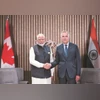 "Prime Minister Narendra Modi with his Canadian counterpart Mark Carney on the sidelines of the G7 Summit in Kananaskis, Canada PHOTO: PMO/PTI")
The proposed $2.8billion, ten-year uranium supply agreement that Carney is expected to finalise during this visit exemplifies the depth of possible cooperation | PHOTO: PMO/PTI
Listen to This Article
Canadian Prime Minister Mark Carney’s arrival in India today marks more than a diplomatic reset. His visit is an acknowledgment of huge unexploited economic potential economic partnership between the two countries. As Canada seeks to diversify beyond its overwhelming dependence on the United States, and India looks to secure critical resources for its growth trajectory, the proposed Comprehensive Economic Partnership Agreement (CEPA) has transformed from a desirable option into a strategic imperative.
The timing of Prime Minister carney’s visit couldn’t have been more opportune. With bilateral trade in goods at $8.6 billion in 2024-25, the relationship remains significantly underutilised given the complementarities between two economies. Canada possesses what India urgently needs: uranium for expanding nuclear energy program, critical minerals for electronics and EV manufacturing, and advanced agricultural technology to enhance farm productivity. India offers what Canada seeks: a massive and growing consumer market, world-class IT and pharmaceutical capabilities, and a democratic partner in the Indo-Pacific to counterbalance an increasingly assertive China.
Nuclear Energy Collaboration
The proposed $2.8billion, ten-year uranium supply agreement that Carney is expected to finalise during this visit exemplifies the depth of possible cooperation. As India pursues its ambitious target of 500GW of renewable energy capacity by 2030, nuclear power will play a crucial bridging role. Canadian uranium, processed in India’s expanding nuclear infrastructure, can help meet both our climate commitments and energy security needs. This isn’t merely a commercial transaction as it would further strengthen the foundation of a long-term strategic energy partnership.
Partnership for Critical Minerals
Also Read

 "Mark Carney, Canada")
 "bombardier, bombardier jets, jets, aircrafts")
 "Prime Minister Narendra Modi with his Canadian counterpart Mark Carney, on the sidelines of the G20 Summit in Johannesburg")
 "India Canada")

Beyond energy, critical minerals represent another frontier of collaboration. Canada holds substantial reserves of lithium, cobalt, nickel, graphite and rare earth elements - precisely the inputs India’s burgeoning battery, electronics, green energy and digital sectors require. For instance, Canada’s lithium reserves could supply around half of cumulative global demand between 2030 and 2050. Rather than simply importing raw materials, India should propose joint processing ventures that add value in both countries. Our Production Linked Incentive (PLI) scheme in electronics and advanced chemistry cells create the perfect framework for Canadian miners and Indian manufacturers to build integrated value chains that serve global markets. The technology dimension of this partnership deserves particular attention. The India-Canada-Australia trilateral technology and innovation partnership, focused on
critical and emerging technologies, positions our nations at the forefront of the Indo-Pacific’s digital future. With 427,000 Indian students in Canada—many studying AI, data science, and engineering—we’re already building human bridges that facilitate technology transfer and innovation. A CEPA that includes provisions for seamless movement of skilled professionals could amplify this advantage significantly.
Opportunities for Indian Pharma Sector
India’s pharmaceutical industry stands to gain substantially from expanded Canadian market access. As Canada grapples with rising healthcare costs, Indian generic drugs and biosimilars offer affordability without compromising quality. Our industry has already demonstrated resilience—pharmaceutical exports to Canada grew 20 per cent even during the diplomatic freeze of 2023. A formal trade agreement that includes mutual recognition of manufacturing standards and expedited approval processes could double this trade within five years.
Agri Sector Holds Huge Potential
The agricultural sector offers mutual benefits that align with both nations’ strategic priorities. Canada is a reliable supplier of pulses, oilseeds and potash—commodities essential for India’s food security. India imports nearly 25 per cent of its total requirement of Potash fertilizer from Canada. After the lifting of tariffs on pulses in 2023, our imports have rebounded strongly. India is a top market for Canadian pulses. Simultaneously, India’s expertise in tropical agriculture, processing technology, and value-added food products can help Canada diversify its agricultural exports to global markets. Under CEPA negotiation, on sensitive agricultural products, both nations can adopt gradual liberalization with adequate safeguards for small farmers.
Canadian Pension Funds Investment
Perhaps most significantly, Canadian pension funds, amongst the world’s largest institutional investors, are actively seeking infrastructure investment opportunities in India. With over $2 trillion under management, even a modest allocation to Indian
infrastructure, renewable energy, and smart city projects could catalyse transformational development. A robust investment protection framework within the CEPA would provide the regulatory certainty these long-term investors require.
CEPA to Provide a New Roadmap
The success of recent India’s trade agreements offers a roadmap. The India-UAE CEPA, concluded in just three months, has already exceeded expectations with bilateral trade crossing $85 billion. The India-Australia Economic Cooperation and Trade Agreement, finalized within a year, demonstrates that focused negotiations on complementary sectors can deliver results. Similarly, India recently concluded the most difficult FTA with EU. The FTA with four nations block - EFTA is already in force and the one with UK is soon going to be operational.
Canada-India negotiations, now being relaunched with clear political commitment from both Prime Ministers, should target conclusion at the earliest. The motivation for Canada and India for this trade agreement is clear. For Canada with nearly 75 per cent of its exports going to the US, any disruption in that relationship creates economic vulnerability. India represents diversification, growth, and alignment with Canada’s Indo-Pacific strategy. For India, Canada offers resource security, technology access, and a partner that shares our democratic values and commitment to a rules-based international order.
A Strategic Recalibration
Prime Minister Carney’s visit to India represents a strategic recalibration by Canada toward the Indo-Pacific. His meetings in Mumbai and Delhi, accompanied by a large business delegation, signal serious intent. For India, this is an opportunity to secure long-term access to resources, critical for our manufacturing ambitions while expanding markets for our competitive services and pharmaceutical sectors. A robust India-Canada partnership, anchored in a comprehensive trade agreement, can be a model for this new era of economic statecraft.
As the global order fragments into regional blocs and friend-shoring becomes the norm, India and Canada—both middle powers with global ambitions and shared democratic values—have much to gain from closer economic integration. The CEPA isn’t just about trade statistics; it’s about building resilient supply chains, fostering innovation, and creating prosperity for our peoples.
The author is Chairman of Hi-Tech Gears Limited, which has manufacturing units located in Canada
(Disclaimer: These are the personal opinions of the writer. They do not reflect the views of www.business-standard.com or the Business Standard newspaper)
More From This Section
 "digital law, internet, mobile usage, internet users, smartphones")
 "Narendra Modi, Lula da Silva (Photo: X/@narendramodi)")
 "(From left) Mukesh Butani, managing partner, BMR Legal Advocates; Spandana Koona, associate, BMR Legal Advocates.")
 "ai, artificial intelligence")
 "Human vs AI, artificial intelligence")
Topics : Canada India-Canada bilateral ties Trade deal
Don't miss the most important news and views of the day. Get them on our Telegram channel
First Published: Feb 28 2026 | 3:06 PM IST