


DFS, Meity secys among 3 external members of Payments Regulatory Board
The new Payments Regulatory Board, chaired by the RBI governor, will replace BPSS and include government nominees - the DFS secretary, Meity secretary and retired IAS officer Aruna Sundararajan
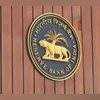 "Reserve Bank of India, RBI")
Listen to This Article
In a major overhaul of the payments ecosystem, the new six-member Payments Regulatory Board (PRB), which focuses on regulatory oversight of payment systems to enhance monitoring and promote accountability, will include secretaries of the Department of Financial Services (DFS) and Ministry of Electronics and IT (MeitY), and retired IAS officer Aruna Sundararajan as its three external members nominated by the government.
The governor of the Reserve Bank of India (RBI) will be the chairperson of the PRB, which was meant to have greater government representation and will replace the RBI’s Board for Regulation and Supervision of Payment and Settlement Systems (BPSS). It will have the central bank’s deputy governor and executive director in charge of payments and settlement systems as members.
Currently, M Nagaraju is the DFS secretary and S Krishnan is the Meity secretary.
Additionally, the principal legal adviser of RBI will be a permanent invitee to the meetings of the PRB.
In a notification back in May, the government said that PRB will replace the BPSS, which was a committee of the central board of the RBI that exercised powers on its behalf, to regulate and supervise the payment and settlement systems in the country.
Also Read

 "Banks")
 "Reserve Bank of India, RBI")
 "RBI")
The new regulatory entity, PRB, will be assisted by the Department of Payment and Settlement Systems (DPSS), a department in the RBI.
According to a notification published on May 21, the composition of the Board will be in accordance with Section 3 of the Payment and Settlement Systems Act (PSS), 2007. Along with the RBI governor, who will be the chairperson, the RBI deputy governor in charge of payment and settlement systems, and an RBI officer nominated by its central board, the Board will include three members nominated by the central government.
Additionally, the PRB may invite persons with experience in the fields of payment and settlement systems, information technology, law, etc., to attend its meeting either as permanent or as ad hoc invitees.
The PRB is required to meet at least twice in a year, and the meetings will be presided over by the chairperson or in his absence, by the deputy governor. The notification states that each member of the board will have one vote, and any item of business requires voting, then such an item will be decided by a majority of votes. In the event of an equality of votes, the chairperson, or in his absence, the deputy governor, will have a second or casting vote.
In 2017, an inter-ministerial committee for finalising amendments to the PSS Act, 2007, had recommended, in a draft report, the creation of an independent regulator PRB to deal with payments related issues, with the chairperson appointed by the government in consultation with the RBI.
Consequently, RBI in a strongly-worded dissent note said there is no case for having a regulator for payment systems outside the central bank. According to the RBI’s dissent note in October 2018, PRB should be headed by the RBI governor, with the government nominating three members to the board, and a casting vote for the governor.
“The overarching impact of monetary policy on payment and settlement systems and vice versa provides support for regulation of payment systems to be with the monetary authority," the dissent note had stated.
More From This Section
 "target, gdp, economy, fiscal deficit")
 "India US trade deal, India US trade surplus, India trade with US, US-India economic relations, trade deficit USA, mutually beneficial trade deal, US trade concerns India, America First trade policy, India imports from US, US exports to India, Indo-US")
 "Suman Bery, Suman, Bery")
 "GDP growth")
 "employment, employment in India, job")
Topics : RBI finance sector IT ministry
Don't miss the most important news and views of the day. Get them on our Telegram channel
First Published: Sep 30 2025 | 5:52 PM IST