


India, EU near FTA finish line, aim to close talks at January 27 summit
India and the European Union are in the final and most difficult phase of free trade agreement talks, with both sides aiming to announce the conclusion at the India-EU Summit in New Delhi on January 2
 "India, EU, European Union, India flag")
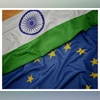
The EU is India’s largest trading partner, and India’s bilateral trade in goods with the bloc stood at $136.53 billion in FY25, with exports worth $75.85 billion and imports of $60.68 billion | Photo: Shutterstock
Listen to This Article
India and the European Union (EU) continue to hold intense negotiations on the proposed free-trade agreement (FTA), including thorny issues such as sustainability, and are aiming to announce the conclusion of the talks at the India-EU Summit in New Delhi on January 27.
Once the negotiations are concluded, both sides will follow their internal approval processes before moving towards signing the agreement, an EU official said, adding that the proposed pact aims at a “substantial reduction of tariffs” on both sides.
The proposed trade deal is seen as part of a broader strategy to diversify trade ties and reduce reliance on a limited number of supply sources. The idea is also to boost investment and industrial cooperation in key sectors such as active pharmaceutical ingredients (APIs), solar equipment and hydrogen. Both sides want to jointly build industrial capacity and cut dependencies, the official added.
“As (European Commission) President Ursula von der Leyen said in Davos as well, we’re closing in on a deal, and that’s more than 20 years after we first started these negotiations. Following (deal with) Mercosur, this would be another major and very strategic agreement,” the EU official said.
“An FTA between India and the EU would create one of the largest trading areas in the world, a market of around 2 billion people. It would mean more predictability, better market access for companies, and that, of course, would support trade, would support growth and jobs, and it would also help diversify supply chains and reduce unwanted dependencies.”
Also Read

 "Brazil's President Luiz Inacio Lula da Silva")
 "European Union, EU")
 "Kaja Kallas")
 "Ursula von der Leyen, Ursula, von der Leyen, Leyen")
 "India-UAE, Trade, India, UAE")
Over the last three months, New Delhi and Brussels have been in the “last and the most arduous” leg of the negotiations. Last week, Commerce Secretary Rajesh Agrawal had said 20 of 24 chapters had been concluded. The agreement will cover all aspects of the deal, but “sensitive” agriculture issues on “both sides” are off the table.
The EU is India’s largest trading partner, and India’s bilateral trade in goods with the bloc stood at $136.53 billion in FY25, with exports worth $75.85 billion and imports of $60.68 billion.
A security and defence partnership remains another key deliverable during the India-EU Summit, which will take place after a gap of five years.
Both sides are also looking to conclude a memorandum of understanding (MoU) on a comprehensive framework on mobility, covering high-skilled workers and students, researchers, and seasonal workers. The framework will include measures to ease movement, while allowing members from the bloc to decide how many people they admit. “The idea here really is to better support Indian talent coming to Europe, and of course, in line with what the labour market needs in the European Union,” the official said.
“The idea here really is to better support Indian talent coming to Europe, and of course, in line with what the labour market needs in the European Union,” the official said.
That apart, there will also be focus on the India–Middle East–Europe Economic Corridor (IMEEC), which would create new transport, digital and energy connections between India and Europe. “Of course, that involves other partners as well, but we do expect that the summit would inject some momentum into the preparatory work,” the official said.
On January 27, President of the European Council, António Luís Santos da Costa, and the President of the European Commission, Ursula von der Leyen, will co-chair the 16th India-EU Summit, along with Prime Minister Narendra Modi.
For New Delhi, the trade deal with the 27-nation European bloc is crucial amid India-United States (US) trade negotiations having dragged on, and India exploring new export markets as the White House has imposed a 50 per cent additional tariff on its exports.
Apart from the economic benefits of the trade agreement, the EU, especially its biggest members, such as Germany and France, are keen to wean India off Russian influence. Both New Delhi and the European bloc are hopeful that their deal will help cut their mutual dependence on China.
More From This Section
 "Manufacturing PMI, manufacturing")
 "GST revenues November 2025, India GST collection slowdown, GST compensation cess dip, GST rate rationalisation impact, indirect tax revenues India, festive demand GST, imports GST growth, GST refunds decline, ICRA Aditi Nayar GST outlook, consumption")
 "Census")
 "India–European Union (EU) free-trade agreement (FTA)")
 "PMI")
Topics : India EU summit India trade European Union
Don't miss the most important news and views of the day. Get them on our Telegram channel
First Published: Jan 23 2026 | 7:07 PM IST