


Anand Mahindra urges India to turn tariff turmoil into "1991 moment"
Mahindra Group chairman calls for bold reforms, single-window clearance, and a tourism push to turn global tariff disruption into an opportunity for transformation
 "Anand Mahindra")
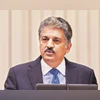
Anand Mahindra, chairman of the Mahindra Group.
Listen to This Article
Anand Mahindra, chairman of the Mahindra Group, has called on India to turn the ongoing global tariff upheaval into an opportunity akin to the transformative economic reforms of 1991.
Drawing parallels with the liberalisation that followed India’s forex crisis more than three decades ago, Mahindra asked whether the current “global Manthan” over tariffs could yield some “Amrit” for the country.
In a social media post, Mahindra said the “law of unintended consequences” was quietly reshaping global economic priorities, triggered by the tariff war unleashed by the United States. While the short-term impact has been marked by friction, he said longer-term effects were already emerging in significant and potentially positive shifts.
In Europe, he noted, the response to changing tariffs has gone beyond strategic trade adjustments. Countries such as Germany and France have ramped up defence spending, prompting a rethinking of security dependence and nudging Germany away from rigid fiscal conservatism. Mahindra said this could pave the way for an economic resurgence in Europe, giving the world a new growth engine.
Similarly, in Canada — long constrained by internal trade barriers among its provinces — Mahindra observed that the same global pressures were driving efforts to dismantle inefficiencies. This, he said, could bring the Canadian economy closer to becoming a true common market, enhancing long-term resilience.
Also Read

 "Mahindra BE 6")

 "Anand Mahindra, chairman of Mahindra Group, at the Invest Karnataka 2025 summit")
 "Narayana Health")
 "mutual fund, SIP, systematic investment plans")
These developments, Mahindra argued, show how unintended consequences can create major structural advantages. He urged India to act decisively to engineer its own set of outcomes that may seem unintended but are intentional in their transformative potential.
He called for a radical improvement in India’s ease of doing business, proposing the creation of a genuinely effective single-window clearance system for investment proposals. Noting that many regulatory powers lie with individual states, Mahindra suggested forming a coalition of willing states to align with a national platform to streamline and simplify approvals. If India can demonstrate speed, transparency, and predictability in this area, he said, it could become an irresistible destination for global capital.
Mahindra also emphasised the need to unleash tourism as a major foreign exchange driver. Calling it one of India’s most underexploited assets, he advocated urgent improvements in visa processing, tourist facilitation, and the creation of dedicated tourism corridors anchored in assured security, sanitation, and hygiene, serving as model destinations for replication nationwide.
In addition to these two focus areas, he recommended broader policy action to strengthen competitiveness and resilience, including liquidity support for MSMEs, faster infrastructure investment, expanded manufacturing through enhanced production-linked incentive (PLI) schemes, and import duty rationalisation to reduce input costs for domestic manufacturers.
Mahindra concluded with a call for intent-driven reform: “Let the unintended consequences we create be the most intentional and transformative ones of all.” While acknowledging that no country can be faulted for putting its own interests first, he said India must use this moment to build a future greater than ever before.
More From This Section
 "Sanjay Malhotra, RBI, RBI Governor")
 "Ministry of External Affairs")
 "Donald Trump")
 "RBI, Reserve Bank of India")
 "Ongc, oil, oil company, refinery")
Topics : Anand Mahindra tariffs trade US tariff hikes
Don't miss the most important news and views of the day. Get them on our Telegram channel
First Published: Aug 07 2025 | 1:11 AM IST