


India-UK trade deal: Dairy products excluded, zero duty on 95% agri goods
India secures duty-free access for most agricultural products in the UK market, while protecting dairy, edible oils, and apples from tariff concessions in the India-UK FTA
 "Britain's Prime Minister Keir Starmer and Prime Minister Narendra Modi")
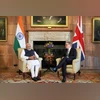
Britain's Prime Minister Keir Starmer welcomes Indian Prime Minister Narendra Modi at Chequers near Aylesbury, England, Thursday, July 24, 2025. | Photo: Reuters
Listen to This Article
India has protected the interest of domestic farmers by excluding dairy products, edible oils and apples in the free trade agreement (FTA) with the UK while securing zero duties on 95 per cent of agriculture and processed food items, a move which is expected to bump up agriculture exports by over 20 per cent over the next three years.
Sources said big gainers could be shrimp and meat exporters who will enjoy duty free access to the lucrative UK markets.
No tariff concession has been allowed on oats as well in the FTA, which was signed on Thursday.
Over the past decade, the UK’s shrimp imports have remained relatively stable, fluctuating between 11,000 and 15,000 metric tons annually since 2014, a report by InCred Equities showed.
However, in the 2022 calendar year, total imports surged past 75,000 tonnes, positioning the UK as India’s ninth-largest shrimp export destination.
Also Read

 "Modi, Narendra Modi, Keir Starmer")
 "Bangladesh import ban, Indian textile industry, ITF, CMAI, Indian retailers, domestic sourcing, apparel imports, import duty, MSMEs, textile manufacturing")
 "Modi, Narendra Modi, Keir Starmer, Keir, Starmer, UK")
 "Prime Minister Narendra Modi meets Keir Starmer")
India was the UK’s leading shrimp supplier until 2017, before Vietnam took the lead. Since 2020, Ecuador has rapidly expanded its shrimp exports to the UK, emerging as a strong competitor to both Vietnam and India.
“By 2022, Vietnam held a 25 per cent market share, followed by India at 18 per cent and Ecuador at 10 per cent," the report said.
Vietnam and Ecuador paid 0 per cent tariff while India was stuck at 12 per cent-20 per cent effective tariff. UK is the world’s sixth largest shrimp import market.
That apart, Indian staples like turmeric, pepper, cardamom; processed goods like mango pulp, pickles, and pulses will enjoy duty-free access in the UK market.
In agriculture, the UK imports USD 37.52 billion worth products, but imports from India are just USD 811 million.
More than 95 per cent of agricultural and processed food tariff lines will attract zero duties on fruits, vegetables, cereals; pickles, spice mixes, fruit pulps; and ready-to-eat meals and processed foods.
This will lead to reduction in landed cost of these Indian products in the UK market, boosting India’s export and enhancing income of domestic farmers.
“Duty-free access is expected to increase agriculture exports by over 20 per cent in the next three years, contributing to India’s goal of USD 100 billion agri-exports by 2030,” the official said.
The FTA would also give a boost to exports of emerging products such as jackfruits, millets, and organic herbs. It would also help India’s export of high-margin branded products like coffee, spices, beverages, and processed food.
Stating that the UK consumes 1.7 per cent of India’s coffee, an official said duty-free access will help Indian instant coffee compete with EU exporters like Germany and Spain.
The UK is a major buyer of Indian tea (5.6 per cent), while spices have a 2.9 per cent share. The zero tariffs will help enhance the country's market share.
“Indian craft drinks like feni from Goa, artisanal wines from Nashik, and toddy from Kerala will now enjoy Geographical Indication (GI) protection and shelf space in high-end UK retail and hospitality chains,” the official said.
The FTA is set to help India’s food processing sector. India exports USD 14.07 billion of processed agriculture and food products globally per year. The UK imports USD 50.68 billion worth of processed items, but Indian products make up for a mere USD 309.5 million.
More From This Section
 "Modi, Narendra Modi, Keir Starmer, Keir, Starmer, UK")
 "India, economy, market, Indian economic growth, inflation")
 "Modi, Narendra Modi, Keir Starmer, Keir, Starmer, UK")
 "Range Rover, JLR, Jaguar Land Rover")
Don't miss the most important news and views of the day. Get them on our Telegram channel
First Published: Jul 24 2025 | 9:25 PM IST