


India coming to the negotiation table: Peter Navarro ahead of meeting
Peter Navarro's remarks come as the trade talks between India and the US are gaining momentum, with the US chief negotiator visiting India for a day-long meeting
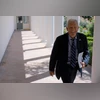 "White House trade advisor Peter Navarro walks past news photographers at the White House in Washington, D.C., U.S., September 3, 2025 | REUTERS")
In his interview with CNBC, Navarro, once again, slammed India for its Russian oil purchase | Photo: REUTERS
Listen to This Article
White House trade adviser Peter Navarro said on Sunday (local time) that India was coming to the negotiating table.
Speaking at an interview with CNBC, Navarro said, “India is coming to the table. Prime Minister Narendra Modi sent out a very conciliatory, nice, constructive tweet, and President Trump responded to that. We'll see how this works.” He further said that the two nations are still negotiating on the trade issues and are working on ‘trade barriers’.
Fresh thrust to trade talks
Navarro’s remarks come as the trade talks between India and the US are gaining momentum, with the Assistant US Trade Representative for South and Central Asia, Brendan Lynch, visiting India on September 16 for a day-long meeting.
US President Donald Trump recently posted on Truth Social, his private social media platform, that both India and the US are now continuing negotiations to address the two barriers, adding, “I look forward to speaking with my very good friend, Prime Minister Modi, in the upcoming weeks. I feel certain that there will be no difficulty in coming to a successful conclusion for both of our Great Countries.”
New optimism in trade ties
Trump’s softening of stance towards India was welcomed by Prime Minister Narendra Modi, who said that India and the US were close friends and natural partners. “I am confident that our trade negotiations will pave the way for unlocking the limitless potential of the India-US partnership. Our teams are working to conclude these discussions at the earliest. I am also looking forward to speaking with President Trump. We will work together to secure a brighter, more prosperous future for both our people,” Modi said.
Also Read

 "Donald Trump, Lisa Cook")
 "Members of the Ohio National Guard patrol 14th Street in Washington on Aug. 23.")
 "Coca crops in San Miguel, Putumayo, Colombia")
 "Donald Trump, Trump")
 "Donald Trump, Trump")
What has happened so far
The recent change in stance signals a possible thaw in the bilateral ties between the two countries, which hit a rough patch after Trump imposed 25 per cent “reciprocal tariffs” on India on July 30, as compared to the original 26 per cent announced in April. Soon after, Trump also imposed an additional 25 per cent tariff on India for its continued purchase of Russian crude oil, at a time when Washington has been trying to pressure Russian President Vladimir Putin for a peace deal with Ukraine.
Recently, Trump also urged the European Union to slap a 100 per cent tariff on India and China, the two largest buyers of Russian oil, to pressure Trump to come to the negotiating table, after Trump met him last month. A Financial Times report also suggested that Trump is likely to urge the G7 to impose tariffs on India and China.
As the ties between the two countries were impacted, Trump’s adviser Navarro slammed India on several occasions, accusing it of acting as a “laundromat” for the Kremlin and calling the Ukraine war “Modi’s war”.
Navarro slams India’s Russian oil trade
In his interview with CNBC, Navarro, once again, slammed India for its Russian oil purchase and said, “And by the way, there’s this issue of India buying Russian oil, which it never did. You understand this. It never did that before 2022. I mean, the Indian refiners got in bed with the Russian refiners immediately after the invasion, and they’re making out like bandits. I mean, it’s like it’s crazy stuff because they make money off of us in unfair trade. Okay, so American workers get screwed, right?”
Questioning India’s ties with China and Russia, Navarro said, “Then they use that money to buy Russian oil, and then the Russians use that to buy weapons. And then we, as taxpayers, have to pay more for this, for the defence of Ukraine. And so how can that be? And watching Modi on a stage with China, which has been its long-term existential threat. And Putin, that was an interesting stretch. I don't think he felt comfortable doing it.”
Navarro slams India’s high tariffs
Reiterating his claim of India being a “maharaja of tariffs”, the White House trade adviser said, “But as a practical matter, we know that on the trade side, they have the highest tariffs of any major country. They have very high non-tariff barriers. We had to deal with that, like we're dealing with every other country that does that.”
More From This Section
 "Liquefied Natural Gas, LNG, OIL SECTOR")
 "Trump's bandwagon of retribution is doing damage")
 "Income Tax Bill, Income Tax")
 "MGNREGA, MGNREGA wages, labour market, MGNREGA job scheme")
 "WPI, WPI Inflation")
Don't miss the most important news and views of the day. Get them on our Telegram channel
First Published: Sep 16 2025 | 9:17 AM IST