


IAF to start mock war drill on Pak border amid civil defence exercise
The war exercise and the civil preparedness campaign follow heightened tensions after the April 22 terrorist attack in Pahalgam, in which 26 people, mostly tourists, were killed
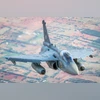 "Caption: Indian Air Force's Light Combat Aircraft (LCA) Tejas Mk-I. Image Credit: PIB")
Indian Air Force's Light Combat Aircraft (LCA) Tejas Mk-I. (Image Credit: PIB)
Listen to This Article
The Indian Air Force (IAF) will begin a two-day war exercise along the country’s western border with Pakistan from Wednesday, describing the manoeuvre as a “pre-planned and routine training exercise”.
The first day of the exercise, involving frontline fighter jets and airspace restrictions near the India-Pakistan border, coincides with a large-scale civil defence drill to be held across at least 244 districts nationwide. Experts believe it could be the most expansive civil preparedness drill since the 1971 war with Pakistan. The civil exercise includes the sounding of air raid sirens, blackouts, evacuation protocols, and bunker readiness checks, including in 13 districts housing sensitive installations such as nuclear reactors.
The war exercise and the civil preparedness campaign follow heightened tensions after the April 22 terrorist attack in Pahalgam, in which 26 people, mostly tourists, were killed. Civil aviation authorities have issued a Notice to Airmen (NOTAM) impacting flight movements near the southern and western sections of the India-Pakistan border. While the IAF has stressed that the exercise in Rajasthan and nearby areas are routine, it urged media outlets not to speculate on their timing or scope.
On Tuesday evening, Prime Minister Narendra Modi made a veiled reference to reports that India had stopped the flow of water from the Baglihar dam on the Chenab River, saying water that once went “outside” would now be used for India’s benefit. Modi was speaking at an event in New Delhi. On April 23, India suspended the Indus Waters Treaty as part of its response to the “cross-border linkages” to the Pahalgam terrorist attack.
The prime minister, in a meeting with top military officials on April 29, according to sources, gave the armed forces “complete operational freedom” to decide the nature and timing of India’s response. Air Chief Marshal A P Singh met the Prime Minister again on Sunday to brief him on the IAF’s readiness. On Saturday, Navy Chief Admiral Dinesh K Tripathi had apprised Modi on the overall situation in the critical sea lanes in the Arabian Sea.
Also Read

 "mock drill, bsf, civil defence")
 "Pakistan Army Chief General Asim Munir")
 "Delhi police security")
 "Delhi mock drill, blackout")
 "Mock drill")
As for the civil defence drills, all states and Union Territories have been instructed to participate, with exercises beginning from 4 pm on Wednesday. The drills will test emergency warning systems, evacuations, blackout protocols, and other procedures in the event of a hostile attack. Around 600,000 volunteers are expected to take part, with the figure likely to rise as school and college students join in.
The Ministry of Home Affairs on Monday urged the drills in light of “new and complex threats”. States have been asked to involve students, hospital workers, transport staff, and personnel from both government and private sectors. The drills will also engage uniformed personnel from police, paramilitary and defence forces, sources said.
Metro cities including Delhi, Mumbai, Chennai and Kolkata, along with border cities and locations with key infrastructure, have been identified as the most vulnerable. The civil defence authorities will check the capabilities of all these zones and what’s lacking or not working. This exercise of identifying weak points for correction will continue for the next three days.
In Delhi, the government issued a list of “dos and don’ts” for the Operation Abhyaas at 55 locations. Citizens have been asked to learn air raid siren codes -- long wails indicating alert, and short bursts signalling all-clear -- and identify nearby shelters. Emergency kits, torches and bottled water are recommended.
During the exercise, people will be expected to immediately seek shelter and avoid phone use to keep lines free for emergencies.
In the Kashmir Valley, the drill will also commence at 4 pm. In Chandigarh, a city-wide blackout is scheduled between 7.30 pm and 7.40 pm, with sirens to be sounded for 10 minutes. Jharkhand will conduct blackouts, simulate evacuation of the injured, and protect infrastructure. Punjab will carry out mock drills in 20 districts.
In Jharkhand, the drills will be conducted from 4 pm for activities like warning of danger through siren, blackout, keeping major infrastructure safe and safe evacuation of injured in case of an accident. In Punjab, mock drills will be conducted across 20 districts and towns.
A home ministry communication said the exercise would also include activating hotlines and radio links with the IAF, and testing both main and shadow control rooms. “In the current geopolitical scenario, new and complex threats/challenges have emerged,” the Directorate General Fire Services, Civil Defence & Home Guards said in its letter to state governments and Union Territories. “It would be prudent that optimum civil defence preparedness is maintained at all times.” The drill will extend to village levels and aims to reinforce civil defence capacity nationwide.
Civil defence mobilisation has occurred in the past, too, including during the Covid-19 pandemic, after the 2001 Parliament attack, and during the Kargil conflict, sources said.
Meanwhile in New York, the UN Security Council on Monday questioned Pakistan’s role in the Pahalgam attack. According to a PTI report, the council declined to release a statement after the session, which was held in a consultative room rather than the main chamber. The report, quoting unnamed sources, said there was broad condemnation of the attack and a push for accountability, with members advising Pakistan to resolve issues bilaterally with India.
Furthermore, the Ministry of External Affairs on Tuesday said that Iranian Foreign Minister Seyed Abbas Araghchi will arrive in New Delhi on a two-day visit starting Wednesday. During his visit, Araghchi is scheduled to meet External Affairs Minister S Jaishankar and call on President Droupadi Murmu. His visit follows a trip to Islamabad on Monday, where he held talks with Pakistan’s top leadership. Araghchi has previously offered to mediate between India and Pakistan.
In a separate development, authorities in Doda, Jammu & Kashmir, have banned the use of virtual private networks (VPNs), citing concerns over public safety, cybersecurity and digital governance, an official spokesperson said.
Earlier, Pakistan’s Express Tribune reported that Islamabad’s coalition government has endorsed an 18 per cent increase in defence spending, pushing the defence budget to over PKR 2.5 trillion (approximately ₹749 crore) for 2025–26 (Pakistan follows July 1-June 30 financial year). The new budget is expected to be unveiled in early June. For 2024-25, the defence allocation stands at PKR 2.12 trillion, already up nearly 15 per cent from the previous year.
(With agency inputs)
(With agency inputs)
More From This Section
 "S. Jaishankar")
 "Farmers, Farmer, agriculture")
 "Khalida Zia, former PM of Bangladesh")
 "India Pakistan")
Topics : Pahalgam attack Indian Air Force IAF aircraft
Don't miss the most important news and views of the day. Get them on our Telegram channel
First Published: May 06 2025 | 10:16 PM IST