


Code of conduct must for freebies: Ex-RBI governor Duvvuri Subbarao
He said that although some people live at subsistence levels and the government must provide certain safeguards, there should be a limit on such provisions
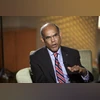 "Ex-RBI governor, Duvvuri Subbarao in 2013")
Ex-RBI governor, Duvvuri Subbarao in 2013 | Image: Bloomberg
Listen to This Article
Former Reserve Bank of India (RBI) governor Duvvuri Subbarao said there is a need for central and state governments to collaborate and formulate a code of conduct on freebies to determine a limit for such schemes.
He said that although some people live at subsistence levels and the government must provide certain safeguards, there should be a limit on such provisions.
Speaking at the IIMK-NSE Annual Conference on Macroeconomics, Banking & Finance, Subbarao said, “Borrowing has to pay for itself. If the states and the central government are going to borrow to finance freebies, where is the money going to come from if it is going to be spent on consumption?”
"There has to be a code of conduct, a limit on this. Every party, state government, and the central government is guilty. The finance minister and the prime minister must have a dialogue with state governments and establish centre-state collaboration, as was done for GST and FRBM. We must have a code of conduct," he said.
Subbarao also said that regulators undertake cost-benefit analyses before implementing regulations, but it is difficult to quantify the costs and benefits of such measures. The RBI also holds informal discussions with stakeholders.
Also Read

 "RBI Governor Sanjay Malhotra")
 "Saugata Bhattacharya, external member of the Reserve Bank of India's (RBI) Monetary Policy Committee (MPC) | Photo: website/ cprindia.org")
 "Reserve Bank of India, RBI")
 "RBI, Reserve Bank of India")
 "RBI, Reserve Bank of India")
However, basing regulations on the decisions of an external body might "tie the regulator’s hands."
"The RBI, as an institution, needs flexibility while making regulatory decisions, without being constrained by an external body," he said.
The Economic Survey of 2025 suggested that financial sector regulators such as the RBI, Securities and Exchange Board of India (Sebi), and Insurance Regulatory and Development Authority of India (Irdai) set up an independent Regulatory Impact Assessment (RIA) agency.
Meanwhile, amid criticism that the RBI is sacrificing growth for inflation control, he said that there is a need to review the inflation targeting framework, but it should not be discarded.
"In a pre-inflation targeting framework, I believe the inflation targeting framework has been a force for good. So, I don't think we should throw it away. But we should see how to manage the concerns of growth and inflation and how to balance the trade-off," he said.
He added that among the three key objectives of the central bank—price stability, growth, and financial stability—price stability takes precedence over the other two. However, once inflation is within the target range, the RBI should shift its focus to financial stability and growth concerns.
More From This Section
 "Bonds")
 "Directorate of Revenue Intelligence")
 "M Rajeshwar Rao, deputy governor at the Reserve Bank of India")
 "Bank of India")
 "salary")
Topics : RBI RBI Governor Model Code of Conduct
Don't miss the most important news and views of the day. Get them on our Telegram channel
First Published: Feb 21 2025 | 8:29 PM IST