


Sebi chief urges public interest directors to strengthen governance at MIIs
Speaking at the Public Interest Directors Conclave, the Sebi chairman said that the role of PIDs will increase in significance and will also be under increased scrutiny
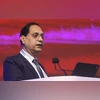 "Tuhin Kanta Pandey, SEBI Chairman")
Pandey emphasised that the larger objective of maintaining safety, efficiency, and financial stability in the financial sector must not be overshadowed by commercial interests of an MII-- stock exchanges, clearing bodies and depositories. (Photo: PTI)


Listen to This Article
Tuhin Kanta Pandey, chairman of the Securities and Exchange Board of India (Sebi), on Wednesday urged public interest directors (PIDs) at market infrastructure institutions (MIIs) to move from traditional oversight to strategic stewardship.
Speaking at the Public Interest Directors Conclave, the Sebi chairman said that the role of PIDs will increase in significance and will also be under increased scrutiny.
Pandey emphasised that the larger objective of maintaining safety, efficiency, and financial stability in the financial sector must not be overshadowed by commercial interests of an MII-- stock exchanges, clearing bodies and depositories.
“Please use the authority vested in you by Sebi. Bring your independent judgment to the table. Pro-actively bring to Sebi’s notice any risk identified by you. Reinforce the checks and balances that strengthen your institution’s governance culture,” said the Sebi chairman, asking PIDs to prioritise public interest and fairness.
Pandey urged PIDs to ensure that their interventions in board meetings are appropriately recorded and that their meetings should have comprehensive discussions on critical issues concerning the MII. He further called them to exercise their independence when reviewing the adequacy of financial and human resource functions.
Also Read

 "SEBI")
 "Tuhin Kanta Pandey, SEBI Chairman")
 "Sahara India Pariwar")
 "Securities Appellate Tribunal, SAT")
Calling for stronger oversight to technological risks and cybersecurity threats as the markets grow, Sebi chairman asked PIDs to treat any system failure with the same seriousness as financial irregularity.
“Ensure that as MIIs innovate, there is no compromise on systemic stability or data integrity. Sebi encourages the use of AI and machine learning tools, but with guardrails to protect privacy and security of investor data,” said Pandey.
The chairman also detailed measures taken to enhance governance and ease burden on MIIs, such as removal of cooling off period for PIDs, skill evaluation metrics for appointment of PIDs, and appointment of two executive directors on the board of MIIs. Sebi has also proposed simplification of the regulatory framework on administration and governance of the MIIs.
More From This Section
 "Skye Air")
 "Tax on pension corpus: Jaitley just shrank your retirement kitty")
 "rbi, reserve bank of india")
 "Swaminathan J, Deputy Governor, RBI")
 "Fintech")
Topics : SEBI finance sector finance
Don't miss the most important news and views of the day. Get them on our Telegram channel
First Published: Oct 15 2025 | 6:39 PM IST