


Black-spotted onions & sprouted potatoes: Here's what you should know
They may seem fine after a quick trim or peel, but experts caution against taking chances. Here's what causes these changes and the safest way to handle them.
 "health risks - black spots onions, sprouted potatoes")
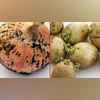
Check your kitchen staples — black spots on onions and sprouts on potatoes may signal it’s time to toss them. (Photo: Shutterstock | Indranil Sen)
Listen to This Article
We’ve all been there, you’re prepping dinner and notice your onions have gone spotty or your potatoes are sprouting like they’re growing a garden of their own. From fungal infections to toxic compounds, knowing what causes these changes and when to discard affected produce can help you avoid potential health risks.
What causes black spots on onions?
Black patches on an onion aren’t just harmless marks. They’re often caused by the fungus Aspergillus niger (commonly known as black mould), which thrives in onions stored in hot, humid or unfavourable conditions.
According to Srishti Goyal, consultant dietician, Ujala Cygnus Group of Hospitals, if an onion has black spots, even peeling the outer layer may not remove deeper microscopic filaments of the fungus. "The mould can produce mycotoxins, which in vulnerable individuals could trigger allergic reactions, respiratory issues or stomach upsets. It is best to either throw it or compost it," she explained.
Are they safe to eat?
Experts agree that a single spoiled onion may not always cause visible illness, but consuming it repeatedly or ignoring symptoms can trigger serious health complications.
If you’ve already cooked with an onion that looked slightly off and are now feeling uneasy, don’t ignore the signs, shared Kanika Narang, Deputy Manager and HOD- Dietetics Department, Indraprastha Apollo Hospitals, Delhi. “If an individual has symptoms like nausea, vomiting, stomach pain, or allergic symptoms following the consumption of an onion infested with fungus, they need to remain hydrated and should approach a doctor without delay,” she told ABP News.
Also Read

 "heart disease prevention, daily habits heart health")
 "hot water immersion, heat therapy")
 "Diwali weight gain")
 "air pollution, Delhi smog")
 "migraines and headaches")
Why do potatoes sprout?
When potatoes are stored for too long, or in the wrong conditions (light, warmth, moisture), they start to sprout. At the same time, levels of natural toxins called glycoalkaloids (such as solanine and chaconine) increase in the eyes, shoots, green skin and damaged parts. According to Andrew Stolbach, toxicologist and emergency physician with the Department of Emergency Medicine at Johns Hopkins Hospital, the glycoalkaloids in sprouted potatoes can cause some pretty uncomfortable symptoms.
"Glycoalkaloids cause gastrointestinal upset—cramps, diarrhoea, nausea and vomiting," Stolbach said in a report by EatingWell.
Stolbach explained that, while in theory exposure to fungal toxins could cause a drop in blood pressure, fever, or even neurological symptoms in extreme cases, such instances were extraordinarily rare. Most people, he added, were more likely to experience only mild gastrointestinal discomfort.
Are they safe to eat?
The safest route is to discard potatoes that have significant sprouting or green skin. "These natural chemicals are not removed by frying, baking, microwaving or boiling. Cutting off the sprouts and green skin will decrease, but not eliminate, your exposure," Stolbach added.
When to discard & how to avoid spoilage
Onions:
- Discard if black spots, powdery or fuzzy patches appear, or the onion becomes soft and mushy.
- Store in a cool, dry, well-ventilated place, not sealed plastic bags, away from moisture.
Potatoes:
- If there are green skins, lots of sprouts or bruises, it is better to discard.
- To slow sprouting: store in a cool (not fridge), dark, dry spot.
- Avoid storing potatoes alongside onions, as gases from onions may accelerate sprouting.
For more health updates, follow #HealthwithBS
This report is for informational purposes only and is not a substitute for professional medical advice.
More From This Section
 "AQI 50, clean air, air pollution")
 "pregnancy")
 "Vaccination - immunisation")
 "Smog, Delhi Pollution, Delhi Air Quality, Pollution")
 "supplements, medicines")
Topics : Health with BS BS Web Reports Onion Potato
Don't miss the most important news and views of the day. Get them on our Telegram channel
First Published: Nov 11 2025 | 1:55 PM IST