


Canada to invite 17,860 sponsors for parent, grandparent PR from July 28
Starting July 28, 2025, Canada will invite 17,860 people from its 2020 sponsor pool to apply for permanent residency for their parents or grandparents
 "Mark Carney, Canada PM")
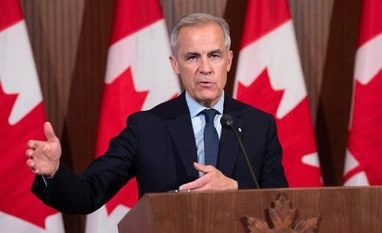
Canadian Prime Minister Mark Carney speaks with reporters during an availability following a cabinet retreat, Wednesday, May 21, 2025, in Ottawa, Ontario.(Photo: PTI)
Listen to This Article
Good news! Thousands of Canadian citizens and permanent residents will soon get the chance to bring their parents or grandparents to live with them permanently.
Starting July 28, 2025, Immigration, Refugees and Citizenship Canada (IRCC) will begin sending invitations to 17,860 potential sponsors who had submitted an interest-to-sponsor form back in 2020. The announcement was made in a notice published online on Wednesday.
IRCC said it will accept up to 10,000 complete applications under this year’s intake for the federal Parents and Grandparents Program (PGP).
“For those invited, applications must be submitted online, either through the Permanent Residence Portal or the Representative Permanent Residence Portal,” the agency said.
Only 2020 pool will be considered
Also Read

 "marriage, wedding")
 "Canada, Canada visa, canada immigration")
 "Canada, Mark Carney")
 "Canada Flag")
 "Canada")
Those who had filled out the interest-to-sponsor form in 2020 but haven’t heard back yet are advised to check their inboxes carefully—including junk or spam folders. IRCC made it clear that no fresh forms will be accepted this year. Invitations will only be issued to individuals already in the 2020 pool.
Missed out? Consider the super visa
If you don’t get an invitation to apply under the PGP, there’s still the super visa option. This is a long-term, multi-entry visa valid for up to 10 years, which allows parents and grandparents to stay in Canada for up to five years at a time. They can also apply to extend their stay by another two years while still in the country.
According to IRCC, family reunification accounts for around 22 per cent of all permanent resident admissions, even as the federal government looks to scale down both temporary and permanent immigration levels this year.
How the Parents and Grandparents Program works
The Parents and Grandparents Program is a route to permanent residency for family members of Canadians.
Here’s how it works:
— Canadian citizens, permanent residents and registered Indians can sponsor their parents or grandparents
— Applicants must receive an invitation to apply before submitting a sponsorship application
— Demand usually exceeds supply, so IRCC uses a lottery-style draw to select eligible sponsors
— Applications are only accepted from those drawn in the lottery
What to know about the super visa
If you are unable to apply through the PGP, you can opt for the Super Visa, which is a more flexible alternative
Key points:
Valid for up to 10 years
Allows a stay of up to five years per visit
Can be extended by up to two more years at a time while in Canada
Requires the applicant to have private medical insurance
Hosts must meet minimum income requirements and commit to supporting their relatives during the visit
According to IRCC (updated June 3, 2024), the Minimum Necessary Income (MNI) requirements for Canada’s Super Visa are:
For 1 person: CAD $29,380 (approx. ₹17.92 lakh)
For 2 persons: CAD $36,576 (approx. ₹22.31 lakh)
For 3 persons: CAD $44,966 (approx. ₹27.43 lakh)
For 4 persons: CAD $54,594 (approx. ₹33.30 lakh)
For 5 persons: CAD $61,920 (approx. ₹37.77 lakh)
For 6 persons: CAD $69,834 (approx. ₹42.60 lakh)
For 7 persons: CAD $77,750 (approx. ₹47.43 lakh)
For each additional person beyond 7: Add $7,916 (approx. ₹4.83 lakh)
This includes the host, their spouse or partner, dependent children, the parent(s)/grandparent(s) being invited, and anyone else they’ve sponsored who’s still under financial obligation.
The program continues to be popular among Canadians looking to reunite with family, especially amid limited slots in the permanent residency scheme.
More From This Section
 "visa fraud")
 "Germany")
 "Seoul, South Korea")
 "US visa interview")
 "london")
Topics : Canada Immigration BS Web Reports immigration
Don't miss the most important news and views of the day. Get them on our Telegram channel
First Published: Jul 18 2025 | 12:35 PM IST